Security | Threat Detection | Cyberattacks | DevSecOps | Compliance

Amazon EC2 security: How misconfigured and public AMIs expand your cloud attack surface

Amazon Machine Images (AMIs) are templates for launching and scaling Amazon Elastic Compute Cloud (EC2) instances. Because Amazon EC2 AMIs are reused across environments and automation pipelines, decisions about how you build, source, manage, and share them directly affect your cloud attack surface.
Remediate transitive vulnerabilities faster with Datadog Software Composition Analysis

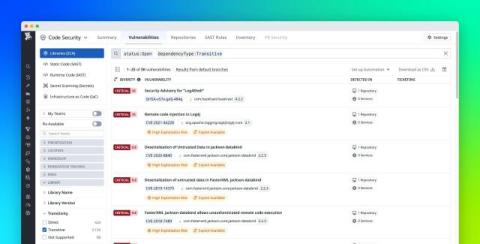
Security teams are responsible for finding and remediating vulnerable dependencies within applications that are built from large ecosystems of frameworks, SDKs, and utilities. What makes this task especially challenging is that these dependencies can pull in dozens or even hundreds of transitive dependencies through complex dependency chains. Even when scanners identify what’s vulnerable, teams still often lack the information they need about the dependency chain to safely address the issue.

Generate audit-ready vulnerability and compliance reports with Datadog Sheets

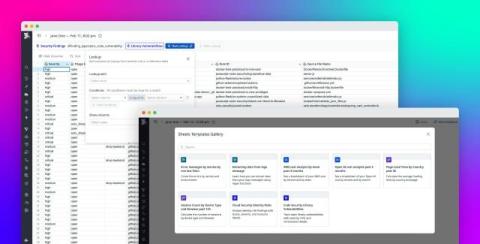
Security teams are frequently asked to provide clear, time-bounded evidence of their organization’s security posture. Whether the request comes from external auditors validating SOC 2, ISO 27001, PCI DSS, or internal governance reviews, they typically require collecting vulnerability data from multiple tools, reconciling resource lists, and manually generating spreadsheets for auditors. This process is slow, error-prone, and difficult to repeat consistently.

Enrich logs with ServiceNow CMDB context before routing to any SIEM or logging tool

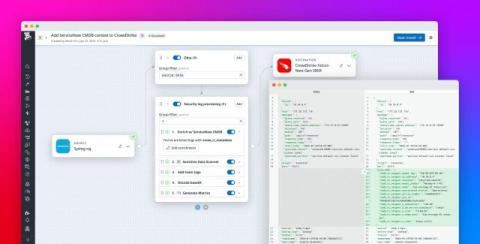
Many DevOps and security teams rely on ServiceNow CMDB (Configuration Management Database) as the system of record for metadata about infrastructure assets, application and service ownership, and dependencies. ServiceNow CMDB captures which team owns each service, what business unit the service supports, the environment where it runs, and how assets relate to each other.

Detect human names in logs with ML in Sensitive Data Scanner

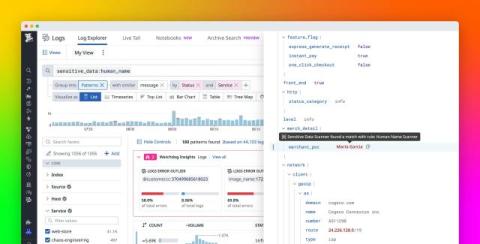
Modern applications generate a constant stream of logs, some of which carry more information than they should. For too many organizations, logs include personally identifiable information (PII) such as customer names that were never meant to leave production systems. Teams try to limit this data exposure by using regular expressions to detect and obfuscate matches, only to discover that names like John O’Connor, Mary-Jane, Jane van der Meer, and A. García slip through.