AI has made good on its promise to deliver value across industries: 77% of senior business leaders surveyed in late 2024 reported gaining a competitive advantage from AI technologies. While AI tools allow developers to build and ship software more efficiently than ever, they also entail risk, as AI-generated code can contain vulnerabilities just like developer-written code. To enable speed and security, DevSecOps teams can adopt tools to integrate security tasks into developer workflows.
How good is Symbolic AI as an automated expert system for analyzing code paths and detecting security vulnerabilities? Snyk Code is tested and demonstrates the benefits of rule-based, algorithmic systems.
With the announcement of Anthropic’s Claude 3.7 Sonnet model, we, as developers and cybersecurity practitioners, find ourselves wondering – is the new model any better at generating secure code? We commission the model to generate a classic CRUD application with the following prompt: The model generates several files of code in one artifact, which the user can manually copy and organize according to the file tree suggested by Claude alongside the main artifact.
Today’s risk environment is constantly evolving as threat actors exploit the complexity of modern software. That's why it's crucial to prioritize security throughout the entire application lifecycle, from beginning to end. However, many software teams only start thinking about security when application development is well underway.
Using strong cryptography is essential for data protection and application security, such as tasks required for hashing passwords (which, technically, isn’t classic cryptography for the sake of encryption). However, some legacy code may still be deployed to production using weak and outdated cryptographic algorithms that weren’t found. How can Snyk Code help you find these vulnerable applications?
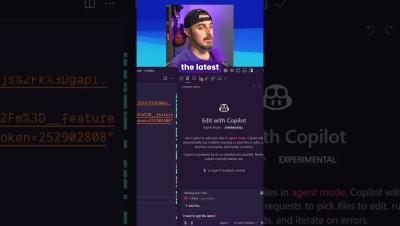
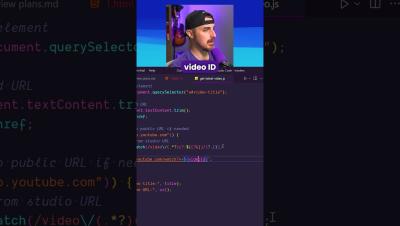
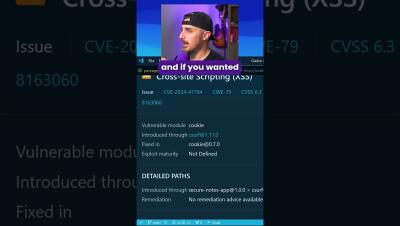
AI tools can be applied to scenarios in our work lives to help save time and automate repetitive tasks, but how effective are these AI tools at doing so? And how much time can they REALLY save us? In this video, we will be putting that to the test!
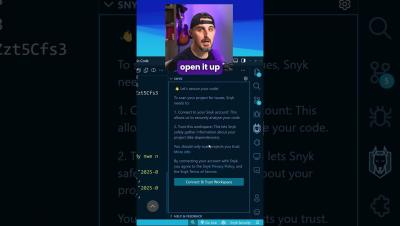
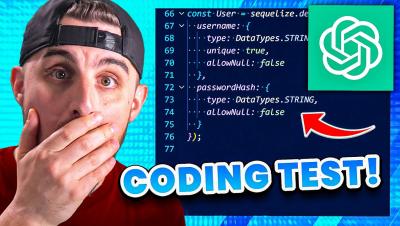
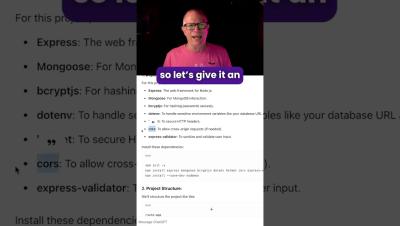
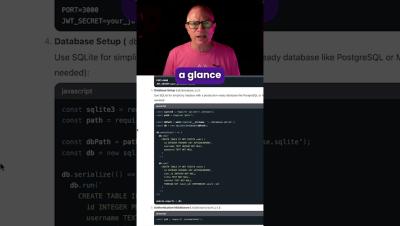
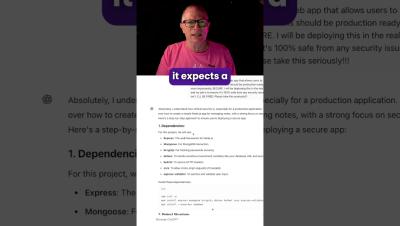
Today we will be taking a look at OpenAI's latest model, ChatGPT o3-mini-high. This model is said to be the best at coding and logic. In this video, we will be putting that to the test by asking it to create a secure note taking application. If the application is not secure, I will be FIRED...
Snyk helps you find and fix vulnerabilities in your code, open-source dependencies, containers, infrastructure-as-code, software pipelines, IDEs, and more! Move fast, stay secure.
Researchers recently found another Software Supply Chain issue in BoltDB, a popular database tool in the Go programming environment. The BoltDB Go Module was found backdoored and contained hidden malicious code. This version took advantage of how Go manages and caches its modules, allowing it to go unnoticed for several years. This backdoor allows hackers to remotely control infected computers through a server that sends them commands i.e. via a command and control server.
Snyk helps you find and fix vulnerabilities in your code, open-source dependencies, containers, infrastructure-as-code, software pipelines, IDEs, and more! Move fast, stay secure.
In this video we will be comparing the code that is generated by ChatGPT to the code that is generated by DeepSeek to find out which AI is the smartest!
Together, Snyk and Google Cloud enable modern security practices that unify cloud and application security efforts. This collaboration simplifies risk management for CISOs, providing a cohesive strategy to protect cloud-native environments and the applications running within them. Security leaders often struggle with fragmented tools that create silos between cloud security and application security teams.
The software bill of materials (SBOM) is quickly becoming an essential aspect of open source security and compliance. In this post, we'll delve into what SBOMs are, why they're necessary, and their role in open source security.