Security | Threat Detection | Cyberattacks | DevSecOps | Compliance

Your app store listings are changing without you noticing. Here's why it matters.

Most teams treat an app release as the finish line. The build clears CI/CD checks. Security scans pass. The app ships. Celebrations follow. But for mobile apps, the real exposure often begins after release, inside app stores, where metadata lives a completely different lifecycle from your code. App store listings are not static assets. They evolve constantly: What your team approved on day one may look very different to users on day ten.

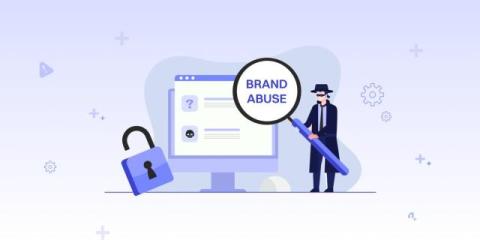
How modified APKs disguise themselves as your app across third-party stores

Attackers don’t need to breach your infrastructure to harm your users. They don’t need source code access, credentials, or backend vulnerabilities. They just need your public APK. Once your app is publicly available, attackers can download it, decompile it, inject malicious code, repackage it, and redistribute it through third-party app stores and unofficial marketplaces.

Brand Abuse in App Stores: Why Fake Apps Keep Winning & What Security Teams Miss

Brand abuse in app stores is no longer opportunistic. It has become repeatable, scalable, and persistent. Attackers do not publish one fake app and disappear. They operate in cycles. A fake app is uploaded, value is extracted, a takedown occurs, and a near-identical version reappears under a new developer identity. This loop runs continuously across regions, marketplaces, and distribution channels. For security teams, this changes the mandate.

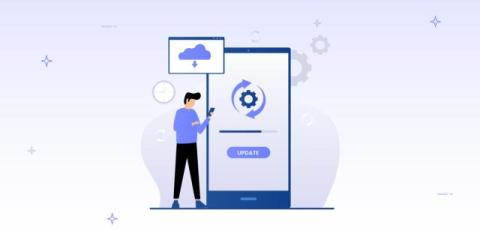
What Happens When Outdated App Versions Circulate Unnoticed? How to Regain Control?

Most teams assume that once an update is released, the old version quietly disappears. But mobile distribution doesn’t work that way. Some app stores delay syncing updates. Others keep older APKs accessible. Third-party sites mirror binaries and never refresh them. Certain regions continue serving outdated versions weeks after security fixes go live.

Why High-Performing Security Teams Monitor App Stores as Closely as CI/CD

The most persistent risks in mobile security don’t originate in code. They appear later, inside app stores, third-party marketplaces, alternate distribution channels, and unlabeled download mirrors. A spotless SDLC doesn’t protect teams from cloned listings, fraudulent builds, outdated versions circulating in unauthorized markets, or malicious uploads positioned under a company’s name. Traditional AppSec tools aren’t built for any of this.

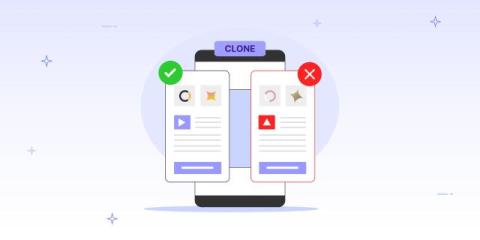
The Clone Problem: Why Fake Apps Multiply Faster Than Teams Can Respond

When fraudulent apps pretend to be you, the damage rarely starts in your codebase. It starts in places most security programs don’t watch closely enough: app stores, third-party marketplaces, and alternate distribution channels. Every well-known app eventually gets cloned. Sometimes it looks harmless. Most times, it isn’t. A publisher in a regional marketplace copies your icon and description. A third-party store mirrors your listing but swaps the developer name.

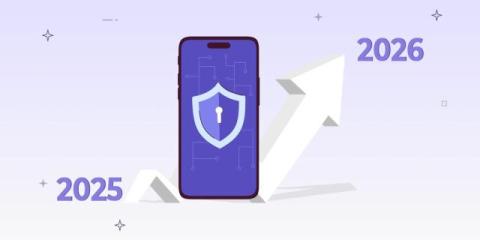
Raising the Bar for Mobile Security: Reflections on 2025 and What 2026 Demands of Us

As 2025 comes to a close, it’s worth pausing, not to slow down, but to reflect on how rapidly the mobile security landscape is evolving and what that evolution now demands from all of us. This year reinforced something we have long believed at Appknox: security can no longer be an isolated activity or a late-stage control. As mobile applications become more interconnected, AI-enabled, and globally distributed, security must operate continuously and at scale, without slowing teams down.

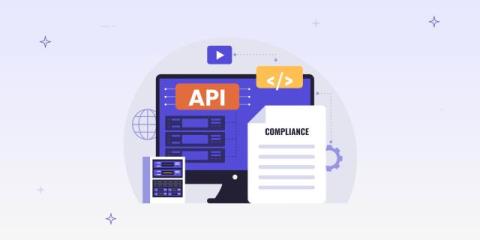
Ensuring API Testing Meets Compliance: Policies, Performance, and Proof

APIs sit at the center of modern applications. They move data between systems, power mobile apps, and enable integrations at scale. Naturally, they are also a focal point for regulators, auditors, and attackers. Most organizations today do test their APIs. Yet many still struggle during audits. Not because testing didn’t happen, but because it wasn’t consistent, governed, or provable. Compliance frameworks don’t ask whether you ran an API scan.

How Appknox reporting and analytics make security data usable across teams

Security reporting only works when the right people can use it. Appknox reporting and analytics are designed to help security leaders, AppSec teams, and developers work from the same data—without translation layers or manual fixes—so teams can meet targets for report delivery and act faster.

CI/CD Security Checklist for Engineering Managers

Modern engineering teams ship fast. Attackers move faster. CI/CD pipelines are no longer just build systems; they are a critical part of production infrastructure. A compromised pipeline can allow attackers to inject malicious code, poison dependencies, leak secrets, or deploy compromised builds directly to production. As Engineering Managers, we’re expected to maintain high delivery velocity while reducing security risks.