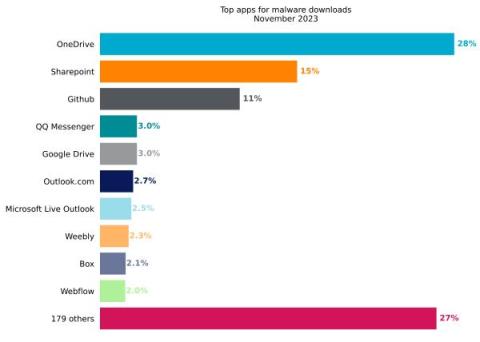
In the past month, the Netskope Threat Labs team observed a considerable increase of SharePoint usage to deliver malware caused by an attack campaign abusing Microsoft Teams and SharePoint to deliver a malware named DarkGate. DarkGate (also known as MehCrypter) is a malware that was first reported by enSilo (now Fortinet) in 2018 and has been used in multiple campaigns in the past months.
As Cybersecurity Awareness Month 2023 draws to a close, we wanted to highlight some tips to keep in mind for the rest of the year, and beyond. In case you’ve missed it, we’ve been running a series of videos on our LinkedIn page throughout the month of October highlighting tips from members of our internal security team on topics like password sharing, keeping personal identifiable information safe, and maintaining good cyber hygiene.
DarkGate Loader is a commodity malware loader with multiple features including the ability to download and execute files to memory, a Hidden Virtual Network Computing (HVNC) module, keylogging, information-stealing capabilities, and privilege escalation. Its distribution mechanism also makes use of legitimate AutoIt files to inject the malicious payload.
In August 2023, Netskope Threat Labs highlighted an increase in downloads of PDF phishing attachments in Microsoft Live Outlook, caused by a series of phishing campaigns targeting users of the email service. We took a closer look and found that these campaigns are mostly Amazon-themed scams with a few Apple and IRS-themed phishing attempts sprinkled throughout. Just like in our previously reported phishing blog posts, attackers are abusing free services in these campaigns.
In October 2023, Netskope analyzed a malicious Word document and the malware it contained, dubbed “Menorah.” The malware was attributed to an advanced persistent threat group APT34, and was reported to be distributed via spear-phishing. The malicious Office file uses dispersed and obfuscated VBA code to evade detection. The advanced persistent threat group targets users of outdated versions of Microsoft Office, since it does not attempt to bypass the mark of the web security check.