
Why Mid-Sized Cities Are Reshaping the Commercial Real Estate Map
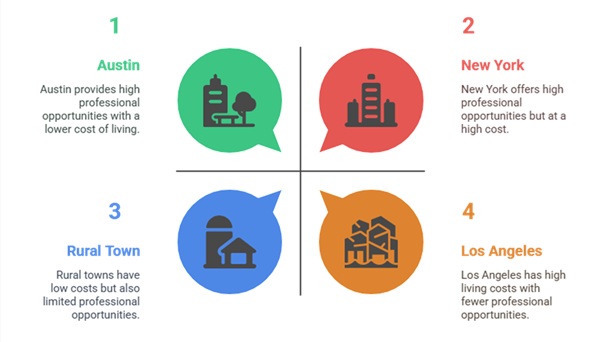
Look, I'll be straight with you - I used to be one of those guys who wouldn't touch anything outside New York or LA. Maybe some Colorado commercial real estate if I was feeling adventurous, but otherwise it was gateway cities or bust, right? That was the gospel according to every commercial real estate conference I'd ever been to.
Then 2020 happened, and everything I thought I knew got turned upside down.
My wake-up call came when my nephew graduated from college and took a remote job with a San Francisco tech company. Instead of moving to the Bay Area like everyone expected, he packed up and moved to Austin. Same salary, half the rent, actually has a social life that doesn't require a second mortgage.
That got me thinking. If smart young professionals are bailing on expensive cities, what does that mean for my business?
Turns out, it means everything.
The "Why Now?" Factors Driving the Shift
The remote work thing isn't going away, no matter what some CEOs want to believe. I've talked to dozens of companies over the past couple years, and even the ones calling people back to the office are doing it hybrid style. The days of everyone sitting in a Manhattan high-rise five days a week are over.
Here's what's really happening: people got a taste of freedom during the pandemic and decided they liked it. They realized they could have the same career without the $3,000 studio apartment and the hour-long subway commute.
My friend Sarah moved from Brooklyn to Nashville in 2021. She kept her marketing job, works from home three days a week, and when she does go into the Nashville office, it's a 15-minute drive. She bought a house - an actual house with a yard - for less than what she was paying for her one-bedroom apartment in Williamsburg.
And she's not alone. The migration numbers are staggering. People are leaving expensive coastal cities in droves, and they're not moving to the middle of nowhere. They're moving to places like Austin, Nashville, Phoenix, Charlotte - cities that offer urban amenities without urban prices.
Companies are following the talent too. It's not just satellite offices anymore. Major corporations are relocating entire divisions to these markets. Why pay Manhattan rents when you can get the same work done in Tennessee for a fraction of the cost?
Identifying the Characteristics of a Thriving Mid-Sized Market
Not every mid-sized city is the next Austin, though. I learned that lesson the hard way when I bought into a market that looked great on paper but turned out to be completely dependent on one major employer. When that company downsized, my investment went south fast.
Now I'm a lot more careful about where I put my money. Here's what I look for:
First, job diversity. If a city lives or dies by one industry, I'm out. I want to see tech, healthcare, manufacturing, logistics - multiple sectors that aren't all going to tank at the same time.
Second, people actually moving there. Not just thinking about it, actually doing it. I track U-Haul rental rates (seriously), look at school enrollment numbers, follow building permit data. When people are voting with their feet, that's when you know something real is happening.
Third, infrastructure investment. Cities that are serious about growth put their money where their mouth is. New highways, airport expansions, utility upgrades - that's how you know local government believes in the future.
And finally, the business climate has to make sense. If it takes six months to get a permit or the tax structure is hostile to business, companies will go somewhere else. There's a reason Texas cities are eating California's lunch right now.
Opportunities Across Asset Classes in Mid-Sized Cities
The beautiful thing about this trend is it's not just affecting one type of property. There are opportunities everywhere if you know where to look.
Apartments are the obvious play. All these people moving to mid-sized cities need somewhere to live. I've seen rental growth rates in some of these markets that would make your head spin. Built a complex in Charlotte last year, had a waiting list before we even finished construction.
Industrial is probably even hotter. E-commerce changed everything about how goods move around the country. Instead of shipping everything from one massive warehouse in California, companies want regional distribution centers that can get packages to customers faster. Mid-sized cities with good highway access are perfect for this.
Retail is trickier. You can't just build a mall and hope for the best anymore. But neighborhood shopping centers, grocery-anchored strips in growing residential areas, those can work. The key is thinking local, not trying to replicate what works in Manhattan.
Office space is where you have to be really careful. The whole work-from-home thing has changed the game completely. But there's still demand for the right kind of space - medical offices, flex space that can handle both office and light industrial uses, smaller footprints for companies that need some office presence but not a whole floor.
Navigating the Challenges and Nuances
Let me be honest - investing in mid-sized cities isn't all sunshine and rainbows. There are real challenges you need to be aware of.
The biggest one is infrastructure. When a city grows too fast, sometimes the roads, utilities, and services can't keep up. I've seen traffic in Austin go from manageable to nightmare in just a few years. Water rights are becoming a real issue in some of the Sun Belt cities.
Data is another challenge. In New York, I can get detailed information on every building within a five-block radius. In smaller markets, you're often flying blind. This is where having good local relationships becomes critical.
Financing can be more complicated too. Some lenders just don't understand secondary markets. They'll approve a $50 million deal in Chicago without thinking twice, but get nervous about a $5 million deal in Boise.
Case Studies/Examples
Let me tell you about a couple deals that show you what's possible.
Three years ago, I bought industrial land outside Phoenix that everyone said I was crazy to touch. "Too far from everything," they said. "Middle of nowhere," they said.
Today, that land is surrounded by Amazon fulfillment centers, FedEx hubs, and manufacturing facilities that relocated from California. I could sell it tomorrow for four times what I paid.
The key was understanding that Phoenix sits right at the intersection of major shipping routes to California, Texas, and the rest of the Southwest. The logistics demand was inevitable once you understood the geography.
Another one: bought a tired apartment complex in the Nashville suburbs that had been struggling for years. The numbers were mediocre, but I could see what was happening. Healthcare jobs were growing, the airport was expanding, people were moving there from all over.
We renovated the units, got better management in place, and repositioned it for the incoming demographic. Occupancy went from 70% to 95%, rents went up 35% in two years. Best return on investment I've ever had.
Your Expert Guidance: How to Approach Mid-Sized Market Investment
After making plenty of mistakes and having some decent successes, here's what I've learned about investing in these markets:
You have to actually go there. Not just for a day, but spend real time. Drive around different neighborhoods, eat at local restaurants, talk to people. The best insights come from conversations with locals, not from reading reports.
Build relationships before you need them. Find local brokers, contractors, property managers who know the market inside and out. These people are worth their weight in gold, and you can't develop these relationships over email.
Don't try to impose your big-city assumptions on smaller markets. What works in New York might not work in Nashville. Each market has its own personality, its own demand drivers, its own quirks.
Think long-term. These markets usually give you steady, consistent returns rather than explosive growth. I'm looking for 8-10% annual returns over 5-7 years, not trying to double my money in 18 months.
Conclusion
The commercial real estate world is changing, whether we like it or not. The old playbook of just buying in gateway cities and waiting for appreciation isn't working like it used to.
Mid-sized cities aren't just cheaper alternatives to major markets anymore. They're becoming major markets in their own right. The fundamentals are strong - job growth, population growth, infrastructure investment, business-friendly policies.
The window for getting in at reasonable prices is still open, but it won't be forever. Five years from now, everyone will be chasing deals in these markets, and the easy money will be gone.
I've shifted most of my portfolio toward these markets over the past few years, and it's been the best decision I've made in 20 years in this business. The returns are better, the fundamentals are stronger, and honestly, it's just more interesting than fighting over the same overpriced buildings in Manhattan.
The question isn't whether this trend is real - it's whether you're going to be part of it or watch it happen from the sidelines.