
Why Do High-End Security Cameras Fail Unexpectedly?
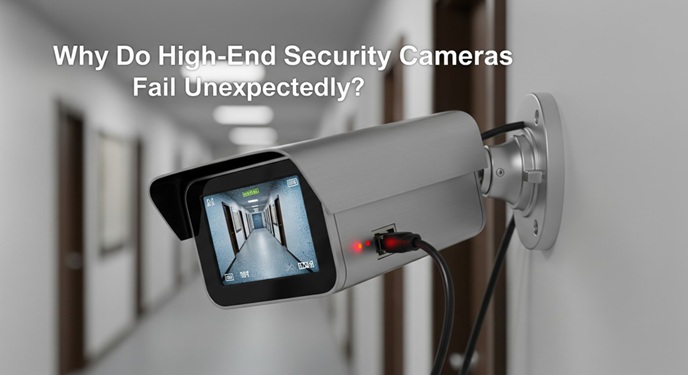
You would imagine that with high dollar spending on a security camera system, it would perform perfectly, right? However, so many of these businesses and house owners have seen their surveillance systems, which are being used to monitor their premises, go black at the worst possible time. It is annoying, expensive, and quite unacceptable when you have spent thousands of dollars in what would have been considered a sure safety net.
Power Problems Are the Unspoken Murderer
This is one of the facts that the majority of people are not aware of: expensive cameras require clean and regular power. In contrast to their budget equivalents that may be able to withstand the changes in voltage, professional systems with high-tech features such as PTZ controls, infrared or AI processing require constant electricity to work effectively.
Power outages, brownouts or power deficiency cause domino effects. The camera may seem to operate well over weeks after which it will crash during a storm or when it is being overworked by other equipment. I have even seen installations with the cameras at $800 apiece but the installer saved 20 dollars a unit by using inexpensive power adapters. Guess what failed first?
Another complexity that is introduced is POE (Power over Ethernet) systems. The cameras that are more remote to the network switch may have intermittent failures in case your network switch is not able to provide enough wattage along the length of the cable run. This is particularly troublesome in longer cable paths in which voltage drop is a significant issue. Using an online cable size calculator can help you determine whether your cable gauge is appropriate for the distance and power requirements, potentially preventing power-related failures before they happen.
Environmental Factors That Manufacturers Won't Emphasize
Expensive cameras are provided with incredible IP ratings yet those figures do not tell the whole story. An IP66 rated camera is expected to be able to withstand rain and dust without problem—in theory. Practically, I have observed that high-end outdoor cameras do not work due to:
- Condensation deposits: Changes in temperature cause moisture to cycle in the housing slowly corroding the connections and fogging the lenses. This occurs despite closed units and especially in humid weather or when cameras experience high day and night temperature variations.
- UV degradation: The tough polycarbonate dome yellows and gets brittle after several years of direct sunlight exposure undermining image quality and weatherproofing.
- Pest intrusion: IR LEDs are favorite web builders with spiders and they will web directly above sensors. This is not a joke—it is a fairly frequent problem, which can lead to false motion notices or seriously ruin the image.
The Wiring Nightmare That No One Is Talking About
This is where it is interesting. Numerous breakages of cameras are related to ineffective cable handling and connections and not to the camera itself. Attention to detail is looked at in professional installations that may otherwise be ignored.
Outside Ethernet cables should be shielded and grounded or they serve as lightning antennas. Near-strikes can also cause voltage sufficient to fry the costly cameras. Correspondingly, cables packed close to AC power lines collect electric noise which induces odd glitches such as frozen video, dropped connections, or broken data streams.
The connectors matter too. RJ45 crimped connections used outside eventually corrode and form intermittent connections that are frustratingly hard to troubleshoot. For critical installations or complex setups requiring multiple cable types, a custom wiring harness designed specifically for your surveillance system can eliminate many of these failure points by ensuring proper shielding, strain relief, and environmental protection from the start.
Firmware and Software Gremlins
High-end cameras are very advanced with features which implies advanced software. And advanced software implies additional possibilities of something going wrong.
The manufacturers release new firmware updates regularly with bugs fixed, security holes patched, or new features. There are occasions when such updates result in new problems. I have also experienced instances where a camera had served well in six months, had an automatic update, and thereafter, it began rebooting itself without being prompted.
Then there is compatibility hell. After updating your camera, your high-end camera may not work well with some NVR systems, network settings, and VMS programs. Whatever was successful yesterday fails you today, and you have to do some troubleshooting rather than monitoring.
Circuit Board Failures in Harsh Conditions
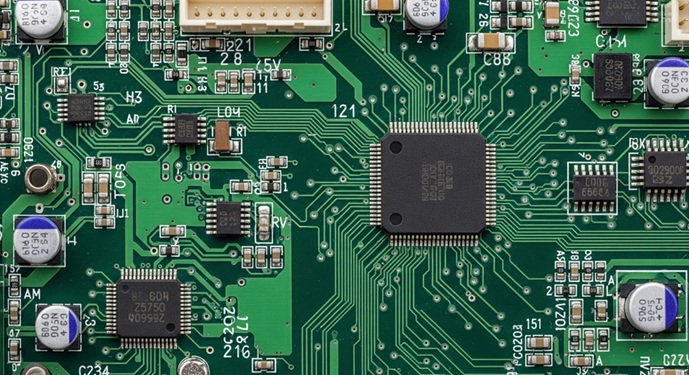
Each high end camera contains a circuit board full of components that handle video processing, networking and act as control over motorized features. These boards are not only marvelous in terms of engineering but are also frail.
Heat is the enemy. Incident light on the cameras and areas with low ventilation lead to deterioration of the components. Capacitors run dry, solder joints rupture due to thermal cycling, processors slowdown or close down to avoid overheating. Quality electronics PCB assembly during manufacturing helps, but even well-built boards have limits in extreme environments.
While most modern consumer digital cameras are quite handy, some of these functional and compact devices frequently prove unreliable. The engineering principles may have various requirements such as an image stabilizer, zoom lens, high-quality display, viewfinder, and a chassis structure. Note that quality mobile-electronic parts usually account for most systemic camera failures.
The Network Infrastructure Can Not Keep Pace
Massive data streams are produced by HD cameras. A 4K camera is capable of continuous push of 20-25 Mbps. Multiply that by a dozen cameras and you are blowing out network infrastructure that was not intended to support the load.
Switches begin to drop packets, routers are unable to cope with the traffic and cameras suddenly disconnect by chance. The cameras are not the problem—they are simply too much of a load on your net. This tends to emerge weeks or months post-installation with more recording schedules projected or additional cameras going online.
The bandwidth is not the only issue. Instability in the network caused by network loops, IP conflicts, and VLAN misconfigurations is the cause of failures in cameras. Such problems do not exist until they become devastating.
The Human Element
And the last one is installation quality. I have observed extremely high priced cameras being mounted by individuals who had no idea of how to mount it correctly, shield it against weather, and how to handle the cables.
- The mounted cameras are not supported properly and thus they end up being slender to an extent of water seeping into connections.
- Bent too tight cables at connectors break the copper conductors.
- Another shortcut that can be seen is not using surge protection because of saving some dollars, and the difficulties can be expected to occur on the first major electrical storm.
Moving Forward
Professional security cameras are expensive safety and monitoring investments. When they break down, it is not necessarily the quality of the camera which has failed but is more likely to be power delivery, environmental conditions, installation habits, or network architecture.
Investigate the whole system that supports those cameras before laying the blame on the hardware. Our premium cameras will be operational as planned, with proper planning, good installation, sufficient power and network infrastructure, and frequent maintenance. Keep in mind that a $2,000 camera with a $5 power supply is only a costly piece of paper awaiting to be broken.