
Why 3D Printing Services Are Revolutionizing Modern Manufacturing
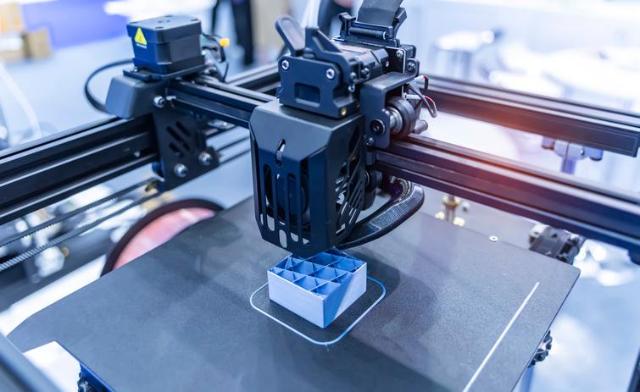
Manufacturing’s been under serious pressure lately. Between delays in the supply chain and the growing demand for eco-friendly processes, it’s a tough environment. On top of that, customers now want faster production and more personalized options. The old-school manufacturing systems just aren’t cutting it anymore; they weren’t built for the kind of flexibility and speed today’s market demands.
The answer lies in a technology that's reshaping how we think about making things. According to recent market analysis, the global 3D printing market was valued at $23.7 billion in 2023 and is projected to rise at a compound annual growth rate of 20.5% between 2022 and 2030.
How 3D Printing is Transforming Production Methods
Additive manufacturing, facilitated by 3d printing services reduces waste, enables intricate designs, and offers faster development, lower costs, and greater flexibility compared to traditional methods. This innovation is revolutionizing industries, making production more efficient and sustainable.
Breaking Down Traditional Barriers
Traditional manufacturing often requires expensive tooling, lengthy setup times, and minimum order quantities that can make small-batch production economically unfeasible. Custom 3D printing services eliminate these constraints, allowing manufacturers to produce single units as cost-effectively as hundreds.
The ability to create complex geometries that would be impossible through conventional methods opens up new design possibilities. Engineers can now think beyond the limitations of traditional machining, making parts with internal channels, intricate lattice structures, and organic shapes that optimize performance.
Speed and Flexibility Advantages
The most striking benefit is speed. What once took weeks in traditional manufacturing can now happen in days or even hours. This acceleration doesn't just affect production; it transforms the entire product development cycle.
The technology enables rapid iteration and testing, allowing designers to identify and fix issues early in the development process. This reduces costly revisions and gets products to market faster than ever before.
The Rise of On-Demand Manufacturing
The concept of producing items only when needed represents a fundamental shift in manufacturing philosophy. This approach challenges the traditional model of mass production and inventory stockpiling.
On-demand 3D printing enables manufacturers to respond quickly to market changes without the burden of excess inventory. Companies can produce parts as needed, reducing warehousing costs and minimizing waste from obsolete products.
Eliminating Inventory Challenges
Traditional manufacturing often requires companies to predict demand months in advance, leading to either stockouts or excess inventory. Both scenarios incur costs and introduce inefficiencies throughout the supply chain.
With on-demand production, manufacturers can maintain minimal inventory while still meeting customer demands. This shift particularly benefits industries with unpredictable demand patterns or products with short lifecycles.
Localized Production Networks
The technology enables distributed manufacturing networks where products are produced close to their point of consumption. This reduces transportation costs and carbon footprints while providing faster delivery times.
Regional production facilities can serve local markets more effectively, customizing products to meet specific regional preferences or requirements. This localization strategy provides competitive advantages in today's global marketplace.
Industrial Applications Driving Innovation
Industrial 3D printing has moved far beyond simple prototyping to become a legitimate production technology. Industries from aerospace to healthcare are integrating additive manufacturing into their core operations.
The aerospace sector leads adoption, using 3D printing to produce lightweight components that would be impossible to manufacture conventionally. These parts often combine multiple traditional components into a single, optimized structure.
Manufacturing Complex Components
The automotive industry uses 3D printing for both tooling and end-use parts. Custom jigs, fixtures, and low-volume production parts can be produced on demand, reducing lead times and inventory requirements.
Medical device manufacturers have embraced the technology for producing patient-specific implants and surgical guides. The ability to customize each device to individual patient anatomy improves outcomes and patient satisfaction.
Reducing Material Waste
Traditional manufacturing processes often generate significant material waste. Some estimates suggest that up to 90% of raw materials can be wasted in conventional machining operations.
3D printing uses only the material needed for the final product, dramatically reducing waste. This efficiency translates to cost savings and environmental benefits that appeal to sustainability-conscious manufacturers.
Prototyping Revolution
3D printing for prototyping has transformed product development cycles across industries. The ability to quickly create physical models from digital designs enables faster iteration and better decision-making.
Traditional prototyping often involved expensive tooling or outsourcing to specialized shops, creating bottlenecks in the development process. Modern additive manufacturing eliminates these constraints.
Accelerating Development Cycles
Design teams can now produce multiple iterations of a product in the same time it previously took to create a single prototype. This acceleration enables more thorough testing and refinement before final production.
The ability to test form, fit, and function early in the development process reduces costly revisions later. Problems identified during prototyping are much less expensive to fix than those discovered during production.
Enabling Design Innovation
When prototyping costs are low and turnaround times are short, designers feel more freedom to experiment with unconventional approaches. This creative freedom often leads to breakthrough innovations.
The technology enables designers to create and test concepts that would be too expensive or time-consuming to prototype using traditional methods. This expanded design space drives innovation across multiple industries.
Professional Services Landscape
Professional 3D printing services bridge traditional manufacturing and advanced technologies, offering specialized expertise in materials, processes, and applications for complex, mission-critical manufacturing needs.
Specialized Expertise and Equipment
Professional service providers invest in multiple types of 3D printing technologies, from basic FDM printers to advanced metal systems. This diversity allows them to match the right technology to each application.
The knowledge and experience these professionals bring can significantly reduce the learning curve for manufacturers new to additive manufacturing. They help avoid common pitfalls and optimize designs for 3D printing success.
Cost-Effective Access to Technology
For many manufacturers, outsourcing 3D printing makes more financial sense than purchasing equipment. Professional services provide access to expensive industrial systems without the capital investment.
This model allows companies to experiment with 3D printing and prove its value before making major equipment investments. It also provides flexibility to scale production up or down based on demand.
Traditional vs 3D Printing
|
Aspect |
Traditional Manufacturing |
3D Printing |
|
Setup Time |
Weeks to months |
Hours to days |
|
Material Waste |
30-90% waste is typical |
Less than 5% waste |
|
Minimum Order Quantity |
High (hundreds of thousands) |
One unit |
|
Design Complexity |
Limited by tooling |
Nearly unlimited |
|
Customization Cost |
Very high |
Minimal additional cost |
|
Lead Time |
Long (weeks-months) |
Short (hours-days) |
|
Inventory Requirements |
High |
Minimal |
|
Tooling Costs |
$10,000-$100,000+ |
None |
The Future of Manufacturing is Here
The revolution in manufacturing is here. Companies adopting 3D printing gain a competitive edge through improved materials, faster printers, and better software. Early adopters gain valuable experience and expertise, positioning themselves for long-term success. 3D printing also fosters sustainability, efficiency, and responsiveness, offering solutions that traditional methods can’t match.
As the demand for speed, customization, and environmental responsibility increases, this technology is transforming industries and providing advantages that will only grow more significant over time.
FAQs on 3D Printing in Manufacturing
1. Why do you think 3D printing is becoming more popular in various industries?
Raw materials for 3D printing will become more uniform and of a higher, more reliable quality. These materials will be generally more accessible and affordable, and improvements in materials formulations and processing techniques will make them more user-friendly.
2. What is the revolutionary impact of 3D printing on production?
Traditional manufacturing processes often generate excessive waste due to molding and cutting techniques. With 3D printing, manufacturers can minimize material waste by only using the exact amount of material required for production. This results in reduced environmental impact and more eco-friendly practices.
3. How does 3D printing compare to traditional manufacturing in terms of cost?
While initial per-unit costs might be higher for large volumes, 3D printing eliminates tooling costs, reduces waste, and enables on-demand production. For low-volume or customized products, it's often significantly more cost-effective than traditional methods.