
VPNs and Zero-Trust Architecture: How They Fit Together
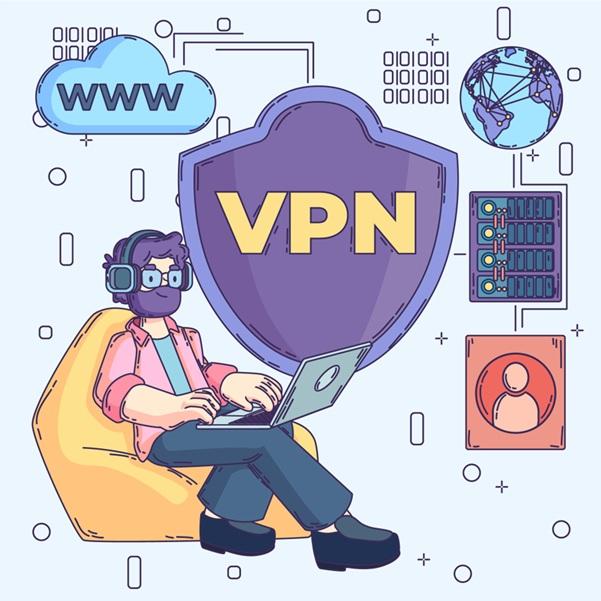
Designed by Freepik
The cybersecurity landscape has shifted dramatically in recent years. Remote work, cloud adoption, and increasingly complex digital ecosystems have expanded the attack surface for businesses. Traditional perimeter defenses no longer provide sufficient protection. In response, organizations are turning to two powerful tools: Virtual Private Networks (VPNs) and Zero-Trust Architecture (ZTA). Though distinct in purpose, they can complement one another in meaningful ways.
VPNs in the Modern Enterprise
A Virtual Private Network establishes an encrypted tunnel between the user and the network. This prevents attackers from intercepting or tampering with sensitive data in transit. For decades, VPNs have been the go-to solution for enabling employees to connect to corporate resources safely from remote locations.
VPNs are especially valuable when workers rely on untrusted networks, such as public Wi-Fi. By encrypting all traffic, a VPN prevents data leakage and safeguards employee privacy. In distributed workplaces, VPNs continue to serve as a foundational security layer.
That said, VPNs were built for an era of centralized networks. With the rise of cloud services and mobile-first workflows, VPNs are often stretched beyond their original design.
Shortcomings of VPN-Only Models
Despite their strengths, VPNs have limitations. Once authenticated, users often receive broad network access. If credentials are stolen, attackers can exploit this to move laterally and compromise critical systems.
Performance issues also arise. Centralized VPN gateways may bottleneck traffic, especially when employees access cloud-based applications. This not only slows productivity but can also create frustration among users.
Moreover, VPNs do not enforce continuous verification. After login, trust is assumed, leaving sessions vulnerable to hijacking. This gap in protection illustrates why many businesses are moving toward more adaptive security models.
Zero-Trust Architecture Explained
Zero-Trust Architecture introduces a different mindset: never trust, always verify. Every request for access is scrutinized, regardless of whether it originates from inside or outside the network. Trust is continuously reassessed, and access is only granted if strict conditions are met.
ZTA relies on identity-centric controls. Decisions are made by evaluating user identity, device posture, location, and context. Even familiar users and devices must pass ongoing checks to maintain access.
Least-privilege access is another key principle. Instead of blanket permissions, users only receive the minimum rights necessary to complete their tasks. This approach dramatically reduces the potential impact of compromised accounts.
Complementary Strengths of VPNs and Zero-Trust
While VPNs and Zero-Trust are often viewed as alternatives, they can reinforce each other. VPNs secure the communication channel, while Zero-Trust enforces dynamic access controls.
For example, a remote worker might first connect through a VPN, ensuring encrypted transport. Once inside, Zero-Trust policies evaluate the user’s identity, verify device compliance, and limit access to only the applications required. This combination delivers layered security.
Organizations that adopt both approaches benefit from reliable encryption alongside continuous, context-aware monitoring. It’s a defense-in-depth model well-suited to today’s decentralized environments.
Practical Deployment Considerations
To successfully merge VPNs and Zero-Trust, organizations must take stock of their assets and access requirements. Identifying who needs to connect, and to which resources, is the first step.
Robust identity and access management (IAM) is essential. Multi-factor authentication (MFA) should be mandatory, as identity forms the new perimeter in Zero-Trust models. Combining strong identity controls with encrypted tunnels delivers powerful protection.
Segmentation is equally critical. VPN connections should not grant blanket access. Instead, Zero-Trust principles can restrict users to specific services or applications, minimizing lateral movement.
Visibility and monitoring should not be overlooked. Behavioral analytics and logging help detect anomalies, refine policies, and strengthen security over time.
Real-World Use Cases
VPNs and Zero-Trust appear in many real-world scenarios. A company with a mobile workforce may deploy a VPN to safeguard data in transit. At the same time, Zero-Trust rules enforce least-privilege access, ensuring that only authorized devices can connect to sensitive databases.
In such settings, organizations often evaluate the best secure VPN services from Spaceship or similar providers to protect remote connections. Adding Zero-Trust controls on top of these VPNs enhances assurance that access remains tightly managed, even if credentials are compromised.
Another example is platform-specific deployment. Many enterprises rely heavily on Microsoft environments, making it vital to provide a fast and reliable VPN for Windows users. Coupled with Zero-Trust policies, this ensures employees experience both performance and security without compromise.
Challenges Along the Way
Implementing Zero-Trust with VPNs can be complex. Legacy applications may not support the granular controls that Zero-Trust requires. Upgrading or modernizing these systems can take time and investment.
Employee experience is another hurdle. Users may perceive frequent verification as a barrier. Striking the right balance between security and usability requires thoughtful design, such as adaptive authentication that reduces friction for trusted behavior.
Costs must also be considered. Shifting to a hybrid model demands resources for IAM, endpoint security, and advanced monitoring tools. Incremental rollout strategies can help manage both budget and complexity.
Looking Ahead
The evolution of enterprise security suggests that Zero-Trust will take on a central role. Direct application access, cloud-native security, and identity-driven controls are quickly becoming the norm.
However, VPNs will continue to have a place. Encrypted tunnels remain critical in scenarios such as global connectivity, compliance-heavy industries, and high-risk networks. Rather than being replaced, VPNs will likely evolve and integrate with Zero-Trust frameworks.
The foreseeable future is one of coexistence, where VPNs provide secure communication, and Zero-Trust ensures continuous, context-aware protection.
Final Thoughts
VPNs and Zero-Trust Architecture are not competitors—they are partners in modern cybersecurity. VPNs deliver encrypted connections, while Zero-Trust enforces least-privilege and continuous validation. Together, they create an adaptive security posture that is both resilient and flexible. Organizations that adopt this layered approach will be better equipped to face the challenges of an ever-changing digital world.