
Using VPNs and Secure Tunnels to Protect Cloud Network Traffic
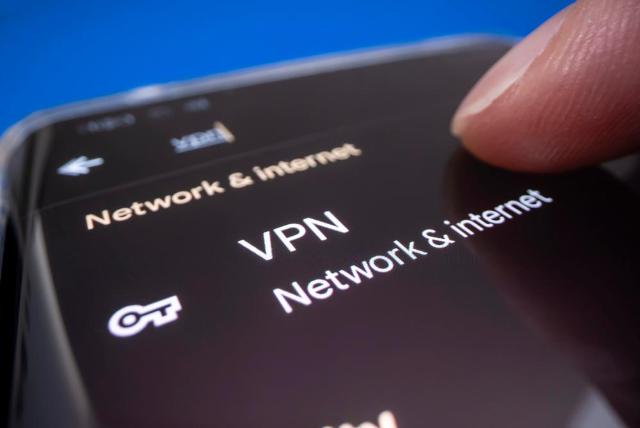
Image Source: depositphotos.com
The fast rise of cloud adoption has reshaped enterprise IT, providing an unprecedented scale, flexibility and cost efficiency. But with this move comes a set of new security hurdles to maintain the control and guarantee the privacy of information that is exchanged across the network. The growing reliance on cloud by organizations for mission-critical applications and data has made the requirement of strong cloud network security a bit more urgent. Adding Security, enforcing policy and preventing data breaches have to start with protecting the flows of information between Users –> applications —> cloud services. In this post, we take an in-depth look at how cloud network traffic can be secured through Virtual Private Networks and, more importantly, secure tunnels, while supplying practical insights to their usefulness and implementation right here and right now.
Rapid Changes in Cloud Network Security
Network security that leads with a traditional model designed to protect static on-prem data centres around a distinct boundary is not built for cloud, which, due to its nature of being distributed and dynamic in every way, doesn't precisely have one! In the cloud, the "network" is spread across multiple virtual private clouds (VPCs), regions, and even different clouds in many cases, spanning connections with on-premise infrastructure through VPNs and routing-as-a-service to connect from users' devices to application workloads.
This results in a very diffuse attack landscape as data crosses the public internet and is thereby susceptible to compromise, alteration, or denial-of-service. The cloud's shared responsibility model adds to the complexity, as cloud providers are responsible for securing the underlying infrastructure ("security of the cloud") while users must secure their data and applications inside that infrastructure ("security in the cloud"). This requires us to preemptively encrypt and segment the network traffic layer, and enables secure tunnelling technologies, a critical hallmark of a complete cloud networking security solution.
Understanding VPNs in Cloud Environments
VPNs have a long lineage within traditional IT, serving as the bedrock secure remote access and site-to-site connectivity tool that simply bleeds over to the cloud without question, providing a basic layer of protection for data in motion. In essence, a VPN creates an encrypted "tunnel" through an inadequately secured network (for instance, the public internet), guaranteeing that data sent along this tunnel cannot be read or altered.
In this section, we will talk about the 2 main types of VPNs that are essential for your cloud network security. A site-to-site VPN (often using the IPsec protocol suite) connects entire networks, e.g., an on-premise data centre or a cloud VPC to another cloud VPC or even two different cloud VPCs. It offers strong user authentication, 2-factor authentication for the companies and also provides data integrity via encryption between the client and server. This kind of service extension is to more effectively secure internal network services to remote users or systems within the Internal Network from the External network. Cloud vendors have eased this process, providing managed IPsec VPN services that natively work with their networking constructs. These VPNs, in turn, allow remote users or devices to securely connect to a cloud network as client-to-site VPNs (also known as remote access VPN).
Usually, they are software-based and use standard web protocols such as SSL/TLS, hence easy to deploy and get on multiple devices. Remote workers must safely access their cloud-based applications and data, so the VPN secures these end-user connections to the cloud by encrypting and authenticating them -- another element of shoring up network security for a decentralized workforce. These VPNs wrap data packets in an encrypted tunnel, which does not hide the fact that communication is taking place but ensures privacy and integrity of the transmitted content and also offers some form of authentication to verify the identity of communicating parties and restrict access to unauthorized users.
Utilizing Secure Tunnels for Inter-Cloud and Hybrid Connectivity
Beyond just VPNs: while we traditionally use "VPN" to denote the creation of secure transport across the internet, "secure tunnels" really covers a wider category of technologies — something that becomes critically relevant as you explore more complex multi-cloud, hybrid cloud and software-defined networking architectures. The tunnels take the concepts of encryption and secure routing, and extend them to developing large-scale private overlays on a vast network infrastructure.
By far the most common use case is to create Generic Routing Encapsulation tunnels, often paired with IPsec for encryption -- think GRE over IPsec. A GRE tunnel is often used when encapsulating a variety of network layer protocols between two sites across an IP network using the GRE protocol. Even when coupled with IPsec, this can help create a protected, routed route allowed to make versatile node-to-node configurations linking varying cloud areas or sectors across separate cloud companies (or even could be applied as a traffic segment within a specific big-scale cloud enterprise), over just an immediate IPsec VPN alone is achievable. This is especially valuable for defining intricate routing policies and strong network micro-segmentation among distributed cloud resources.
Similarly, secure tunnelling is central to the growing adoption of Software-Defined Wide Area Networks. SD-WAN solutions create an intelligent, secure overlay network that uses any underlying transport services (e.g., broadband, MPLS, 4G/5G) and simplifies the management of the physical network by abstracting its many complexities. These use encrypted tunnels, usually based on IPsec or TLS, to link branch offices, remote users and even cloud resources — dynamically directing traffic flows according to application performance needs and security policies. This approach significantly enhances cloud network security by centralizing policy management, enabling granular traffic steering, and providing end-to-end encryption across diverse network paths, making it a powerful tool for hybrid and multi-cloud strategies and building a resilient, high-performing, and secure cloud backbone.
Best Practices & Challenges of Secure Tunnels
To realize the security benefits of VPNs and secure tunnels in a cloud environment, you must plan their effective implementation using best practices that address these challenges. Designing a well-architected security tunnel strategy is the practice of your network topology and identifying all on-premise-to-on-premises, cloud-VPC-to-cloud endpoint, user access to remote locations and inter-cloud legs. Because of the pitfalls, when designing VPN access for cloud workloads or on-premises systems to voterate endpoints such as EC2 instances relative to punters, routing must be carefully configured so that traffic rides in secure tunnels (non-cleartext), compatible network segments within the cloud environment can provide virtual firewalls and security groups should help to segment paths into your glass bubble as well if an endpoint is popped.
As part of Security best practices, the organization should ensure that the highest levels of encryption are being used (e.g. AES-256), and strong authentication methods secure remote access VPN communications (e.g. a strong preshared key or certificates, or multi-factor authentication in place) as well as regular re-keying for protecting data at transmission. Access to tunnel endpoints needs a principle of least privilege, thus authorized personnel or services can only establish/manage tunnels which are integrated with robust identity and access management solutions. Monitoring for abnormal tunnel status, traffic patterns, and restricted... Complete logging of all tunnel activity for audit purposes, incident response,Additionally, by keeping all VPNs and tunnelling tools, devices, and cloud-managed services current with the latest security patches, known vulnerabilities can be successfully contained while regular VPN/tunnel audits for configurations, access policies and logs allow ongoing due diligence of continued compliance as well as identification of any misconfigurations.
Though secure tunnels are excellent, implementation is not always a cake walk. The main challenge is the complexity; arranging and maintaining complex routing and security policies over the hybrid and multi-cloud environments may be burdensome as they often demand networking knowledge and experience in operations. The additional consideration of performance overhead because encryption and encapsulation (overhead) adds latency as well as eats into available processing power, which on high-bandwidth and/or low-latency sensitive workloads can lead to applications not performing well unless proper capacity planning is done, and the network links are connected to high-performance cloud VPN gateways. The cost is also a factor, since cloud provider VPN services charge for data transfer and hourly rates, or complex SD-WAN solutions (or dedicated VPN appliances) represent a CapEx.
Finally, using cloud provider-specific VPN and tunnelling will breed dependencies and potentially cause vendor lock-in, making the multi-cloud portability even more difficult in some cases. Systematic adherence to mitigating these and similar pitfalls results in VPNs and secure tunnels playing a meaningful role as a strong foundation for the cloud network security posture, while accounting for good operational efficiency.
Real-World Applications and Use Cases
In both of these cloud adoption scenarios and more, VPNs and secure tunnels have very diverse but critical practical applications. For example, one of the most common use cases for VXLAN is connecting on-premise data centres to cloud VPCs and deploying hybrid cloud architectures that extend their internal networks to the cloud, enabling applications and users in both environments to communicate securely. E.g., a company may have its web servers hosted in the cloud while maintaining its sensitive database on-premise — ensuring that all traffic flows over an IPsec VPN tunnel. Finally, secure tunnels are another critical requirement for securing traffic between distinct cloud regions or providers to establish encrypted and high-performance links across geographically separated cloud resources for organizations in multi-cloud regions that need data privacy and integrity.
Client-to-site VPN (often SSL/TLS-based) allows remote working employees to work from any location, securely accessing cloud-hosted applications, virtual desktops and data – without corporate data being leaked over untrusted networks. Additionally, VPNs and secure tunnels are an essential part of compliance with various regulatory frameworks (e.g., HIPAA, GDPR, PCI DSS), as many require the encryption of transmitted data, and these technologies offer much-needed cryptographic mechanisms to IDN.
In a large cloud environment, secure tunnels can be utilized to isolate and segment workloads, thereby creating virtual network segments for different departments, projects, or application tiers, enabling higher levels of Security on the remote access plane by blocking lateral spread of threats across the network and enforcing explicit control points between segments. 7 Use Cases of VPNs and Secure Tunnels in a Cloud Networking Strategy. Highlighted by these use cases, the necessity to build secure tunnels with VPN is pivotal for companies that are tapping into what the cloud has to offer as much as they possibly can, but still want strong controls around Security.
Advanced Tunnelling Technologies to Secure Cloud Networks in the Future
Cloud Network Security has been evolving rapidly, but secure tunnelling continues to play an important role as new paradigms emerge. This is where concepts such as Secure Access Service Edge and Zero Trust Network Access come in to provide the next generation of network security while still building off of the fundamental principles behind secure tunnelling. SASE commoditizes networking and security capabilities into a single, cloud-native service model that brings together SD-WAN with other complementary elements of the enterprise edge, including CASB, secure web gateways (SWG), and zero-trust network access. A SASE model directs user and device traffic to a cloud edge, which establishes secure tunnels with the user and the application, whether it is in the cloud or on-premises. Secure tunnelling & encryption. User location and application hosting are irrelevant: the format of this method is plain, that is, all traffic, even though it hops between data centres or traverses over hundreds of kilometres, must go through a central site for applying consistent security policies.
Zero Trust Network Access works on the concept of "never trust, always verify" for filtering and allowing access to applications. Instead of allowing broad network access through a more traditional VPN, ZTNA creates encrypted micro-tunnels for each individual application that a user needs to connect with. This delivers a reduced attack surface where users have access to the exact level of resources they need on a per-session/user basis, validated as well as authorized.
However, ZTNA solutions, despite being very different from traditional VPNs, mostly use the tunnelling methodology for carrying traffic on secure and direct connections between a user and an app on a one-to-one communication path that bypasses the corporate network. As cloud environments mature and distributed workforces become the rule, these next-gen Tunnels will be as indispensable to your organization's success as agile development and scalability are today — continuously evolving to keep you steps ahead of fast-changing threats in cloud network security.
Conclusion
In an age where cloud-first strategies are dominating, safeguarding the network traffic becomes a top priority for any organization. VPNs and secure tunnels are the tools of choice, allowing you to exert that encryption, authentication, and secure pathways required to keep your sensitive data ecosystem safe as it crosses back and forth over the public internet through multiple cloud infrastructures. Site-to-site VPNs that traditionally extended on-premise networks to more advanced SD-WAN overlays and newer architectures of SASE, ZTNA — these tunnelling technologies are crucial for setting in place a defence-in-depth cloud network security strategy.
Organizations can take advantage of this transformative change to deliver faster innovation, using the best security practices, all while ensuring the critical network communications that are key to their confidentiality and integrity. Continuous usage of these powerful tools becomes part of the strategic investment necessary for ensuring future secure and operational continuity in any cloud-enabled enterprise.