
Routing Context: The Missing Piece In Network Incident Response
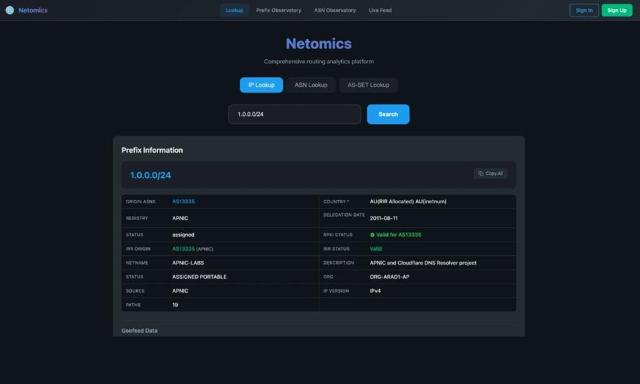
Ask anyone who has run an incident bridge during a routing event, and they will describe the same scramble. Traffic is going somewhere it should not, alerts are firing, and the team is trying to answer a deceptively simple question: is this announcement legitimate, and if not, whose is it? The tools to answer exist, but they are scattered, and the minutes spent stitching them together are minutes traffic keeps flowing the wrong way.
The problem is rarely a lack of data. It is a lack of context, delivered fast enough to act on. This piece looks at why routing context is so hard to assemble during an incident, and how consolidating it changes response.
Why routing events are hard to triage
BGP was built on trust between networks, and that design still shapes how incidents unfold. When an autonomous system announces a prefix, its neighbors have historically accepted the claim. So when something goes wrong, the on-call engineer is not handed a clean alert that says "hijack." They are handed a symptom, and they have to reconstruct the cause.
Doing that reconstruction means answering several questions at once, each from a different source:
- Who is originating this prefix right now?
- Is that origin authorized, from RPKI validation?
- Who actually holds the address space, from IRR, WHOIS and RIR records?
- Has this prefix ever been originated from this AS before, from routing history?
- Is more than one AS originating it at the moment, a MOAS event worth flagging?
Individually, each answer is a lookup. Together, under time pressure, they are a tab-hopping exercise that delays the one thing that matters: deciding whether to act.
The cost of slow answers
Routing incidents are not a rare edge case, and their impact is measurable. A more specific announcement for YouTube's address space in 2008 spread worldwide and took the service down for roughly two hours. Route leaks, where an operator re-advertises routes it should have kept internal, have degraded reachability for major providers without any malicious intent at all.
The financial stakes have risen alongside the technical ones. In the Uptime Institute's 2024 outage survey, 54 percent of operators said their most recent significant outage cost more than 100,000 dollars, and one in five put it above a million. When response time is the difference between a contained event and a prolonged one, the assembly delay is not a minor inconvenience. It is part of the cost.
Consolidating context changes the response
The fix is not another data source. It is bringing the sources that already exist into one place, correlated, so the engineer sees the whole picture at once instead of building it by hand.
This is what FastNetMon designed Netomics to do. It is a c that ingests live BGP Monitoring Protocol feeds and joins them with historical routing state, ASN and prefix ownership, RIR and WHOIS data, IRR records, geofeed information, RPKI validation and ASPA status within a single operational platform. During an incident, that means a prefix shows up already annotated with who is originating it, whether that origin is valid, who owns the space, and how it has behaved historically.
Two properties make it fit the incident-response use case. It ingests BMP feeds live, so origin changes and new announcements are visible as they happen rather than on a polling delay. And it runs entirely inside the operator's infrastructure, so there are no third-party APIs, no external rate limits, and no routing data leaving the network while an investigation is underway.
FastNetMon founder Pavel Odintsov put the intent plainly: "Internet routing has become critical operational infrastructure, yet many organisations still depend on multiple external services to understand what is happening in their own networks. We built Netomics to give operators complete ownership of their routing intelligence while making it easier to troubleshoot incidents, automate workflows and improve routing security." The platform was detailed when FastNetMon announced it in introducing Netomics.
Why real time matters here
There is a second delay hiding inside routing response, and it is easy to miss. Even once an engineer knows which tools to check, many of those tools work from snapshots. A route collector that updates every few minutes will happily show you the state before an event and the state after it, but not the transition. During a fast-moving incident, that gap is exactly where the useful information lives.
Live ingestion changes that. The BGP Monitoring Protocol, which routers use to stream their routing tables to a monitoring station as changes happen, means an origin change is visible the moment it occurs rather than at the next poll. For an incident responder, watching an AS path evolve in real time is a fundamentally different experience from reconstructing it afterward from logs. You can see the event forming instead of performing an autopsy on it.
Combine that live view with the correlated context described above, and the response shifts from archaeology to observation. The engineer is no longer piecing together what must have happened. They are watching what is happening, with ownership and validation already attached to every prefix on the screen.
From reactive to briefed
The deeper change is that the same correlated data can feed automation. REST APIs and Prometheus metrics let a team wire routing signals into existing alerting, so an anomalous origin change can trigger an investigation before a human even looks. With native Model Context Protocol (MCP) support, an AI assistant can pull the prefix, its history and its validation status and hand the on-call engineer a briefed summary instead of a blank terminal.
For a SOC or NOC, that is the meaningful shift. The routing events that caused the worst outages were rarely sophisticated. They caused damage because the teams affected found out too late and spent too long working out what had happened. Consolidating routing context is how you take that time back, and keeping it on your own infrastructure is how you keep it available exactly when an incident is testing everything else. The events will keep coming. What you can change is how long it takes to understand them.