
Multi-Factor Authentication for High-Security Facilities
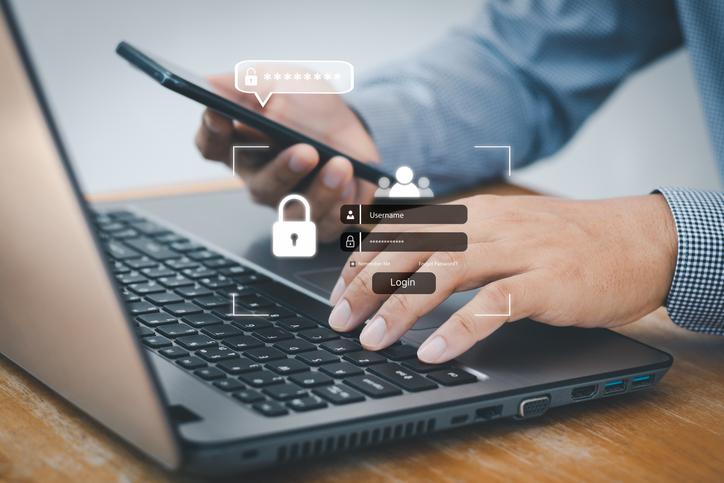
Security threats targeting critical facilities have reached a level of sophistication that most organizations simply weren't built to handle. Data centers, government buildings, pharmaceutical labs: unauthorized access to any of these environments can trigger genuinely irreversible consequences. Here's a number worth sitting with: organizations deploying multi-factor authentication are 75% less likely to be compromised than those still relying on legacy methods. One statistic. Enormous implications. The era of badges and PINs as a primary defense is over, and facilities that haven't accepted that yet are running on borrowed time.
Before jumping into solutions, though, it's worth being honest about exactly where traditional systems break down and why MFA isn't just an upgrade; it's a fundamental reset.
Why Traditional Access Systems Keep Failing High-Security Facilities
Legacy security models weren't designed for today's threat landscape. Badge cloning happens. Tailgating happens. Credential theft is disturbingly routine in environments that still lean on outdated infrastructure. One stolen card, and suddenly every door in your facility is potentially open. That's not a theoretical risk. That's Tuesday for a determined bad actor.
The Hidden Danger of Single-Factor Entry
The core assumption of PIN-only or badge-only access is that whoever holds the credential is supposed to be there. That assumption breaks the moment a card gets lost, duplicated, or handed off. And in a single-factor system, there's nothing left catching the fall.
Multi-factor authentication closes that gap by demanding identity proof across multiple independent dimensions before granting entry. It isn't merely a stronger lock; it's an entirely different way of thinking about who gets in and why.
Secure Access Control: The Architecture That Actually Holds
Legacy vulnerabilities make one thing crystal clear: you need a foundation built for modern threats. That foundation is secure access control: a framework built around verifying identity, authorizing appropriate permissions, and logging every single interaction without exception.
At the center of that architecture sits the access controller, the device connecting physical entry points to digital identity platforms. It enforces your security policies at the hardware level, communicates with authentication providers, and generates the detailed logs that your audit teams and compliance officers depend on.
Treating cyber and physical security as separate domains? That's a gap bad actors actively look for. Physical-digital convergence isn't optional anymore.
Advanced Authentication Methods That Actually Move the Needle
Understanding what secure access demands is step one. Step two is knowing which technologies make layered protection operationally realistic because not every method carries the same weight.
What Real Advanced MFA Actually Looks Like
Standard two-factor authentication uses two verification steps. Advanced authentication methods stack three or more: something you know, something you have, something you are. For a nuclear research facility or a high-containment pharmaceutical lab, that additional layer isn't overkill. It's the baseline.
Practical deployments commonly combine a cryptographic smart card with a biometric scan and a mobile push notification. Each factor addresses a different attack surface, and together they create a system that's genuinely difficult to defeat.
Biometrics, Smart Cards, and Mobile Credentials
Fingerprint scanning, iris recognition, and facial authentication have moved well past novelty; they're mainstream in high-security environments now. Fast, biologically unique, and tied to the person rather than a device they might misplace.
Smart cards with embedded encryption add hardware-level protection that's extraordinarily difficult to replicate. When validated by an access controller checking the card's cryptographic signature, that entry point becomes robustly defensible. Mobile MFA adds the final layer: geofencing and contextual verification, ensuring the right person is physically present at the right moment.
Physical Keys and What's Already on the Horizon
FIDO2-compliant devices and hardware keys like YubiKey offer phishing-resistant authentication by binding the credential to a specific origin. Credential-harvesting attacks? They fail by design.
Looking slightly further ahead, continuous authentication using behavioral biometrics and AI-driven risk scoring is already moving into live deployments. These systems don't just verify identity at the door; they keep verifying throughout the session.
Building an MFA Security Framework That Actually Scales
Technology alone doesn't build a resilient facility. Strategy does. Here's how to move from concept to working deployment without getting lost in the weeds.
Map Your Risk Before You Touch Any Hardware
Identify your most sensitive zones and your highest-value assets first. A server room carries different risk than a lobby, and your authentication requirements should reflect that distinction precisely. Staff roles, shift patterns, contractor privileges all of it needs mapping before a single device gets installed.
MFA security performs best when it's tiered: lighter friction where stakes are lower, significantly stronger verification where they're highest.
Deploying Your Access Controller Infrastructure Thoughtfully
Zone mapping done, now comes the critical task of selecting and deploying the right access controller technology across your facility. Your network of access controller devices needs to support hierarchical permission structures, enforce anti-passback rules that prevent tailgating, and maintain tamper-evident access logs that hold up under audit scrutiny.
Visitor credentials and temporary access must live inside this same framework. Remote access, whether through VPN or smart door platforms, should meet identical MFA security standards as on-site entry, reinforced by time-based rules and geolocation constraints.
Security and Usability Aren't Mutually Exclusive
The strongest authentication system in the world fails if your people find workarounds. Adaptive MFA, which scales friction based on context and behavior, helps preserve both security and the operational rhythm of a busy facility.
Emergency access protocols with complete auditability are non-negotiable, particularly in environments where a failed authentication has life-safety implications. And compliance with NIST, CISA, GDPR, and CCPA frameworks isn't just a regulatory box to check it forces documentation practices and privacy-first design that genuinely strengthen the overall system. Biometric data specifically requires encryption at rest and in transit, backed by explicit user consent.
74% of IT leaders identify improved security for remote and hybrid workers as MFA's primary benefit, which tells you that secure access control must now extend well beyond any physical perimeter.
Where Facility Security Is Heading
Zero Trust architecture is becoming the dominant model for high-security environments, and for good reason. It assumes no user or device is inherently trustworthy, demanding continuous verification at every layer. Paired with advanced authentication methods, it creates a system where access is never assumed. Only earned, repeatedly.
Meanwhile, 5G, IoT sensors, and edge computing are reshaping how access controllers process and act on real-time data. Behavioral intelligence tools can surface anomalies an employee badging in at an unusual hour, for instance- before a human reviewer even pulls up the alert.
Priority Checklist for Security Leaders
- Audit all access points and identify remaining single-factor vulnerabilities
- Define authentication tiers by risk exposure, not just organizational role
- Verify your access controller hardware supports current MFA integrations
- Build and test offline failover protocols for authentication outages
- Schedule regular penetration testing and red team exercises
Common Questions About MFA in High-Security Environments
Which authentication methods provide the strongest physical security?
Combining biometrics, encrypted smart cards, and FIDO2 hardware keys delivers the most robust protection. Each factor covers a different attack vector; together, they're significantly harder to defeat than any method in isolation.
Can MFA govern both digital systems and physical entry simultaneously?
Absolutely. Modern secure access control platforms integrate with digital identity systems and physical access controllers within a unified framework, covering everything from server rooms to building entrances.
How do access controllers function with cloud-based authentication across multiple sites?
Cloud-connected access controller devices sync policies and logs across locations in real time, enabling centralized permission management and consistent audit trails regardless of how many facilities are in play.
Setting the Standard That Actually Protects What Matters
High-security facilities cannot afford to treat authentication as a set-it-and-forget-it installation. Threats adapt continuously, and your systems need to keep pace. Multi-factor authentication, deployed alongside a well-architected access controller infrastructure and a clear compliance strategy, gives security leaders the tools to stay genuinely ahead not scrambling after a breach has already occurred.
The facilities investing in layered, adaptive authentication today are the ones that won't be in crisis mode tomorrow. That's not just sound security practice. That's what responsible leadership actually looks like.