
How to Use a VPS for Forex Trading Without Losing Control
Image Source: depositphotos.com
Forex never really sleeps. While you are having dinner, driving home, or simply away from your computer, currency prices continue to move and automated trading systems can continue to monitor the market and send orders. So why should your trading platform depend on whether your home PC is switched on?
A VPS can solve exactly this problem. It keeps your trading terminal running around the clock, provides a stable internet connection, and can place your trading environment closer to your broker’s infrastructure. But a VPS is not a magic button that makes a strategy profitable. It is infrastructure that helps your trading system work reliably.
«A VPS does not make a trading strategy profitable. It makes the infrastructure around that strategy more reliable.»
What Is a VPS in Forex Trading?
A VPS, or Virtual Private Server, is a virtual computer hosted on a remote physical server in a data center. You connect to it remotely and use it much like an ordinary computer. The key difference is that the machine remains online independently of your home PC, Wi-Fi router and local power supply.
If you want a more formal definition, you can read the general explanation of a Virtual Private Server on Wikipedia.
For Forex traders, this distinction is important. Imagine that you have an Expert Advisor running on your laptop. You go to sleep, close the lid, or your operating system decides to restart for an update. The trading terminal goes offline with it.
Move the same terminal to a VPS and the situation changes. Your laptop can be switched off while the remote machine continues running. Your Expert Advisor can monitor the market, manage positions and execute its programmed rules without requiring your physical presence.
✅ Useful insight: Think of a VPS as a permanent remote workstation for your trading terminal. You do not rent it because it is more powerful than your laptop; you rent it because it can remain online when your laptop cannot.
Why Would a Forex Trader Need a VPS?
The first major reason is continuous operation. A home computer is designed for everyday tasks, not necessarily for uninterrupted automated trading. Internet connections can fail, electricity can disappear, operating systems can restart, and someone at home can simply turn the machine off.
Consider a simple situation. You configure an Expert Advisor at 20:00 and go to bed. At 02:17, its entry conditions are met. If the computer is online, the EA can react. If the computer is sleeping or disconnected, nothing happens.
With a properly configured VPS, the terminal continues running throughout the night. That is particularly useful when your strategy is designed to operate around the clock.
«The VPS should keep your strategy running while you sleep — not force you to stay awake and watch the terminal.»
VPS and Latency: Why Location Matters
The second important factor is network latency. Latency is the time required for information to travel between your trading terminal and the broker's trading server. It is normally measured in milliseconds.
Think about it as a conversation over a long-distance phone connection. The faster the communication path, the smaller the delay between one side sending information and the other side receiving it.
The same principle applies to Forex. If your computer is in Kyiv while your broker's infrastructure is in London, market data and trading instructions have to travel between these locations. A VPS located in a well-connected data center closer to the broker can reduce network latency.
This can be especially relevant for automated systems and short-term strategies. If an EA reacts to rapidly changing market conditions, even a small execution delay can become part of the overall trading environment.
💡 Tip: Do not select a VPS simply because the provider advertises “ultra-low latency.” Measure the actual connection to your broker. The real network route matters more than a marketing number.
How Important Is Latency?
The answer depends on your trading style. A trader who holds EUR/USD positions for several days usually has little reason to obsess over a difference of a few milliseconds. A scalper operating on very short timeframes has a completely different situation.
Suppose one strategy opens a position and expects to hold it for several days. An additional 50 milliseconds of network delay is unlikely to have a meaningful influence on the overall result.
Now imagine a high-frequency or scalping system reacting to very short-term price changes. Here, the delay between receiving market information and transmitting an order becomes much more relevant.
| Trading style | Importance of latency | Typical VPS value |
|---|---|---|
| Long-term / swing | Low | Mostly reliability |
| Intraday | Moderate | Reliability + connectivity |
| Scalping | High | Latency can matter significantly |
| Automated EA | Strategy-dependent | Often highly useful |
However, chasing the lowest possible ping can become counterproductive. A difference between 2 and 5 milliseconds is not automatically more important than spreads, slippage, liquidity, broker execution quality or the logic of the trading system itself.
«Lower latency can improve execution conditions. It cannot turn a losing strategy into a winning one.»
What Can You Run on a Forex VPS?
A VPS can host much more than a single Expert Advisor. Depending on its resources, you can run MetaTrader 4 or MetaTrader 5, automated strategies, custom indicators, scripts, signal-copying systems and several trading accounts.
- MetaTrader 4 or MetaTrader 5;
- Expert Advisors and automated strategies;
- custom indicators and scripts;
- signal-copying systems;
- multiple trading accounts;
- additional monitoring software.
This makes VPS hosting particularly useful for traders who operate several systems simultaneously. Instead of keeping multiple terminals open on a personal computer, you can place them in one remote environment designed for continuous operation.
Home PC vs VPS for Forex Trading
Consider two traders using exactly the same Expert Advisor. Trader A runs it on a home computer. Trader B runs it on a VPS. The strategy is identical, but the infrastructure is different.
| Situation | Home PC | VPS |
|---|---|---|
| Computer switched off | Trading stops | Trading continues |
| Local internet failure | Trading may stop | Trading continues |
| Power outage at home | Trading stops | Trading continues |
| System restart | Possible interruption | Independent of local PC |
| Connection to broker | Depends on your location | Can be optimized |
| 24/7 operation | Requires local setup | Designed for it |
«Your VPS is the permanent remote workstation for your trading terminal.»
How to Choose a VPS for Forex Trading
Not every VPS is equally suitable for automated trading. The cheapest server is not necessarily the best choice, but you also do not need a powerful machine designed for gaming or video rendering.
1. Location
Start with your broker's infrastructure. If the broker's trading server is located in London, a VPS in London or another well-connected European data center may be a sensible choice.
Do not judge the location only by looking at a map. Two data centers that appear similarly close geographically can have completely different network routes.
2. CPU and RAM
A single lightweight EA usually does not need a large amount of computing power. A modest VPS can be enough for one or two MetaTrader terminals.
The requirements increase when you run many terminals, dozens of charts, complex indicators or several resource-intensive Expert Advisors simultaneously.
Think of RAM as desk space. One person can work comfortably on a small desk. Put ten people there and suddenly everybody has a problem.
3. Reliability
For automated trading, reliability is more important than impressive hardware specifications. A server that costs slightly less but frequently restarts is a poor bargain.
- Check the provider's uptime record.
- Look for reliable network infrastructure.
- Check whether automatic restart is supported.
- Understand how scheduled maintenance is handled.
- Make sure technical support is available.
4. Network Quality
For many Forex configurations, network stability matters more than having an extremely powerful processor. What matters is the complete connection between your trading terminal and the broker.
«Focus on the connection to your broker first. Hardware specifications come second.»
How to Set Up MetaTrader on a VPS
The basic process is straightforward. First, select a VPS and choose the operating system required by your trading software. Windows is a common choice for MetaTrader users because the platform runs naturally in that environment.
Next, connect to the VPS using Remote Desktop, install MetaTrader, log into your trading account and configure the terminal.
Install your Expert Advisors and indicators, open the required charts, configure the trading parameters and enable automated trading.
Then comes the step that should never be skipped: testing.
Do not put real money at risk simply because the terminal opened successfully. Run the configuration on a demo account first. Check the journal, verify that orders are generated correctly, confirm that stop-loss and take-profit parameters work as expected, and test what happens after a server restart.
💡 Tip: Treat the first period on the VPS as a technical test. Your goal is to prove that the entire execution chain works correctly before exposing real capital.
MetaTrader's Integrated VPS Option
If you use MetaTrader 5, you do not necessarily need to configure a conventional third-party VPS manually. The platform includes an integrated virtual hosting option designed to keep trading environments operating continuously.
This can be convenient for traders who do not want to manage a remote Windows server themselves. You prepare the trading environment on your local terminal and migrate the required components to the virtual environment.
A conventional third-party VPS, however, provides greater flexibility. You can install additional software, manage several terminals independently and configure the server according to your own requirements.
A Common Mistake: Confusing VPS With a Profitable Strategy
Here is where things become slightly ironic. Some traders spend hours comparing VPS providers, measuring latency down to the millisecond and searching for the perfect server location — while their Expert Advisor loses money because the strategy itself has never been properly tested.
That is like buying racing tires for a car with no engine.
A VPS improves execution infrastructure. It does not improve the mathematical expectancy of a trading system.
If your strategy loses money after spreads, commissions and realistic slippage, putting it on a faster server simply gives it a more reliable way to lose money.
📌 Critical point: A VPS cannot compensate for negative expectancy, excessive leverage, poor risk management or a strategy that fails under realistic market conditions.
The sensible sequence is simple:
- Develop the strategy.
- Backtest it.
- Forward-test it.
- Define risk limits.
- Build a stable execution environment.
- Only then move to live trading.
When a VPS Is Especially Useful
Automated Trading
If an Expert Advisor needs to monitor the market continuously, a VPS gives it a permanent environment. This is probably the clearest use case for VPS hosting.
Multiple Trading Accounts
Suppose you manage three accounts and use different strategies on each one. Keeping several terminals open on a personal laptop can become inconvenient. A VPS allows you to organize them in one remote environment and keep them connected.
Signal Copying
If your system depends on receiving or transmitting signals continuously, connection stability becomes important. A VPS can remove many interruptions caused by your local computer or home network.
Trading While You Sleep
This is perhaps the easiest benefit to understand. You go to bed at midnight. Your strategy continues operating. You wake up at seven, and the remote server has been working the entire time.
You do not have to leave your computer running on the kitchen table all night, listening to its cooling fan like a miniature aircraft.
✅ Useful case: The value of a VPS becomes especially obvious when your trading schedule does not match your personal schedule. The server does not need sleep, lunch breaks or weekends.
Does Every Forex Trader Need a VPS?
No. If you trade manually, monitor the market yourself and close your terminal when you finish, a VPS may provide little practical benefit.
If you make only a few long-term trades per month, ultra-low latency is unlikely to be your main concern either.
But if your trading depends on automation, continuous connectivity or rapid execution, the value becomes much clearer.
So the better question is not “Is a VPS good for Forex?” It is: “Does my trading strategy depend on infrastructure that must remain online 24/7?”
«If your strategy must operate continuously, the VPS is part of the trading infrastructure, not a decorative extra.»
VPS, Latency and Slippage: The Bigger Picture
Latency is only one component of execution quality. Imagine that your VPS sends an order extremely quickly, but the available market liquidity changes while the broker processes that order. The final execution price can still differ from the price you saw.
That difference is known as slippage. This is why professional thinking about execution goes beyond simply chasing the lowest ping.
The complete chain looks more like this:
Market data → Trading terminal → VPS → Broker server → Liquidity / execution → Order confirmation
Improving one part of this chain can help, but it cannot eliminate every source of execution variability. Your broker, liquidity conditions, spread, order type and strategy can all influence the final result.
How Much Does a Forex VPS Cost?
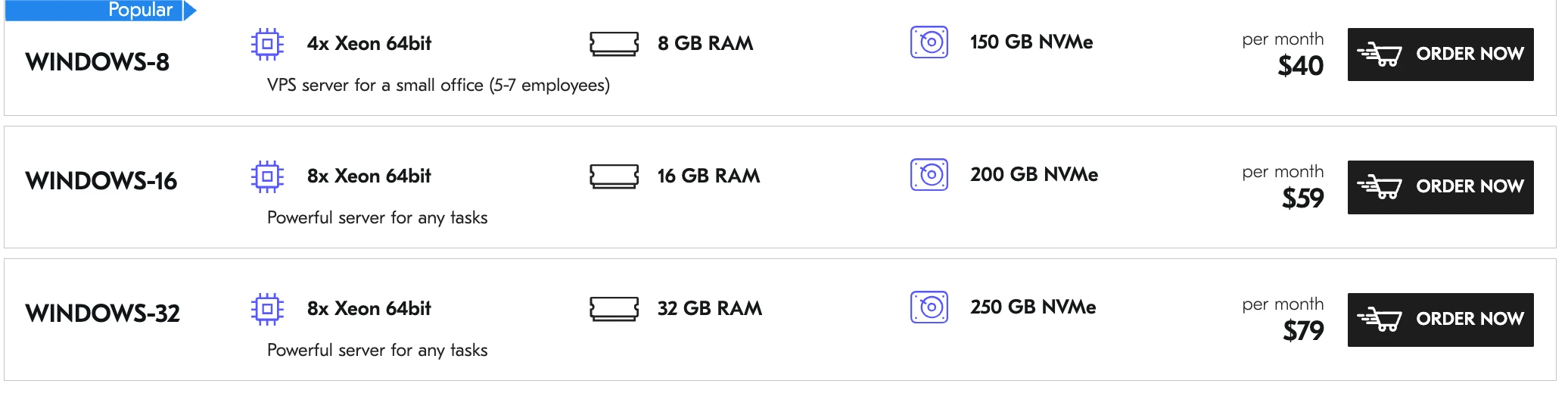
The price depends on location, hardware resources, operating system and provider. For a basic MetaTrader configuration, you usually do not need an expensive high-end server.
A small VPS can be sufficient for one or several lightweight terminals. More powerful configurations become relevant when you run many accounts or computationally demanding strategies.
The important question is economic rather than technical. If your entire trading system generates only a few dollars of expected monthly profit, paying a large amount for hosting makes little sense.
If you operate several automated systems and hosting represents a small part of your trading costs, reliable infrastructure can be a reasonable operational expense.
A Practical Checklist Before Going Live
Before moving an automated Forex system to a real account, check every part of the environment. The fact that MetaTrader opens successfully does not mean that the system is ready for live trading.
- Is the VPS located close to your broker's server?
- Have you measured actual latency?
- Does MetaTrader reconnect after a restart?
- Does the Expert Advisor start correctly?
- Are all indicators and libraries installed?
- Are trading permissions configured correctly?
- Do stop-loss and take-profit orders work?
- Have you checked the EA journal?
- Have you tested the configuration on a demo account?
- Do you have a backup plan if the VPS becomes unavailable?
💡 Recommendation: Test the complete configuration before committing real capital. A few days of technical testing can reveal problems with reconnects, permissions, automated trading or server restarts that would otherwise appear at the worst possible moment.
The Bottom Line
A VPS for Forex - https://deltahost.com/ trading is best understood as a reliability and execution tool. It keeps your trading terminal online, separates your automated strategy from the limitations of your home computer and can provide a more direct connection to your broker's infrastructure.
For manual traders, it may be unnecessary. For traders running Expert Advisors, signal-copying systems or strategies that must operate continuously, it can become an important part of the setup.
But there is one principle worth remembering above everything else: technology cannot rescue a bad strategy.
A VPS can keep your EA awake. It can help reduce network delay. It can protect your trading terminal from a home computer being switched off. It cannot tell you when to buy, when to sell, or how much risk to take.
«Build the strategy first. Test it properly. Optimize the infrastructure second.»
If your system genuinely benefits from continuous operation, choose a VPS based on reliability, network quality and proximity to your broker rather than impressive marketing numbers. Test the setup on a demo account, monitor its behavior and only then move to live execution.
The goal is not to have the fastest server on the internet. The goal is to have the right infrastructure for the strategy you actually trade. Measure, test, optimize — and only then put real money at risk.
«A good VPS should make your trading system more dependable — not make you believe that it is more profitable than it really is.»