
How Digital Records Simplify Heavy Equipment Moves
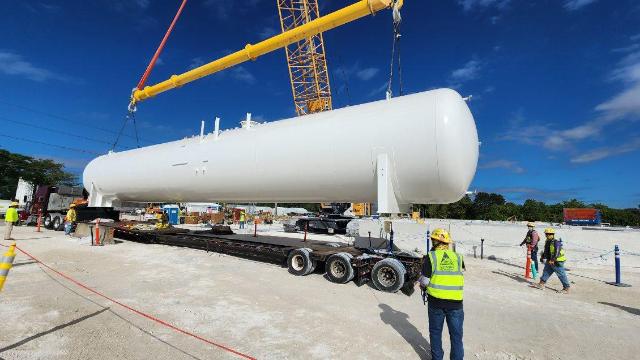
Digital records simplify heavy equipment moves by replacing assumption-based coordination with verified, structured data that every party in the transport chain can act on, eliminating the three most common and costly failures: wrong trailer arrivals, unusable pickup windows, and blocked site access.
For Texas contractors and equipment-rental dispatch teams, those failures are not edge cases. They are the predictable result of information gaps that a complete shared dispatch record is specifically designed to prevent.
When the Record Is Incomplete, the Move Breaks Down
Consider what a single missing field produces in practice. A carrier arrives with a standard flatbed for a load requiring a lowboy because nobody recorded the machine's actual transport height and ground clearance.
Booking heavy haul trucking Texas services from Titan Worldwide Logistics requires handing over checked machine details before confirming the move.
If that step is skipped, the result is a same-day re-dispatch event, a compressed delivery window, and a deadhead charge for the carrier's wasted run.
The access scenarios are equally concrete. If a pickup window is confirmed for 6:00 a.m. but the yard remains closed until 7:00 a.m., that unrecorded gap forces the driver to wait while the jobsite absorbs the delay.
Alternatively, a delivery site might require a specific gate code and a visitor escort. Since these details were known at booking but never passed to the carrier, the driver cannot enter and the move stalls at the gate.
|
Quote: Every stalled heavy equipment move traces back to a single missing field a gate code, an attachment status, or an unverified dimension that could have prevented a costly re-dispatch. |
What a Shared Dispatch Record Actually Captures
A shared dispatch record serves as the central operational document. Whether it lives in a logistics platform, a shared cloud folder, or a structured digital form is secondary.
The priority is completeness and accuracy across five functional categories: transport configuration, contacts, site access, route coordination, and handover documentation.
|
Key Insight: A move’s reliability depends on five data pillars: verified transport configuration, accurate contacts, site access details, route/permit notes, and milestone tracking miss one, and the chain breaks. |
Verified Transport Configuration
The file must capture the machine's make, model, and operating condition. Dispatchers need to know whether the unit is loaded or unloaded and if attachments are present at the time of transport.
An excavator with the bucket installed changes deck clearance requirements, and a crane with boom sections attached moves under different trailer restrictions than a fully disassembled unit.
Confirmed dimensions must be verified against the actual unit in its staged transport configuration. Standard legal width limits sit at 8 feet 6 inches, while the maximum height is 14 feet.
A machine with aftermarket attachments or modified counterweights will not match the manufacturer's published specifications, making field verification essential for preventing sizing errors.
Pickup and Delivery Contacts
The file should list named individuals rather than department names or general company listings. A contact entry that reads "equipment yard" provides nothing actionable when the carrier calls early in the morning.
Direct phone numbers must be confirmed active before the move date. An emergency contact is necessary if the pickup or delivery window extends into evenings or weekends.
The record must distinguish between personnel who have yard access and those who hold actual authority to release the machine. Both roles matter operationally, but only one can authorize the transport to proceed.
Site Access Information
Gate codes, badge requirements, and visitor check-in procedures belong in the record as explicit entries.
Informal notes scattered across email threads often get lost before dispatch. The file should document weight-restricted roads or bridge limitations on the access route within the site boundary.
Overhead clearances at yard entrances and the loading conditions the carrier will encounter on arrival must also be noted.
The dispatch team should clarify ground type, ramp availability, and whether the machine requires a licensed equipment operator on site. If the delivery facility has specific pilot car staging areas, those belong in the record as well.
Route and Permit Coordination Notes
The dispatch file functions as the primary source material that makes permitting possible. Before applying for a permit, providers need the exact dimensions and weight of the vehicle and load.
The file should capture preliminary route information like state-line crossings or known low-clearance corridors.
It should also note the permit status along with the responsible party and any known lead times tied to the specific move.
Route planning and permit acquisition require qualified expertise and remain the provider's function. The dispatch team's role is to give those logistics providers accurate, verified data to work from.
Milestones and Handover Documents
Planned pickup confirmation, in-transit check-in points, and delivery windows should appear as tracked entries rather than background assumptions.
The file must identify which handover documents accompany the move, such as a bill of lading or equipment condition report. It should also specify who receives copies of each document and when the exchange happens.
Information Ownership Is a Dispatch Responsibility
A dispatch file is a living document that must reflect current conditions between booking and move confirmation. The dispatch team owns the accuracy of that record, rather than the yard manager or the customer's project coordinator working in isolation.
Shared access across relevant team members acts as a structural safeguard against single-point-of-failure coordination. The most common post-booking gaps that invalidate an otherwise solid plan follow a predictable pattern.
Gate codes change, on-site contacts rotate off a project, or attachments are modified after the initial entry. Since none of those changes automatically update the file, one designated team member should verify that the details reflect current conditions before confirming the move.
When the details live in a single inbox or in one person's memory, the operation stalls the moment that person is unavailable.
Dispatch coordination in equipment-rental environments demands that the data be accessible to every team member who touches the move. While digital tools support this process, information flow remains a strict team discipline.
|
Pro Tip: Before confirming any heavy equipment move, designate one team member to re‑verify all record fields against current conditions a five-minute check prevents a day-long delay. |
Handing Checked Machine Details to a Qualified Provider
The internal file's value multiplies when it is handed to the logistics provider as a structured briefing. A qualified transport company uses the machine's confirmed dimensions, weight, attachment status, and site access conditions to select the right trailer type. None of those functions can proceed accurately without verified data.
When confirmed dimensions, access conditions, delivery contacts, and permit status are already documented, the receiving team can move immediately to route review and carrier coordination.
Dispatch teams coordinating oversized equipment moves rely on this structured data to brief providers effectively. The more complete the file, the faster the provider can assess route options and permit needs.
This creates a clean handoff between two professional functions. Dispatch teams verify the configuration, contacts, and site access so the transport crew can focus on movement.
Heavy hauling permit coordination begins the moment the provider receives accurate details, and it is delayed by every gap that forces them to stop and ask for clarification.
Trailer Requirements Depend on Shipment Configuration
Dispatchers often carry a working sense of trailer types, but confirmed shipment configuration drives equipment selection.
An incorrect assumption confirmed at booking becomes a costly re-dispatch event on move day. The dispatch file captures what the machine actually is, while the logistics provider matches the right trailer to that specific load.
Flatbeds are appropriate for equipment within legal height and width limits, featuring straightforward loading conditions and standard ground clearance.
Step decks suit machinery that exceeds standard flatbed deck height but does not require full lowboy clearance.
Lowboys and removable goosenecks handle tall, heavy equipment with significant ground clearance needs, such as excavators and bulldozers.
Complete cranes require specialized heavy-haul equipment like multi-axle trailers, depending on the transport weight and assembly status.
Lighter disassembled components may move separately on flatbeds, but the main crane body and tracks demand dedicated heavy-haul support. Field-verified dimensions remain the only reliable input for determining these specific trailer requirements.
What Dispatch Teams Should Know About Permit Coordination
Oversized freight moving on Texas roads requires specific movement permits based on load dimensions, axle count, and jurisdiction. Dispatch teams are not expected to acquire these permits themselves.
Their responsibility is to provide accurate load data to whoever handles permitting, whether that is the carrier or a qualified third-party permit service with route-specific expertise.
The permit conditions attached to a given move depend on the load's specific configuration. Any load exceeding 254,300 pounds gross is considered a Superheavy Permit Load and faces strict routing requirements.
Certain routes carry travel time restrictions, including no nighttime travel or blackout periods on specific corridors during weekends.
Complex multi-state moves often require pre-approval and route surveys before a permit is issued. The most common source of permitting delays is inaccurate load data submitted at the very beginning of the process.
The permit status, responsible party, and known lead times must appear in the dispatch file as tracked milestones rather than background assumptions.
|
Important: Inaccurate load data at the permitting stage is the number one cause of move delays a complete dispatch record eliminates the guesswork and keeps permits on track. |
The Path Forward for Texas Dispatch Teams
The shared dispatch record is the operational foundation that makes heavy equipment moves reliable. Without it, trailer selection relies on guesswork, contacts cannot be reached at critical moments, and site access fails at the gate.
A professional handoff compresses setup time and eliminates the first-day information chase that delays execution.
Before any equipment move is confirmed, teams must run an internal verification pass on transport configuration, contacts, and milestone windows.
These elements must reflect field reality rather than original booking-day entries. Treating the record as a team asset with shared access ensures accuracy is maintained throughout the entire process.
Trailer configuration and permit coordination depend on accurate dispatch data. The dispatch team's thoroughness directly determines how quickly a logistics provider can assess route options and move to execution.
Verified digital files provide the exact measurements and access codes needed to keep heavy hauls moving on schedule.