
How Can Startups Source Affordable PCBs Without Sacrificing Quality?

The idea of starting a hardware business is exciting, and that is before you receive your first PCB quote. You wake up looking at numbers that have made your hard-planned budget look like a fairy tale. To most startups, the printed circuit boards may be one of the largest initial manufacturing expenses and the temptation to cut corners can be overwhelming.
But cheap PCBs that fail in the field are more costly than one can save. Return, tarnished reputation, and redesign are known to sink the prospects of the most prospective young firms. Where do you find confidence in cost meeting reliability?
Start With Design Optimization
Look with a harsh eye at your board design before you even pick up the phone to dial a manufacturer. Here, majority of the startups miss out on cash without even noticing it.
Simplify Your Architecture
Complexity drives cost. Each extra layer, each narrow tolerance, each pedantical specification of an exotic material will cost you more. Ask yourself: you really need that six-layer board, or can you do the same using four layers with better routing? In many cases, particularly in prototypes, simplification does not lead to loss of functionality.
Stick to Conventional Specs
On conventional specs, you rely. Manufacturers have streamlined their processes to common parameters such as:
- 6-mil trace widths
- 0.35mm size of holes
- Standard FR-4 material
By remaining within these limits, you are not incurring the cost of special tooling or process modification. The startup I am aware of saved 40 percent of the cost of a per-board by simply changing their design rules to fit the standard capabilities of their manufacturer.
Efficiency in Panelization
It is also important in the use of panel. When your board sizes enable several units to be placed effectively on a panel and thereby there is least waste then you will have improved pricing. Before finalizing your design it is worth discussing with any potential manufacturers the best size of board.
Look Beyond Your Backyard
We have a larger role of geography in pricing PCBs than many founders are comfortable to acknowledge but it is not that easy as overseas is less expensive.
Scaling Globally
The per-unit costs of Asian manufacturers tend to be low especially when done in large quantities. A PCB manufacturer in Thailand, for instance, might provide excellent value for production runs while maintaining quality standards that meet international certifications. The trick is to know what you are maximizing in each step of your product development.
Prototyping Locally
Proximity can be cost saving in the case of prototypes, as well as small batches. Shipping charges, delays in communication and even inability to pay a visit to the facility can consume any price advantage. A PCB manufacturer in Italy working on your initial prototypes means faster iterations and easier collaboration when something needs adjustment.
The Hybrid Approach
The most intelligent startups are applying a hybrid solution, local, to prototype and do low-volume production but shift to cost-efficient offshore production later on, when the design is finalized, and the volumes are growing. This provides you with speed when you have to hurry and savings when it is economical to do it in large quantities.
Develop Relationships, but Not Transactions
Relationship with PCB supplier is as important as technical specs. Manufacturers are quite flexible in their pricing and in the case of start up that they trust in.
- Communicate Your Roadmap: By making your roadmap clear: making it clear that you could get to a prototype run today that would become their 10,000-unit production order tomorrow, you would be an investment in their future business.
- Be Transparent: Be open regarding your condition. Share your budget limitations, your schedule, and your expansion predictions. Most manufacturers would instead give a start-up with the potential to perform well at a competitive price than make maximum profit out of a single order.
- Leverage Technical Support: This relationship style goes to technical support as well. Your design files will be analyzed by a good manufacturing partner who will recommend optimization that you missed. The latter will inform you whether a specific part positioning will result in headaches during the assembly process or whether a minor design adjustment will result in a significant cost savings.
Don't Forget About Assembly
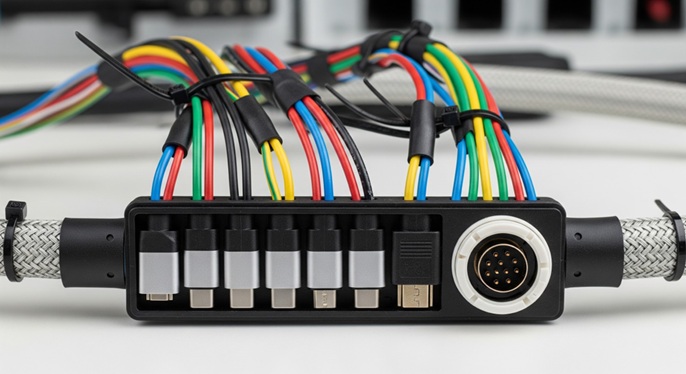
It is not all about the PCB. You have to consider the cost of assembly at the start unless you are intending to hand solder the parts in your garage.
Strategic Assembly Locations
The PCB assembly in Italy or other areas that already have a well-developed electronics manufacturing system can provide surprisingly good rates, which further can be supplemented by a lower shipping cost and more effective communication. The trick is to locate suppliers capable of managing your quantities and not demand extremely massive minimum orders.
Component Selection
The choice of components has a dramatic effect on the cost of assembly.
- Exotic components that have long lead times or components that need special handling equipment will add up to your costs.
- Always use familiar parts that your assembly house has been dealing with on a regular basis.
For products requiring specialized interconnects, consider whether precision cable assembly should be integrated into your manufacturing process or handled separately. In other cases, the costs of complex assemblies can be lowered by breaking them down into modular units to enhance reliability.
Leverage Volume Strategically
You do not need to have to place orders in thousands of boards to get better rates and you just need to be clever in how you make your orders.
- Understand Quantity Breaks: Some of the manufacturers include price discounts at certain levels of quantity. When 100 boards are priced at $15, 150 boards at $11 and anyhow your testing will use 50 boards, then the calculation will favor the large order.
- Order Pooling: Pooling up of orders should be considered when you are dealing with multiple projects or variants. Other manufacturers would offer better rates in case you are ordering other designs that can be carried out as a batch.
Quality Assurance Is Non-Negotiable
Being cheap does not imply compromising quality control. You cannot afford to fail when you have to work with tight budgets.
- Inquire about Testing: Enquiring details about testing and inspection by potential manufacturers. You would at least like electrical testing of each board and physical inspection in the case of apparent faults.
- Invest in Reliability: In cases where reliability is important, demand stricter testing despite incurring a slight increment on the cost--it is still less expensive than field failure.
- Verify Documentation: Order certifications and quality standards documentation. The certification of ISO 9001 implies that the quality management processes are systematic, and in particular industries, you may require the compliance with the IPC certifications or other standards.
The Bottom Line
To find cheap PCBs and not compromise on quality is not about finding the lowest cost supplier, but rather about making a decision that is strategic enough to match cost with value along every part of your process.
Make your designs manufacturable. Establish contacts with your suppliers who believe in you. Consider geographically where various kinds of work can be made effective. Think logically in volume and timing. And never compromise on the quality controls that protect your reputation.