
How AI Is Changing the Automotive Industry
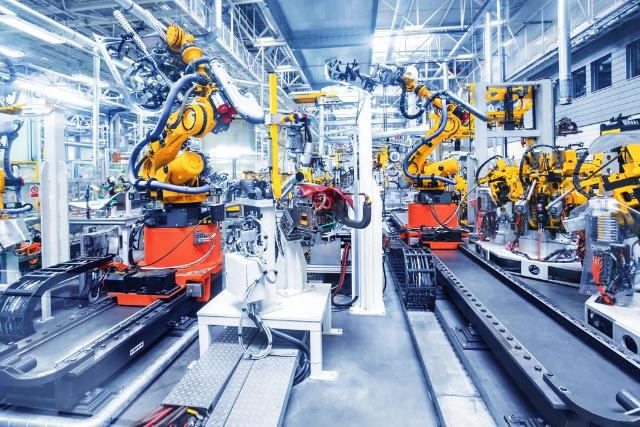
Image Source: depositphotos.com
Artificial intelligence is no longer science fiction — it is currently ruling (sometimes literally) the automotive industry. It helps design cars, assemble them, check for bugs, make smart driver assistance systems, and even communicate with you in the car. The Indy Auto Man Indianapolis used car auto dealer offers to figure out how exactly AI is transforming the automotive industry and what cool technologies already exist.
AI in car manufacturing: When robots work better than people
Designers used to spend hours sketching futuristic cars that would become part of our lives in the following decades. Now, generative design comes into play — a neural network takes millions of parameters (aerodynamics, weight, safety) and creates optimal shapes. Automakers such as BMW, Ford, and Tesla are already utilizing these algorithms.
Factories where cars make themselves
AI has completely changed assembly lines:
- Tesla Gigafactory — thousands of robots work there, which not only assemble cars but also analyze the assembly mistakes.
- BMW iFactory – AI monitors the quality of vehicle assembly at every stage, and if something goes wrong, it informs the engineers.
- Volkswagen Transparent Factory – smart TM AI robots mounted on GESSbot AMRs, autonomously navigating, identifying parts, and executing adaptive pick‑and‑place operations.
In China, they are already testing fully robotic factories, where people are only needed for observation!
Autopilot: When the steering wheel is no longer needed
The most advanced AI-based systems:
- Tesla Full Self-Driving (FSD) – does not just monitor the lanes, but takes control of the car on the road.
- Mercedes Drive Pilot – the world's first system certified for real autonomous driving (at speeds up to 60 km / h, you can give the steering wheel to the car).
Smart driver assistance systems are already being actively used and continue to develop. For example, BMW, Mercedes, and Volvo are implementing:
- Automatic emergency braking – BMW, Volvo, and Hyundai already use this system to prevent accidents.
- Adaptive cruise control analyzes the flow of cars and smoothly regulates the speed.
- Monitoring driver fatigue – Mercedes, Audi, and Volvo use cameras to analyze the driver’s condition.
BMW and Mercedes are developing a system that not only monitors fatigue but also determines mood. It will be able to offer a change of route, take breaks, and even play music according to mood.
AI assistants: cars that understand you
Modern cars are equipped with voice assistants with artificial intelligence:
- Mercedes MBUX – a voice assistant that understands ordinary speech. You can say: “I'm cold,” and it will raise the temperature.
- BMW iDrive 8 – AI doesn’t just turn on music or navigation, but also learns from the driver’s habits.
- Hyundai and Kia – their systems can order coffee or find the nearest gas stations.
In 2024, Volvo introduced a car with ChatGPT – now you can talk to the car like a person.
How AI makes cars faster (and more economical)
AI helps not only in production and driving but also in the development of engines and aerodynamics.
- McLaren and Ferrari use AI to design the aerodynamics of their supercars – vehicles undergo virtual testing before they hit the track.
- Toyota applies AI to optimize hybrid systems to make them even more economical.
- In the Tesla Model S Plaid, AI manages the torque of each wheel – this allows it to accelerate to 60 miles per hour in 2 seconds.
AI and electric cars: how EVs learn to save battery
Electric cars depend on batteries, and AI plays a key role here:
- Tesla and Rivian utilize AI to predict routes and suggest optimal charging times.
- The Porsche Taycan adapts the battery to your driving style - if you drive aggressively, it increases power, and if you drive calmly, it saves battery.
- The Hyundai Ioniq 5 learns from the owner's routes and recommends the most efficient route to save battery.
What technologies will appear next?
AI is developing rapidly, and automakers are preparing even cooler technologies:
- Transparent cars – Jaguar Land Rover is testing a technology that makes the hood “transparent” using cameras and projection.
- Emotional AI – BMW and Mercedes are developing a system that detects the driver’s mood and suggests changing the route or taking a break.
- Cars without a steering wheel or pedals – Honda and Tesla are developing fully autonomous capsules that don’t need a driver at all.
- Cars that repair themselves – Toyota is already testing self-healing paint, and BMW is developing materials that “heal” scratches.
Bottom line: Cars are getting smarter, but who will drive?
AI has already transformed the auto industry, and it will play an even bigger role in the future. Cars are becoming safer, more comfortable, and even friendlier. The only question is when the driver will finally turn into a passenger.
And for those who can't trust the steering wheel to AI, there will always be a market for good old used cars waiting for their driver.