
The Future of AI in the Crane Industry: Safety, Intelligence, and Industrial Upgrading
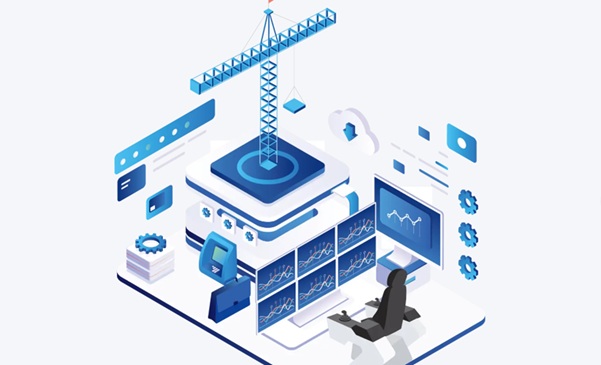
As artificial intelligence (AI) technologies continue to advance, their influence is rapidly expanding across a wide range of industries. The crane and lifting-equipment sector is no exception. AI is reshaping how cranes operate, how they are maintained, and how future industrial environments ensure safety and efficiency. This article explores the key development prospects of AI in crane machinery—focusing on intelligence, safety, efficiency, and industrial transformation—through a security-centric lens suitable for modern industrial operations.
1. Enhanced Intelligence Through Autonomous Learning
Traditional cranes require manual operation and intensive human decision-making. With the introduction of AI, cranes can now gain the ability to learn autonomously, analyze operational data, and make real-time decisions.
Using machine learning and deep-learning models, cranes can:
- Identify loads and operational patterns more accurately
- Optimize lifting paths
- Reduce human-error risk
- Improve task precision in complex industrial spaces
For smaller-scale automated handling scenarios, even compact lifting systems—such as a 1 ton overhead crane — can be enhanced with intelligent features.
2. AI-Driven Improvements to Safety and Risk Prevention
Security and operational safety are central concerns in any industrial environment, especially when handling heavy loads, working at height, or operating in dynamic environments. AI dramatically improves safety by integrating perception, monitoring, and predictive technologies.
AI-enabled cranes can:
- Monitor the working environment in real time
- Detect hazards such as obstacles, unstable ground, or abnormal load sway
- Use predictive analytics to detect early-stage mechanical faults
- Trigger automatic emergency responses or shutdowns
These AI safety functions help minimize accidents and significantly reduce downtime—key priorities for industries that rely on secure and stable operations.
3. Higher Operational Efficiency and Dynamic Response Capability
AI allows cranes to operate with greater speed, accuracy, and adaptability. By analyzing data streams in real time, cranes can automatically adjust braking forces, load distribution, travel speed, and lifting parameters.
This leads to:
- Faster operational cycles
- More precise load placement
- Automatic optimization based on workload
- Reduced reliance on manual adjustments
For heavy-duty, high-capacity applications, advanced equipment such as double girder overhead cranes can integrate AI-based motion control to further enhance performance across large industrial environments.
4. Accelerating Industry-Wide Upgrading and Digital Transformation
AI does more than improve crane performance—it drives a full-scale upgrade of the crane manufacturing and service ecosystem.
AI will support:
- Fully intelligent crane fleets
- Integration with IoT, cloud computing, and big data platforms
- Smart factories with automated material flow
- Predictive maintenance service models
- Remote diagnostics and cloud-based performance management
This transformation will not only improve equipment efficiency but also reshape how crane manufacturers and users collaborate across a digital supply chain.
Conclusion
AI is unlocking a new era for the crane industry. From autonomous operation and intelligent safety monitoring to efficiency optimization and industrial upgrading, AI technologies will fundamentally redefine how cranes are designed, controlled, and managed.
As AI continues to evolve, its role in ensuring safer, smarter, and more secure crane operations will only become more significant—supporting future industrial growth and strengthening global safety standards.