
Definition of Precision Machinery and Its Importance for Core Sectors
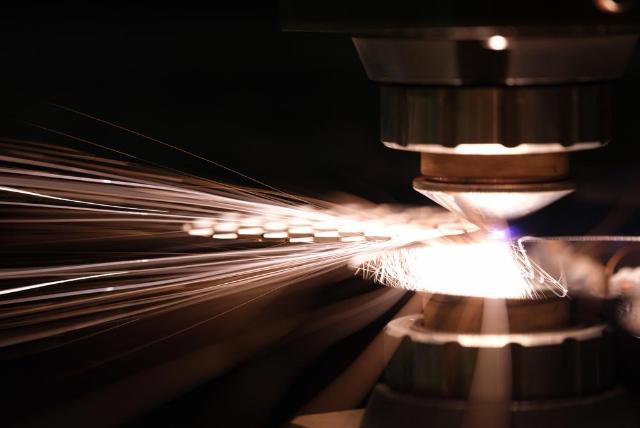
Image Source: depositphotos.com
In any modern industry, accuracy serves as a strategic advantage, not only a technical requirement. This accuracy is vital in industries like aerospace, medical devices, semiconductors, and automation. These companies require components that are machined with unparalleled precision and consistency. The industrial machinery focused on this is called precision machinery.
For procurement experts, engineers, and even strategic company planners, understanding precision machinery definition serves as a cornerstone for making critical decisions. While assessing suppliers or even while planning to scale business capabilities, this article guides on how critical precision machining suppliers can be to product performance.
What Is Precision Machinery
To uncover the components and phrases interlinked with precision machinery definition, it would be good to start with a simplified explanation. Precision machinery encompasses tools, machines, and systems which are more advanced which are capable of manufacturing components with extremely tight tolerances. These components are often enhanced to micrometers (μm) or nanometers on higher levels. These tools are built to multitask.
The definition doesn't stop at just the hardware part. Precision machinery also includes:
- Advanced CNC (Computer Numerical Control) Programming
- High accuracy measurement and feedback systems
- Controlled temperature surroundings to minimize material distortion
- Advanced tool holding and fixturing systems
Precision machinery allows manufacturers to achieve:
- Dimensional accuracy of ±0.001 mm
- Surface finish is smooth (Ra < 0.4 μm)
- Consistent unit positioning across thousands
The description and defining attributes “precision machinery” emphasizes the need for high reliability and standardization, particularly critical in safety-sensitive and tech-driven fields.
Critical Industries Depend on Precision Machinery Why
Sectors where failure is not an option require precision machinery more than any other industry. Here are some of those sectors:
Aerospace
In aerospace, there are no tolerances for errors in dimension. Engine parts, turbine blades, and flight control systems are operated on under extreme environmental conditions; thus, they must be perfectly safe and cannot maintain even minor defects like bolts or casings. Because of these reasons, aerospace manufacturers need a precision machining factory capable of strict tolerancing and quality control.
Medical Devices
In the medical field, the accuracy of machined parts has a direct impact on human safety. Surgical instruments, orthopedic implants, and diagnostic equipment need to meet rigorous standards for contamination, biocompatibility, and sterilization. Accuracy in manufacturing is needed so every groove, edge, and contour functions in a medical precision level.
Semiconductors
The manufacture of chips and microelectronic devices is done at a microscopic level. Vertical and horizontal misalignment of parts can disrupt electrical pathways and render a chip useless. Clean room-compatible components for silk and photo-etching of wafers are produced using precision machinery.
Automotive
Gearboxes or fuel injection modules are examples of systems in modern vehicles that are precisely engineered. They all are critical to the performance of high power cars, electric vehicles, and autonomous systems, all requiring part-to-part consistency. A well-versed precision machining factory is important to these industries as they aid in maintaining quality while hitting high production numbers.
Industrial Automation
Accuracy in robotics, sensors, and control systems comes from precise machining. The frameworks of error-free and high-speed assembly lines as well as automated manufacturing setups need precise components as a base. In many automated systems, custom molded elastomeric components are also used to help absorb vibration, create protective seals, and support smooth machine movement under demanding operating conditions. These components contribute to equipment longevity by reducing wear caused by repeated motion and environmental exposure. Their flexibility and durability make them especially valuable in applications where precision machinery must consistently perform with minimal interruption.
The above example industries illustrate why tight tolerances are necessary to ensure repeatability, reliability, and extensive quality assurance.
What Distinguishes a Precision Machining Factory?
For businesses that depend on the components being manufactured to certain standards, the decision on which machining factory to work with is strategic. But what determines a factory as “precision capable”?
Equipment
Standard factories equip themselves with 4 or 5 axis cnc machines, wire edm systems, multitasking lathes and so on. For manufacturers requiring extremely tight tolerances on complex geometries, dedicated wire EDM services offer an exceptionally precise cutting method. By using an electrically charged wire to cut through hardened metals, wire EDM can achieve micron-level accuracy that conventional milling often cannot match. These machines can cut at complex angles with performance in mm accuracy.
Workforce
Machinists and engineers in these precision factories are skilled to read drawings and documents of their counterparts, set up complexity and apply tolerance controls, as well as operate the necessary measuring instruments such as CMMs.
Metrology and Quality Control Features
Every component produced in the factory can only be machined to certain specifications. With that being said the order division must also have sophisticated tools for measuring real time processes as well advanced stationary inspecting tools.
Material Understanding
Precision machining requires a concrete understanding of all the materials involved in metal cutting. Be it hardened steel, titanium, ceramics or even medical grade plastics, any good factory would know how to achieve maximal efficiency.
Production Environment
Dust and fluctuation in temperatures can cause airborne contaminants. That is why higher tier factories ensure clean conditions for both the production and inspection areas.
In this case, understanding the definition of precision machinery is the same as knowing that the correct precision machining factory is a partner that walks with you in every part of the order.
Why You Should Invest in Precision Machining
B2B businesses often weigh the costs of high-precision components against more conventional alternatives. The advantages that precision machining offers greatly surpass accuracy alone.
Long-Term Cost Efficiency
While precision machining may have a higher first production cost, its reduction of waste, rework, and improvement on part lifecycle enhances value.
Improved Performance of Products
Greater accuracy and reliability of functions means precision parts also wear more smoothly. This greatly enhances customer satisfaction and product performance, especially in complex assemblies.
Reduced Time-to-Market
An accelerated innovation development cycle is achievable because a lot of precision factories offer low-volume runs and rapid prototyping.
Compliance and Certification
Precision providers often comply with detailed aerospace and healthcare regulations that require strict documentation and traceability as they deal with compliance and certification standards.
Competitive Edge
When a business offers higher reliability with better quality, it creates a brand distinction in competitive markets. This also enhances retention while justifying a premium price.
When avoiding failure is critical—be it in human safety or a brand’s reputation—precision machining is not just useful, it’s mandatory.
Conclusion
Looking into the precision machining definition is not merely a matter of grasping a term, it involves comprehending complex systems and expertise integrated in modern industrial problems. Precision machinery is vitally important in areas like miniature medical part manufacturing, seamless turbine component fabrication, and in achieving high levels of global competitiveness and technological advancement.
For B2B buyers and engineers, purchase decisions should not be based solely on price and delivery timelines. The greatest benefit is found in the availability of quality, reliability, and consistent technical assistance from a precision machining factory. In critical manufacturing sectors facing tight tolerances and high expectations, precision isn’t just highly recommended; it is mandatory.