
Beyond Passwords: How Biometric and Blockchain Tech Are Merging for Crypto Security
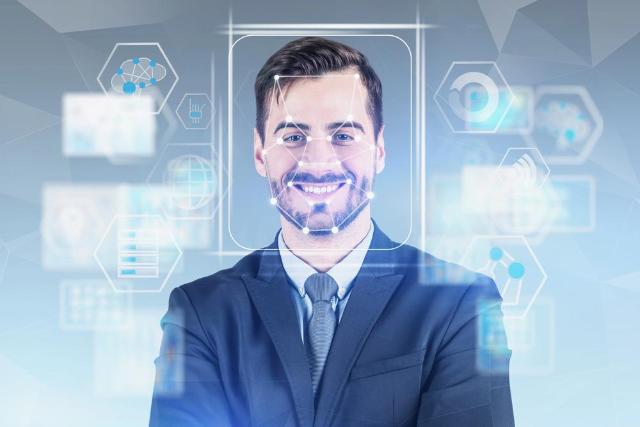
Image Source: depositphotos.com
Passwords were used as a security measure for years, long before digital money was ever a thing. They can be useful and help protect access to certain accounts and applications, but they are not entirely suited for use with cryptocurrencies.
For years now, the security methods used to protect crypto assets have been evolving, becoming more complex and safer in the process. Biometrics have played a huge role in that development, as they are the safest option available. Biometric data can’t be falsified, and it essentially guarantees that only the user can access their account.
A Growing Need for Security
There’s a growing need for security among crypto users. Cryptos are now widely used by the general population. There’s no more question of whether betting on sports with crypto is legal, since it’s a common practice in most jurisdictions.
Crypto assets are also widely used as investment tools, and governments are regulating their use and providing a safer environment. With a growing crypto user base, the average holder needs to look beyond passwords to protect their assets.
Limits of Passwords and Traditional 2FA in Crypto
Users often reuse the same passwords over and over again, as they are easier to remember. They also fall for phishing scams or store their passwords in an insecure place. Two-step authentication was then used as a way to improve upon passwords.
However, it, too, has its faults, since SMS transactions can be intercepted and SIM swaps have become common. Attackers who are tech-savvy also use real-time phishing tunnels to steal one-time codes.
The attacks are even more dangerous when it comes to accessing crypto wallets. It’s possible to drain the entire wallet as soon as you gain access to it, often before the user even notices. The biggest fault in the system lies with users themselves, and the industry as a whole is seeking solutions to that problem.
Understanding Biometric Authentication: Tools and Trends
The use of biometric authentication has, in many ways, solved these issues by providing an alternative to traditional authentication for transfers and account access. Some wallets and exchanges already implement several emerging technologies.
Physical biometrics include fingerprints, facial recognition, and iris scans. There are also behavioral biometrics, including how the phone is held, typing speed, and mouse movements. Most modern mobile devices have these features built in, and now they extend to crypto wallets. Apple’s Secure Enclave, Samsung Knox, and Android’s BiometricPrompt API store biometric data locally, which isn’t always the best approach for crypto security.
The use of biometrics also improves the user experience, as users don’t need to memorize passwords or keep track of codes.
Blockchain Identity Frameworks: The Second Layer of Security
Blockchain provides a second level of security once the user has been authorized. Three major tools are emerging and already in use when it comes to blockchain security.
Decentralized Identifiers (DIDs)
These are self-owned digital identities anchored on a blockchain. From the user’s perspective, the best thing about this tool is that it can be carried over from one wallet and exchange to another, and that it’s not owned or operated by any third-party company.
Verifiable Credentials (VCs)
These are cryptographically signed documents that can be checked without revealing any significant data. These include: KYC verification, tax status, and trading permissions. For instance, a crypto casino can verify a person’s identity without getting access to their passport photo.
Zero-Knowledge Proofs
Zero-knowledge systems allow users to prove facts without having to show personal data. For instance, the user can confirm their identity, location, or age when needed, but reveal nothing more than that.
The Fusion: Biometrics + Blockchain for Next-Gen Crypto Security
When combined, the two make for a powerful two-step authentication system that will keep users much better protected than any password could.
Biometric factors confirm that the person accessing the wallet or an exchange is who they claim they are. A device, such as a wallet or another piece of hardware, stores the keys needed to make a transaction, and the blockchain verifies the credentials required to complete a transfer.
According to experts such as those at Webopedia, different security methods shouldn’t be combined, since biometric information isn’t stored on the chain.
Privacy and Ethical Concerns
There are also many new ethical concerns arising from the use of biometrics for security purposes. These stem from the fact that biometric, and therefore deeply personal, data is used to allow access, and any security breach would mean someone would gain access to that data. Governments and bad actors could use centralized systems to misuse personal information once users choose to store and use it.
Recently, the use of AI-generated deepfakes has become an additional security concern. These could be used to access an account by creating a believable copy of the user’s hand or face.
The Road Ahead: Standardization and Decentralized Control
For biometric security measures to become the norm, a lot needs to change and improve. Wallets need to integrate these features and make them work seamlessly. There should also be a set standard for the industry on how security measures are used and when they are applied.
Such standardization would also mean greater centralization, which can be an issue for some users. Decentralized exchanges market themselves on their ability to avoid storing data in a single source.
To Sum Up
Crypto exchanges and wallets are evolving beyond passwords, which were the primary form of protection until recently. The use of two-step authentication has also been compromised, and crypto services are now relying on biometric data. This means users scan their eyes, hands, or faces to access accounts.
These measures are safer and more convenient for users, but that doesn’t mean they can’t be breached. Hackers are already adapting to the new systems and looking for ways to bypass them. For biometric measures to truly become the norm, they need to be centralized and regulated.