
Best VPN for Mac: how I see it
Choosing the best VPN for Mac sounds easy until you actually start doing it. There are so many providers with flashy websites, praising their apps and making bold promises, but I quickly realized that things rarely work as smoothly as they claim. A good VPN for Mac should truly protect your privacy, deliver stable speed, and not slow down your MacBook. But in reality, many vpn apps for Mac break down in small but important ways. Chances are, you haven’t been paying attention to these critical details either.
What is the best VPN for Mac and what can actually go wrong
If you’re wondering what is the best vpn for mac, you’re probably comparing speed, price, and maybe the number of servers. I was doing the same. But after testing a few, I ran into common problems that no one really talks about:
- VPN app for Mac constantly disconnects
- High battery usage on MacBook
- The VPN software for Mac slows down the whole system
- Servers look good on paper, but are overloaded
- The app gets few updates - which means weak security patches
ExplorerVPN, however, managed to avoid many of these issues by offering a lightweight Mac app with frequent updates and stable performance. Many people skip over these details because they’re too focused on getting a free trial or reading Top 10 VPNs lists. But these are exactly the things that make or break your day-to-day VPN experience. For tasks that require a more consistent IP footprint than VPNs provide, residential proxies can offer a reliable alternative.
How to check for VPN on Mac and see if it’s working right
Once I installed a few apps, I wanted to make sure the VPN for Mac was actually protecting me. Here’s a simple way to check for vpn on Mac:
- Go to a website like Whoer.net before and after you connect.
- Test speeds with and without VPN using tools like Speedtest.
- Check Activity Monitor — does the VPN app hog your CPU or battery?
It only takes a few minutes, but it showed me which services were lightweight and which ones caused performance issues on my macOS.
Which is the best VPN for Mac if you want real privacy?
If you’re looking for what is the best vpn service for Mac, here’s what I suggest paying close attention to:
- Does it have a real no-logs policy?
- Is it optimized for Mac and OS X?
- How often is the app updated?
- Can you get fast and stable download vpn for Mac?
One surprising thing: some big-name VPNs say they’re private, but actually collect a lot of user data. That was a deal-breaker for me. I didn’t want something that just looked safe - I wanted something I could trust.
What is a good VPN for Mac that avoids the usual traps?
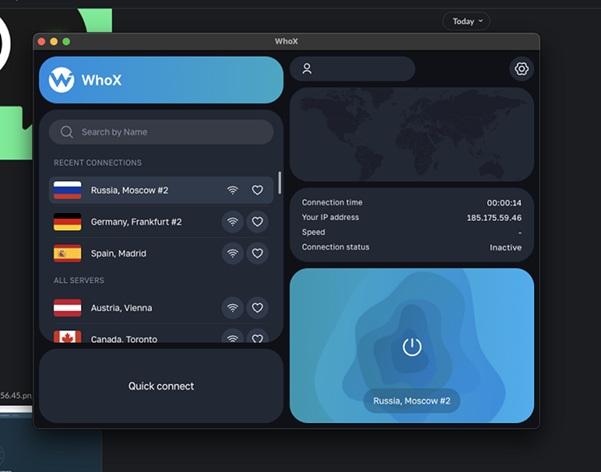
Eventually, I landed on one provider that wasn’t just another overhyped name. WhoX VPN stood out because the vpn software for Mac actually ran well on my MacBook, didn’t overheat my machine, and didn’t log my activity. Setup was easy - just download vpn mac, launch the app, and you’re good to go. It stayed out of my way while still doing its job.
Honestly I wasn’t too worried about having hundreds of servers - the VPN I picked has more than enough around the world. And I didn’t care if the app looked super fancy either. What actually mattered to me was that it worked every time and didn’t mess with my privacy. I’m just not cool with my provider watching everything I do, saving it, and then either getting hacked or sharing it with whoever asks.
How to use VPN on Mac for free or at least try it
If you’re wondering how to use vpn on mac for free, many providers (including WhoX VPN) offer limited free versions or trial periods. Just don’t count on long-term privacy from a totally free service - they often make money in other ways, like tracking or ads.
Still, it’s a good way to test the vpn app macbook before you commit. And if it works well for your needs, it’s worth paying for.
Best VPN for Mac is different for everyone, but for me it meant finding a balance between privacy, performance, and ease of use. If you’ve been burned by buggy apps or slow servers, look past the hype and pay attention to the details. That’s where the real difference is.