
10 POS System Capabilities That Support Consistency Across Restaurant Locations
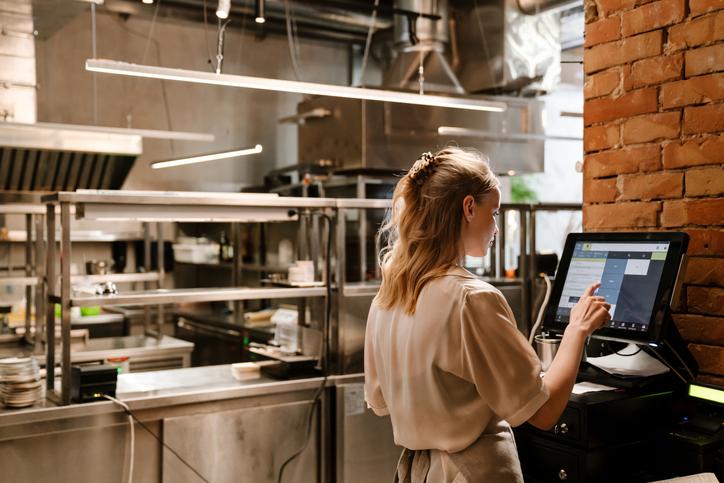
Maintaining consistency across restaurant locations is one of the most persistent operational challenges for growing brands. As the number of stores increases, variability in staffing, local decision-making, and execution habits can lead to uneven guest experiences and operational performance.
Even small differences in how orders are handled, communicated, or fulfilled can compound across locations and weaken brand standards over time.
Technology plays a critical role in managing this complexity. A restaurant pos system acts as a shared operational foundation, helping ensure that core processes are executed the same way across locations while still allowing for necessary local flexibility.
Below are ten POS system capabilities that restaurant operators commonly evaluate when consistency across locations is a top operational priority.
1. Centralized Menu and Configuration Management
One of the most important drivers of consistency is how menus and configurations are managed across locations. When updates are handled manually or inconsistently, discrepancies in pricing, modifiers, or availability can quickly emerge.
POS systems support consistency by:
- Allowing centralized menu creation and updates
- Ensuring changes are deployed uniformly across locations
- Reducing the risk of unauthorized local modifications
Centralized control helps ensure that guests encounter the same offerings and options regardless of which location they visit.
2. Standardized Order Entry Workflows
Order entry is the starting point for execution consistency. Differences in how staff enter orders can lead to downstream issues in the kitchen and service flow.
POS systems help standardize order entry by:
- Structuring menus and modifiers consistently
- Enforcing required selections
- Providing uniform interfaces across locations
These standardized workflows reduce variability caused by individual habits or local practices, supporting more predictable execution.
3. Consistent Order Routing to Kitchen Operations
Once an order is placed, it must move into the kitchen in a consistent and timely manner. Variability in order routing can lead to uneven pacing and preparation standards across locations.
POS systems are often evaluated for how well they integrate with a kitchen display system to:
- Route orders automatically and consistently
- Present information in a uniform format
- Maintain the same kitchen workflows across locations
This consistency helps kitchens execute orders the same way regardless of store size or staffing mix.
4. Uniform Handling of Modifiers and Special Requests
Special requests are a common source of inconsistency, particularly when different locations interpret or communicate them differently.
POS systems support consistent handling by:
- Displaying modifiers clearly and uniformly
- Ensuring changes remain visible throughout preparation
- Reducing reliance on verbal clarification
Clear system-based handling helps ensure that special requests are executed accurately at every location.
5. Consolidated Management of Multiple Service Channels
Many multi-location restaurants operate across dine-in, takeout, delivery, and drive-thru channels. Without centralized systems, execution standards can drift between channels and locations.
POS systems help maintain consistency by:
- Consolidating orders from all channels
- Applying the same sequencing and preparation rules
- Providing a unified operational view
In operations that also rely on a drive thru system, this consolidation is especially important to ensure speed-focused workflows remain aligned with brand standards.
6. Role-Based Access and Governance Controls
Consistency depends not only on workflows, but also on governance. When system access is loosely controlled, local variations and errors become more likely.
POS systems support governance through:
- Role-based permissions by job function
- Clear separation between corporate and local authority
- Approval workflows for sensitive actions
These controls help maintain consistent execution while still enabling efficient local operations.
7. Real-Time Operational Visibility Across Locations
Multi-location consistency requires visibility beyond individual stores. Operators need insight into how each location is performing in real time.
POS systems support this capability by:
- Providing live views of order volume and pacing
- Highlighting exceptions or delays by location
- Enabling centralized monitoring during peak periods
This visibility allows leaders to identify inconsistencies early and take corrective action before issues become systemic.
8. Standardized Reporting and Performance Metrics
Consistency is difficult to measure without consistent data. Disparate reporting formats or definitions can obscure true performance differences between locations.
POS systems help standardize reporting by:
- Applying consistent data definitions across stores
- Supporting comparable metrics by location or region
- Enabling enterprise-level performance analysis
Standardized reporting allows operators to identify best practices and address underperformance more effectively.
9. Support for Consistent Training and Onboarding
High turnover and frequent expansion make training consistency a major challenge for multi-location brands. POS systems play an important role in simplifying onboarding.
POS platforms support training consistency by:
- Providing uniform interfaces across locations
- Reinforcing standardized workflows
- Reducing reliance on informal, location-specific training
This consistency helps new staff reach productivity faster while maintaining brand standards.
10. Scalable Architecture That Maintains Performance
As brands grow, systems must scale without introducing variability in performance. Inconsistent system responsiveness across locations can undermine execution.
POS systems are often evaluated for:
- Stable performance as locations are added
- Predictable behavior during peak service
- Minimal variation in system response times
Scalable architecture helps ensure that consistency is maintained even as the footprint expands.
Broader Operational Impact of Cross-Location Consistency
When POS systems support consistent execution across locations, the operational benefits extend beyond standardization. Restaurants often experience:
- More predictable service outcomes
- Reduced operational risk during growth
- Stronger alignment between corporate and local teams
These outcomes make it easier to scale without sacrificing quality or control.
Why Consistency Should Drive POS Evaluation
POS evaluations that focus only on features or cost often overlook the realities of multi-location operations. Consistency across locations is what allows brands to grow sustainably and protect guest trust.
By assessing POS capabilities through the lens of cross-location consistency, operators can better determine whether a system supports long-term operational and brand objectives.
Closing Perspective
Consistency across restaurant locations does not happen automatically—it is supported by systems that reinforce standardized workflows, visibility, and governance. By enabling centralized control, uniform execution, and scalable performance, POS systems help restaurants deliver the same experience at every location.
For operators reviewing POS platforms, understanding which capabilities support cross-location consistency provides a practical framework for making technology decisions that strengthen operations as the business grows.