Security | Threat Detection | Cyberattacks | DevSecOps | Compliance

CRA 24-Hour Reporting Rule: What Happens If You Miss It?

The EU Cyber Resilience Act's 24-hour reporting deadline is already in force. Is your organisation prepared? Since 11 September 2026, manufacturers of covered software, IoT devices and connected products must report certain cybersecurity vulnerabilities and incidents within strict deadlines. Under the EU Cyber Resilience Act (CRA), manufacturers must submit: Within 24 hours: An early warning after becoming aware of an actively exploited vulnerability or severe incident affecting product security.


The 5 Biggest DORA Compliance Mistakes Financial Institutions Make

Are these common DORA compliance mistakes putting your financial organization at risk? The Digital Operational Resilience Act (DORA) requires financial entities to take a structured approach to ICT risk management and digital operational resilience. But organizations can still encounter gaps when translating regulatory requirements into day-to-day controls. In this video, we break down 5 common DORA compliance mistakes financial institutions should avoid, including.

CRA 24-Hour Reporting Rule: What Happens If You Miss It?

The EU Cyber Resilience Act's 24-hour reporting deadline is already in force. Is your organisation prepared? Since 11 September 2026, manufacturers of covered software, IoT devices and connected products must report certain cybersecurity vulnerabilities and incidents within strict deadlines. Under the EU Cyber Resilience Act (CRA), manufacturers must submit: **Within 24 hours:** An early warning after becoming aware of an actively exploited vulnerability or severe incident affecting product security.

CRA vs NIS2: Does Your Business Need to Comply With Both?

CRA vs NIS2: Which EU cybersecurity regulation applies to your business? Could your company face obligations under the Cyber Resilience Act, NIS2 Directive, or both? If your organisation develops software, manufactures connected products, or operates in a regulated European sector, understanding the difference between CRA and NIS2 is essential for identifying your cybersecurity compliance responsibilities.

What Should a DORA Gap Assessment Include? Explained in 60 Seconds

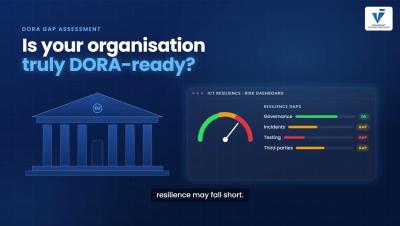
Is your financial organisation prepared for the EU Digital Operational Resilience Act (DORA)? A DORA gap assessment helps financial entities identify weaknesses in their ICT risk management framework and understand what needs to be improved to meet applicable regulatory requirements. In this 60-second YouTube Short, VISTA InfoSec explains 5 essential areas to evaluate: ICT Risk Management – Governance, security controls, ICT assets and business continuity.

Can Your ICT Vendors Put Your DORA Compliance at Risk?

Can your ICT vendors put your DORA compliance at risk? Even with strong internal cybersecurity controls, third-party ICT providers can introduce operational resilience risks that financial institutions cannot afford to overlook. Under the Digital Operational Resilience Act (DORA) financial entities must establish effective ICT third-party risk management practices, including vendor oversight, due diligence, contractual arrangements, ongoing monitoring and appropriate contingency planning.

Which EU Regulations Apply to Your Business EU AI Act, DORA, NIS2 & CRA

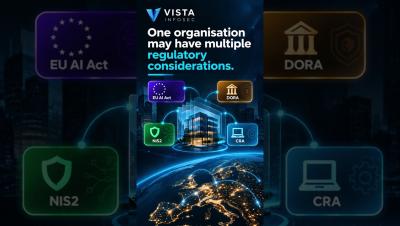
Which European regulations could affect your organisation? Depending on your business activities, products, customers and operations, you may need to consider regulations such as the EU AI Act, DORA, NIS2 Directive, Cyber Resilience Act (CRA) and other European regulatory requirements. The VISTA Regulatory Exposure Check is designed to help organisations get an initial indication of which regulatory areas may deserve further investigation.

The 5 Biggest DORA Compliance Mistakes Financial Institutions Make

Are these common DORA compliance mistakes putting your financial organization at risk? The Digital Operational Resilience Act (DORA) requires financial entities to take a structured approach to ICT risk management and digital operational resilience. But organizations can still encounter gaps when translating regulatory requirements into day-to-day controls.

What Are Auditors Looking for During a DORA Assessment

Are you prepared for a DORA assessment — and can you actually prove your organization is operationally resilient? Under the Digital Operational Resilience Act (DORA), having cybersecurity policies on paper isn't enough. Financial entities need to demonstrate how ICT risks are governed, monitored, tested, and managed in practice. In this video, we cover the key areas that assessors and regulators may review.

What Evidence Will Regulators Expect Under NIS2?

Being NIS2-ready is not just about implementing cybersecurity controls—you should also be prepared to demonstrate that appropriate cybersecurity risk-management measures are actually in place. In this video, we cover some of the key documentation and evidence organizations may need to maintain, including: Security policies and cybersecurity governance documentation Cybersecurity risk assessments and risk-management processes Incident response procedures Business continuity and crisis management plans Supply chain security practices Employee cybersecurity awareness and training activities.