Security | Threat Detection | Cyberattacks | DevSecOps | Compliance

Bring Your AI. Give It Reach. | Reach Security

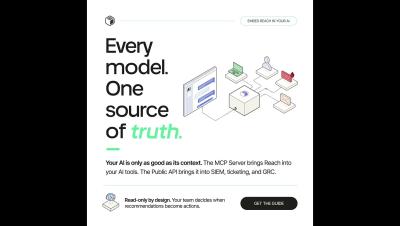
Point an AI model at a security stack it doesn't fully understand and you get confident, wrong answers faster. Reach gives your AI a source of truth for security controls. The MCP Server connects MCP-compatible AI tools directly to Reach. The Public API brings Reach findings and evidence into SIEM, ticketing, and GRC workflows. The MCP Server is intentionally read-only, so your team decides when recommendations become actions.

Ranking the top 10 SIEM platforms in 2026

Security information and event management, or SIEM, remains one of the foundational technologies in the security operations center. Gartner defines SIEM as a configurable system of record that collects, aggregates, and analyzes security event data from on-premises and cloud environments to support threat detection, investigation, and response, along with compliance requirements.

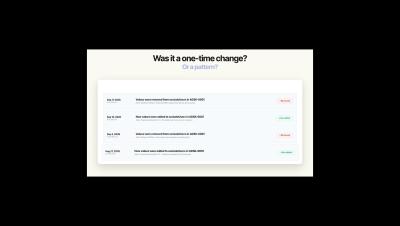
A Configuration Change Should Never Leave You Guessing

Security controls change constantly. Firewall rules are modified, endpoint exclusions are added, identity policies are adjusted, and temporary exceptions appear as teams respond to new business and operational requirements. Some of those changes are expected. Some turn out to be harmless. Others quietly weaken the defenses organizations depend on. Detecting that a configuration changed is really important for security teams, but it’s just the beginning of the investigation.

Why Reach Security Solves Problems That Aren't Sexy | Garrett Hamilton

"The problems we solve are not sexy." But they are hyper-relevant and important. Garrett Hamilton joined Moudy Elbayadi, Ph.D. on Inflection Point: Digital Intelligence Podcast. He explains why Reach goes after problems that have been around for decades, that matter, and that nobody wants to own. He covers why these problems have lasted so long and why they are now possible to fix at scale.

Vulnerability Management: A Complete Guide to the Process and Lifecycle

If your vulnerability management program runs on a fixed scan-and-patch cadence, whether monthly, quarterly, or tied to a compliance deadline, you are measuring your response time against an attacker timeline that continues to accelerate. Vulnerability management remains a foundational security discipline. It identifies real, exploitable flaws and gives teams a structured way to prioritize and remediate them.

Posture Management: A Modern Approach to Building Security That Holds

Security posture is one of the most used yet misunderstood concepts in cybersecurity. For some, it means being audit-ready. For others, it’s shorthand for how many tools are deployed across endpoints, identities, and cloud environments. But in practice, posture is something deeper. It’s the ability of your environment to withstand real-world threats, not just meet compliance requirements. Strong posture doesn’t just reflect what’s present.

Adopting & Implementing Zero Trust: Moving from Concept to Execution

Zero Trust is often summarized as “never trust, always verify.” More precisely, it is a security model built on the premise that trust should never be granted implicitly based on where a user, device, workload, or resource sits. That makes Zero Trust much bigger than deploying a particular product or turning on a handful of access policies.

Configuration Drift in the Age of AI: 2026 Telemetry Report

Reach analyzed a year of telemetry from more than 50 production environments. The average organization generated 13 configuration drift alerts per day. 12 of them traced to a genuine, risk-prioritized exposure. A 92% signal rate on a category of alert most teams treat as background noise. The full report is out now. Security Intent vs. Security Reality: Configuration Drift in the Age of AI.