Security | Threat Detection | Cyberattacks | DevSecOps | Compliance

The CRA Deadline You Can't Ignore: What Every Company Needs to Fix Before September 2026

The EU Cyber Resilience Act (CRA) introduces a 24-hour reporting requirement for actively exploited vulnerabilities from September 11, 2026. For companies selling products with digital elements into the EU, meeting that deadline will require more than compliance documentation — it demands fast vulnerability identification, clear ownership, reliable SBOM visibility, and a remediation process that can move quickly.


Get Your CTEM Initiative Moving with Seemplicity

CTEM scoping isn’t about putting everything you can scan into scope. It’s about defining what matters most to the business and keeping that definition current as your environment changes. Get scoping right, and every stage that follows—from discovery to prioritization and mobilization—becomes more focused, relevant, and effective. Continuous Threat Exposure Management breaks down into five stages: scoping, discovery, prioritization, validation, and mobilization.

We Solved Visibility. Now We Have to Solve the Work

Consolidating every security finding into one place solves visibility, but it doesn’t reduce risk on its own. Aggregation without context just makes the backlog feel bigger. Real remediation depends on answering four questions about each exposure: what needs fixing, why it matters, where the fix happens, and who owns it.

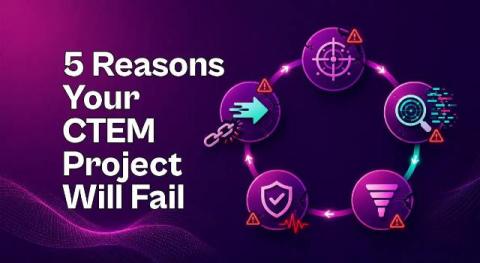
5 Reasons Your CTEM Project Will Fail

CTEM sounds straightforward as a five-stage loop, but most programs stall quietly somewhere inside it. This post breaks down the five places CTEM projects actually break — bad scoping, unreconciled discovery tools, severity mistaken for risk, skipped validation, and unowned remediation — and argues that these aren’t five separate problems, but symptoms of running CTEM as disconnected efforts instead of one continuous workflow.

AI Can't Do CTEM Alone (And Neither Can You)

AI can meaningfully power Continuous Threat Exposure Management (CTEM), but only for specific stages of the cycle: prioritization, validation, and remediation routing. AI can’t replace the underlying data integration work, and it can’t turn CTEM into a single product, because Gartner defines CTEM as a continuous five-stage program (scoping, discovery, prioritization, validation, mobilization), not a tool you install.

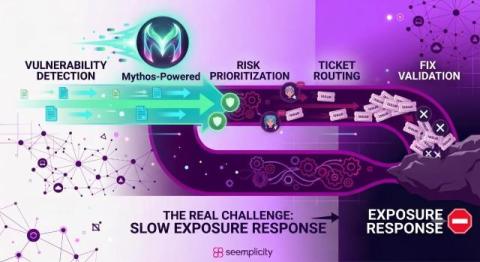
What Mythos Means for Your Vulnerability Management Team

Modern exposure management has evolved beyond vulnerability scanning and alert volume into a discipline focused on measurable risk reduction. As the exposure management market matures, security leaders are adopting cyber exposure management platforms that unify signals across vulnerability, cloud, application, and attack surface tools to prioritize what truly matters.

CTEM vs Vulnerability Management: What's the Difference?

Traditional vulnerability management focuses primarily on identifying, prioritizing, and remediating known vulnerabilities. CTEM is a broader, continuous framework that also considers other exposures, validates which risks are realistically exploitable, and mobilizes the right teams to reduce them. CTEM does not replace vulnerability management; it builds on it by adding the business context and operational focus needed to address the exposures that matter most.