Security | Threat Detection | Cyberattacks | DevSecOps | Compliance

From Brand Impersonation to Account Takeover: The ATO Attack Chain

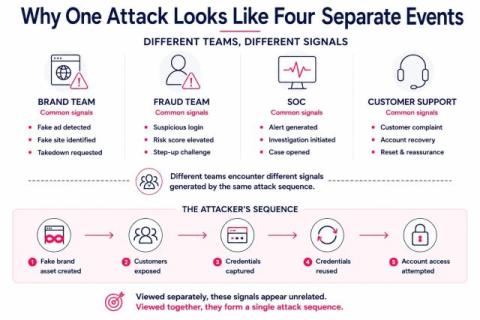
Brand impersonation account takeover (ATO) happens when attackers use fake brand assets to expose customers, harvest credentials, and attempt access on the legitimate site. The impersonation stage happens outside the enterprise’s login environment, but the ATO risk appears when stolen credentials, attacker devices, or exposed users reach the legitimate login environment. That distinction matters because brand impersonation and account takeover are often handled as separate problems.

From Brand Impersonation to Account Takeover: The ATO Attack Chain

Brand impersonation account takeover (ATO) happens when attackers use fake brand assets to expose customers, harvest credentials, and attempt access on the legitimate site. The impersonation stage happens outside the enterprise’s login environment, but the ATO risk appears when stolen credentials, attacker devices, or exposed users reach the legitimate login environment. That distinction matters because brand impersonation and account takeover are often handled as separate problems.

Fake Search Ads and Brand Impersonation: Why Takedown Alone Misses the Real Risk

Fake search ads are paid search placements that impersonate trusted brands, services, or login destinations to redirect users into fraudulent journeys. For enterprises, the risk is not only that attackers buy visibility. It is that they intercept customers at the exact moment those customers are trying to reach the real brand. That makes fake search ads different from many other phishing entry points. The user is not responding to a suspicious message.

How to Detect Brand Impersonation: Key Signals for Security Teams

Brand impersonation detection is the process of identifying fake domains, cloned brand experiences, and exposure signals that show attackers are using a trusted brand to deceive customers, employees, or partners. For security teams, the harder problem is not finding every impersonation asset. It is knowing which signals indicate live user exposure and which ones should change the response.