Security | Threat Detection | Cyberattacks | DevSecOps | Compliance

Top Container Scanning Tools in 2025

Containers have become the backbone of modern DevOps, but they also introduce new security headaches. A single vulnerable base image or misconfigured container can snowball into a major breach across dozens of services. In fact, recent research found that about 75% of container images carry high-severity or critical vulnerabilities. Add to this the 2025 trends of supply chain attacks and ever-evolving CVEs, and it’s clear that container scanning tools are a must-have.

Veracode vs Checkmarx vs Fortify

Modern software teams have a buffet of security tools to choose from. Veracode, Checkmarx, and Fortify are three heavyweight application security platforms often considered by technical leaders. Each promises to secure your code and catch vulnerabilities early. But choosing the right one matters: it impacts developer workflow, security coverage, and how much time your team spends chasing false alarms.

Introducing Aikido AI Cloud Search

Gain instant visibility into your cloud environment with Aikido Cloud Search. Search your cloud like a database. Whether you want to identify exposed databases, vulnerable virtual machines, or over-permissive IAM roles — Aikido gives you the power to uncover risk in seconds. No query language required, no waiting on devops. Just describe what you’re looking for, like “Give me all VMs with CVE-2025-32433 that have port 22 open.” Scroll down to "How It Works" to get technical.

Reducing Cybersecurity Debt with AI Autotriage

The boy who cried wolf goes back to a fable where a shepherd boy mocked the other villagers by telling them that a wolf was attacking the flock. The villagers believed him at first, but he was just laughing with them. When the shepherd boy repeated his joke, villagers started to ignore him and at some point a real wolf comes and attacks the sheep. The boy ‘cried wolf’ but nobody believed him anymore.

Understanding SBOM Standards: A Look at CycloneDX, SPDX, and SWID

Modern applications are no longer giant monoliths, they are a collection of micro services, open-source components, and third-party tools. But this makes it very difficult to actually understand the insides of our applications, particularly when you consider that our open-source dependencies also have open-source dependencies! The Software Bill of Materials (SBOM) plays a key role here. SBOMs provide a detailed inventory of all software components.

You're Invited: Delivering malware via Google Calendar invites and PUAs

On March 19th, 2025, we discovered a package called os-info-checker-es6 and were taken aback. We could tell it was not doing what it said on the tin. But what's the deal? We decided to investigate the matter and initially hit some dead ends. But patience pays off, and we eventually got most of the answers we sought. We also learned about Unicode PUAs (No, not pick-up artists). It was a roller coaster ride of emotions!

Container Security is Hard - Aikido Container Autofix to Make it Easy

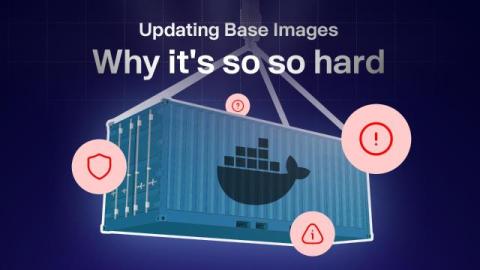
Container security starts with your base image. But here’s the catch: In this post, we’ll explore why updating base images is harder than it seems, walk through real examples, and show how you can automate safe, intelligent upgrades without breaking your app.

RATatouille: A Malicious Recipe Hidden in rand-user-agent (Supply Chain Compromise)

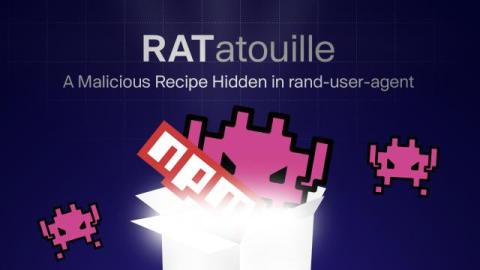
On 5 May, 16:00 GMT+0, our automated malware analysis pipeline detected a suspicious package released, rand-user-agent@1.0.110. It detected unusual code in the package, and it wasn’t wrong. It detected signs of a supply chain attack against this legitimate package, which has about ~45.000 weekly downloads.