Security | Threat Detection | Cyberattacks | DevSecOps | Compliance

Legacy GRC can't keep up. Cyber risk assurance can.

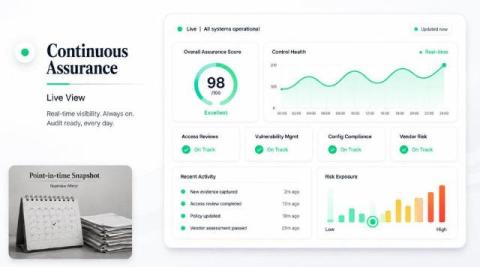
Enterprise security teams need to secure a risk surface that is constantly changing. However, the tools in their stack were built to check only a fraction of that risk. For confirmation, they rely on static snapshots and annual attestations. I now see this as the defining problem in GRC. When 451 Research (S&P Global) initiated coverage of TrustCloud in this space, they described a clear and growing divide.
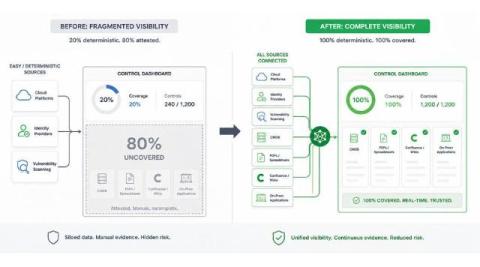
From Demo to Production: Scaling Continuous Control Monitoring within the ServiceNow and Atlassian ecosystem

Enterprises settled the question:“is my software actually working” about a decade ago. Not by hiring more people to read logs, but by instrumenting the data plane once and letting anyone query it. Observability became infrastructure, and the people who used to read logs went and solved harder problems. GRC has never had that moment. We still read the logs, opine, and complete the attestation. And then it stops. The demo proved the concept and became the ceiling.

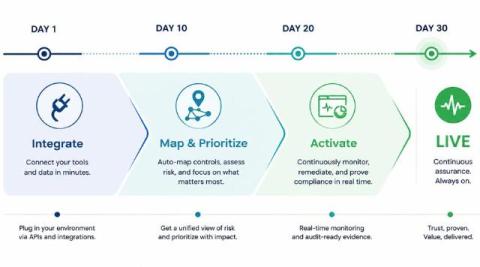
How to implement continuous control monitoring in 30 days

Continuous control monitoring may sound like a program you have to rebuild your whole GRC function to reach. It isn’t. It’s a phased build that integrates with the systems you already run, and a focused team can have continuous monitoring live across its priority controls in about a month.

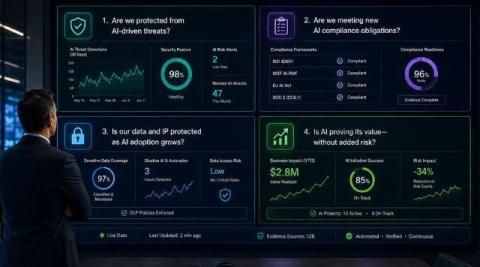
4 Questions every CISO needs to answer about AI

If your board asked today how you are governing AI, how would you respond? Not just the policy you wrote, but what is actually happening across the business. Could you answer with evidence? Many CISOs cannot answer with certainty. AI has entered the business faster than anyone could write policy for it, and securing it across all areas now seems to be the CISO’s responsibility.