Security | Threat Detection | Cyberattacks | DevSecOps | Compliance

6 Ways to move from security questionnaires to self-serve trust

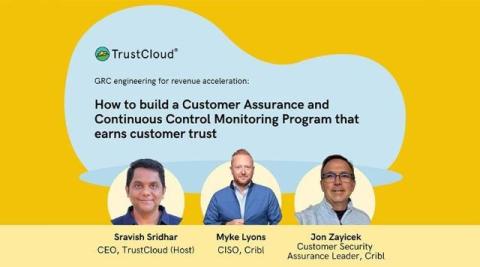
In this session of the Strategic CISOs webinar series, Sravish Sridhar (CEO, TrustCloud) sat down with Myke Lyons (CISO, Cribl) and Jon Zayicek (Customer Security Assurance Leader, Cribl) to break down how Cribl built a customer trust program that helps buyers self-serve proof, reduces questionnaire drag, and gives security a clear line of sight to pipeline and ARR. Cribl has turned customer assurance into a revenue accelerant, and that posture has produced great results.
Acceptable use policy template guide for powerful compliance

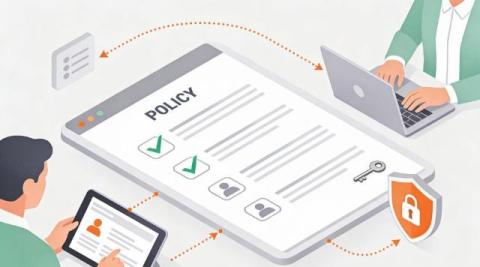
An Acceptable Use Policy (AUP) is a strategic compliance tool that protects people, data, and systems while setting clear expectations for technology use. A well-crafted AUP turns subjective norms into measurable rules that everyone in the organization can follow, helping mitigate legal, security, and operational risk. By standardizing acceptable behavior and linking usage rules to broader governance and risk management objectives, companies create shared understanding and accountability across teams.

GRC Engineering for Revenue Acceleration | TrustCloud

How to build a Customer Assurance and Continuous Control Monitoring Program that earns customer trust. Join us for a practical and insightful conversation on how transparent security and compliance posture sharing , high-confidence AI-assisted security questionnaire completion, and continuous control monitoring (CCM) translate directly into customer assurance, revenue acceleration, faster sales cycles, and higher buyer confidence.

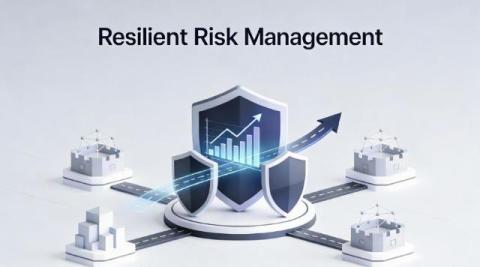
Unlock resilient risk management strategies for 2026 success

Resilience is not a metric. It is the ability of an organization to anticipate, absorb, and adapt to disruption without disintegration. In 2026, risk management will be less about identifying what might go wrong and more about designing systems that endure what inevitably will. The pace of change has erased the illusion of stable baselines. Risk is dynamic, spreading faster through digital ecosystems, third-party dependencies, and regulatory uncertainty than most governance models were built to handle.

How strategic CISOs turn AI risks into competitive advantages

As the flurry of excitement over fresh AI innovation begins to fade, risk leaders, heads of GRC and CISOs have a new challenge to tackle. Regulators, customers, and boards are all asking harder questions about how AI is used, secured, and audited. For CISOs, AI governance is now a board-level expectation. Some organizations will be able to confidently show their measured and documented approach to AI governance.