


Security | Threat Detection | Cyberattacks | DevSecOps | Compliance

The Guide for Moving From Qualitative to Quantitative Risk Assessments

‍Once relegated to the technical corners of the organization, cybersecurity is no longer an isolated business problem that can be attended to reactively. Amid the rising costs of cyber incidents and growing regulatory scrutiny, it has become a high-level business risk that requires proactive analysis.
What Is a Data Breach and How to Mitigate Its Effects

‍ ‍All data breaches are considered cyber attacks, but not all cyber attacks are breaches. A data breach is a unique type of cyber incident that specifically involves unauthorized access to sensitive and confidential information pertaining to customer data, corporate data, or both. DDoS attacks and business outages, for instance, are not categorized as breaches because an external actor has not compromised internal assets.

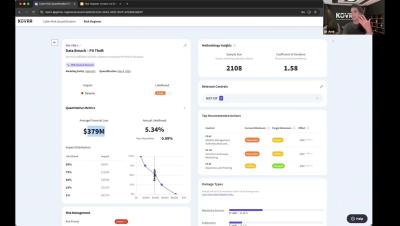
Office Hours With Or Amir - Dive Into The First Ever CRQ-Powered Cyber Risk Register

Explore Kovrr’s brand-new CRQ-Powered Cyber Risk Register — a first-of-its-kind solution that’s redefining the way organizations build cyber GRC programs and manage cyber risk. Led by Or Amir, Product Manager at Kovrr, this session will offer a hands-on deep dive into the risk register’s extensive capabilities and show you why moving beyond static, spreadsheet-based registers to a fully quantified, dynamic risk intelligence framework is necessary for achieving resilience in today’s landscape.

The CEO, CFO, and Board's Expanding Role in Cyber Risk Management

‍Cyber risks have steadily grown more disastrous over the years, with a single event having the power to cause billions of dollars worth of damage. As business leaders watch the monetary losses pile up, whether facing them firsthand or witnessing industry peers absorb the blow, they have begun to realize that they can no longer conceive of cybersecurity as a technical duty managed solely under the chief information security officer’s (CISO’s) purview.