
Security | Threat Detection | Cyberattacks | DevSecOps | Compliance

How Hacker Groups Exploited AI to Develop Malware and Spread Disinformation-What It Means for Digital Security

In a bold move aimed at safeguarding its AI ecosystem, OpenAI recently disabled several ChatGPT accounts linked to Russian, Chinese, and Iranian threat actors. These malicious entities exploited the chatbot’s capabilities to aid malware development, launch social media influence campaigns, and probe U.S. satellite communications infrastructure.

New Cybersecurity Executive Order Redraws Priorities: What It Means for AI, Digital IDs, and Supply Chain Security

As the global cyber threat landscape continues to evolve, the latest cybersecurity executive order from the Trump administration is making waves—setting new priorities while reversing some of the cornerstone initiatives from previous administrations. The new directive pivots away from centralized federal control and compliance-heavy practices, placing a sharper focus on AI innovation, post-quantum cryptography, and software security by design.

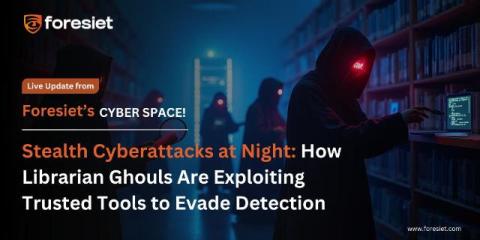
Stealth Cyberattacks at Night: How Librarian Ghouls Are Exploiting Trusted Tools to Evade Detection

The cyber threat landscape is rapidly evolving. Among the most recent and concerning trends is the use of stealth attacks that bypass traditional defenses by abusing legitimate tools. One such campaign, led by a group called Librarian Ghouls, is targeting organizations across Russia with cleverly disguised phishing emails, cryptominers, and remote-access software—often operating undetected in the middle of the night.

New Ransomware Groups Emerging in Late May 2025: A Threat Intelligence Overview

As of the end of May 2025, seven new ransomware groups have surfaced with active leak sites and confirmed victim postings. These groups—Silent Ransomware, Gunra Ransomware, JGroup Ransomware, IMN Crew, DireWolf Ransomware, DataCarry Ransomware, and SatanLock Ransomware have demonstrated early signs of active targeting and data exfiltration campaigns. This blog provides a detailed breakdown of their activity, initial victimology, and attribution by geography where applicable.