


Security | Threat Detection | Cyberattacks | DevSecOps | Compliance

Stryker Hack: What We Know So Far

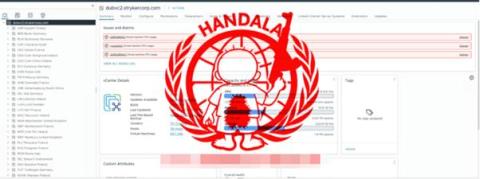
On March 11, 2026, the Iranian hacktivist group Handala Hack Team claimed responsibility for compromising the American healthcare technology company Stryker. Public reporting suggests more than 200,000 systems were impacted and up to 50TB of data exfiltrated. While these figures remain unverified, the scale of operational disruption alone places this incident among the most significant enterprise cyber events of the year so far.
Defending Critical Infrastructure in a Hyperconnected Society

On April 28, 2025, a massive power outage affected large areas of the Iberian Peninsula and parts of southern France. Traffic lights, elevators, point-of-sale systems, and many mobile phone and internet networks suddenly stopped functioning. Subways and parts of the rail network ground to a halt. Industrial production and numerous service businesses were interrupted for several hours to a full day.

Handala Hack Team: Threat Actor Profile

Handala Hack Team, also stylized as Handala_hack, is a hacktivist threat group aligned with pro-Palestinian messaging and Iranian strategic interests. It emerged in December 2023 following the escalation of the Gaza conflict, shortly after the 7 October 2023 Hamas attack on Israel, presenting itself as a pro-Palestinian hacktivist collective. Its operations closely mirror Iranian state-linked activity and indicate a focus on disruption and psychological impact rather than financial gain.

Navigating Cyber Essentials v3.3: A Guide to Compliance

On 27 April 2026, the National Cyber Security Centre (NCSC) will officially implement Cyber Essentials v3.3, delivered through a new self-assessment question set known as Danzell, which replaces the previous Willow set. The foundational five technical controls remain the bedrock of the scheme, but this latest iteration tightens wording, scoping, and marking criteria in ways that have immediate consequences.

AI Penetration Testing: Protecting LLMs From Cyber Attacks

88% of organizations now regularly use artificial intelligence (AI) in at least one business function. While adoption of AI technologies has accelerated rapidly, security measures often lag. The rush to roll out AI has, in many cases, overshadowed essential testing and safety protocols. This is particularly a worry when AI and Large Language Models (LLMs) become deeply embedded within organizational workflows and systems in a way that most software isn’t.

What Is a PCI ASV Scan? A Guide to PCI DSS Compliance Scanning

“We do not store any credit card data, we outsource it. PCI DSS is not relevant for us.” If you think this way, you are not alone, but it is a misconception. The Payment Card Industry Data Security Standard (PCI DSS), is designed to enhance the security of credit card data. It applies to all organizations that store, process, or transmit cardholder data and sensitive authentication data, or that could affect the security of the environment used for such data.