Security | Threat Detection | Cyberattacks | DevSecOps | Compliance

How we brought agentic workflows to Cloud SIEM with the Datadog MCP Server

Security engineers using Cloud SIEM spend their day-to-day investigating signals, tuning detection rules, managing suppressions, running historical jobs across interconnected workflows, and more. Agents are becoming a practical way to navigate that complexity, and we built a set of security tools for the Datadog MCP Server to support them. Cloud SIEM is only one part of a broader cloud security ecosystem, so the Security MCP toolset has to grow across many teams and products.

Monitor Apigee X API traffic and security with Datadog

Apigee X is Google Cloud’s API management platform. Software and platform teams use it to secure, publish, and govern the APIs that internal services, partners, and external developers depend on. Apigee X sits in the request path for that traffic, so a latency spike or a rise in policy errors reaches API consumers before most other signals do. Watching proxy traffic, latency, and security posture usually means jumping between Apigee analytics and separate infrastructure tools.

Protect AWS Strands Agents with Datadog AI Guard

AI agents can reason through tasks, call tools, and adapt their next steps based on intermediate results. That flexibility is useful for building agentic applications, but it also creates security risk at runtime: A prompt injection attempt can change the agent’s instructions, a malicious request can try to exfiltrate sensitive data, and an unsafe tool call can lead to an action that the application owner did not intend.

Reduce SAST false positives with agentic evaluation and Bits Memories

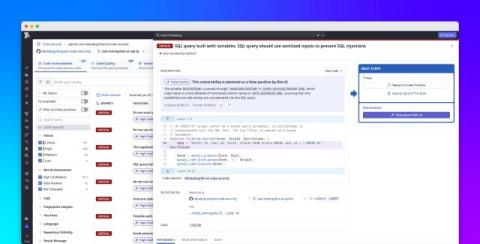
Static application security testing (SAST) tools are intentionally conservative. Traditional scanners identify code that appears exploitable and flag the snippet for review, even when protections elsewhere in the application prevent exploitation. Although that approach helps teams catch vulnerabilities, it also creates false positives that consume developer time, slow remediation efforts, and make future alerts easier to dismiss.