Security | Threat Detection | Cyberattacks | DevSecOps | Compliance

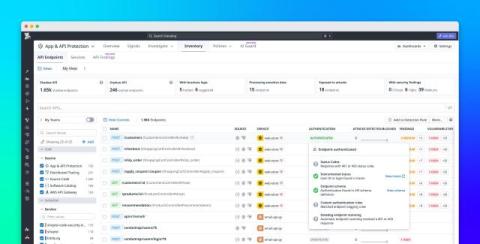
Improve API authentication detection with Datadog

Many organizations have hundreds or thousands of API endpoints across their services, each of which handles authentication differently. For example, one service might rely on standard headers like Authorization: Bearer, while another uses an API key, and a third uses a custom JSON Web Token header with mechanisms or naming conventions specific to the team that built it.

Securing AI agents: Why guardrail placement is a key design decision

When teams start building AI agents, especially with managed systems like Amazon Bedrock, they often wonder whether simply enabling guardrails is enough to secure their agents. A framework like Amazon Bedrock Guardrails provides a solid foundation for content filtering and policy enforcement, but having guardrails in place is only part of the equation.

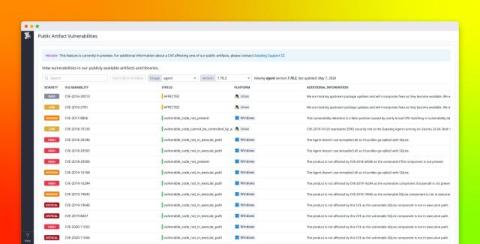
Reduce CVE noise with OpenVEX assessments in Datadog

Software composition analysis (SCA) tools have become essential in modern security programs. They continuously scan software supply chains and match component fingerprints against Common Vulnerabilities and Exposures (CVE) databases to surface vulnerabilities in dependencies. SCA tools are effective at scale, but they introduce a persistent challenge: Not every flagged vulnerability actually presents a risk.

Incident Response: Keeping Cool When Everything's on Fire

The DevOps revolution broke down the traditional silos between development and operations, fundamentally reshaping how we build and maintain software. But with this evolution came an inevitable, and often stressful, reality for many engineers: being on-call and responding to incidents. In this session, Daljeet Sandu will explore how on-call has evolved in recent years, highlight proven best practices, and share insights into the future of incident response in DevOps.

Reviewing Malicious PRs at Scale with AI

As AI coding assistants accelerate software development, the volume of pull requests at Datadog has grown to nearly 10,000 per week, increasing the risk that malicious changes slip through due to review fatigue. To address this, Datadog built BewAIre, an LLM-powered code review system designed to identify malicious source code changes introduced by threat actors. By reducing approval fatigue for developers while increasing friction for attackers, BewAIre guides human reviewers to the areas where judgment matters most, without slowing developer velocity.

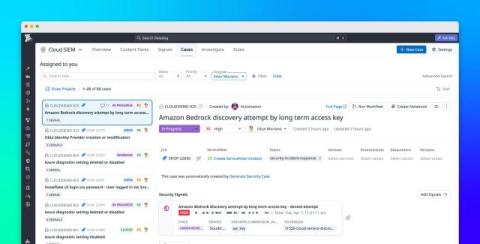
Turn security signals into structured investigations with Case Management in Datadog Cloud SIEM

Security operations teams manage a high volume of signals, often across multiple tools. Analysts may triage detections in one system, document progress in another, and coordinate remediation elsewhere. As context becomes fragmented, response times slow and the risk of missed threats increases.

This Month in Datadog - April 2026

In the latest episode of This Month in Datadog, Jeremy shares how to run autonomous Cloud SIEM investigations, remediate vulnerabilities with auto-generated fixes, and use natural language to explore Datadog. Later, Sumedha Mehta spotlights the Datadog MCP Server, which gives AI agents real-time access to Datadog’s observability data. Then, Chetan Sharma walks through Datadog Experiments, which measures how product changes impact the user journey.