Security | Threat Detection | Cyberattacks | DevSecOps | Compliance

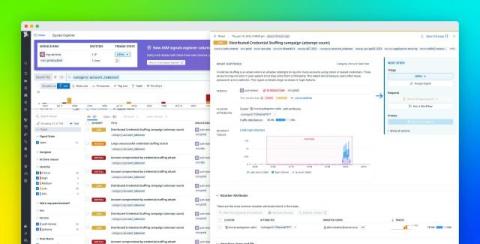
Detect and respond to evolving attacks with Attacker Clustering

In today’s threat landscape, detecting and responding to distributed attacks is more challenging than ever. Attackers often operate in stealth, using coordinated strategies to blend into normal traffic and evade detection. To address this issue, Datadog Application Security Management (ASM) has a new clustering feature designed to identify and group attacker behaviors during distributed attacks.
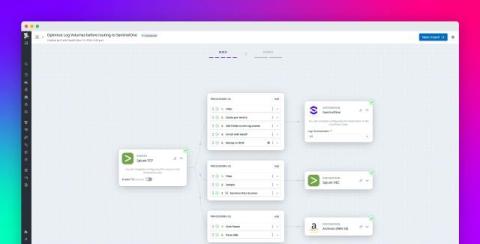
Optimize EDR logs and route them to SentinelOne with Observability Pipelines

Endpoint detection and response (EDR) systems such as SentinelOne Singularity Endpoint, CrowdStrike, and Microsoft Defender monitor IT infrastructure such as computers, mobile devices, and network devices to detect, alert on, and respond to cyber threats. These EDR systems record data about the endpoints to identify abnormal behavior, block malicious activity, and provide remediation suggestions with contextual information.

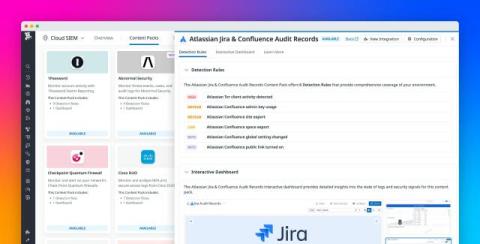
Monitor your Atlassian audit records and event logs with Datadog Cloud SIEM

Collaboration platforms like Atlassian Jira and Atlassian Confluence contain sensitive company and employee data, making them critical targets for cyberattacks. Teams use Jira to track and manage projects, and rely on Confluence as an internal knowledgebase for documentation, company policy guides, team wikis, and more. Atlassian organizations, which provide a centralized place for admins to manage their Atlassian products and users, are also prime targets.

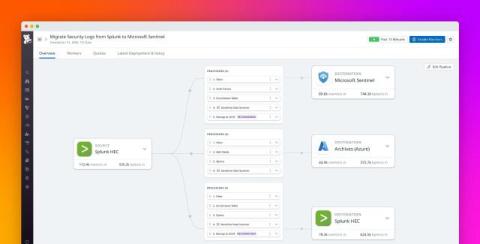
Simplify your SIEM migration to Microsoft Sentinel with Datadog Observability Pipelines

As cyberattacks rise in number and sophistication, many CISOs are pushing their organizations to adopt modern SIEM solutions to better monitor and investigate threats to their applications and infrastructure. Enterprises with a large Microsoft Azure or Windows-based footprint in particular are increasingly eyeing Microsoft Sentinel to consolidate their security stack and workflows.

How insurance companies discover, classify, and act on sensitive data risks with Datadog

Every day, insurance companies manage vast amounts of sensitive data, including medical records, financial information, and personal identifiers—all of which are processed and stored across various services, applications, and cloud resources. The types of sensitive data that these companies collect has become more complex and nuanced, with varying requirements for protection.