
From MFA Fatigue to Smarter Authentication: How Enterprises Can Stay Secure
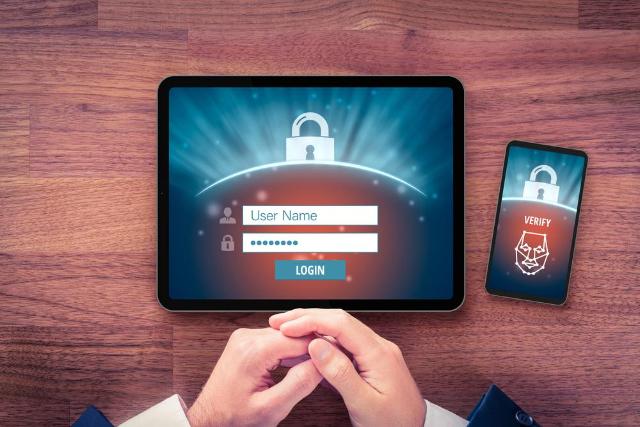
Image Source: depositphotos.com
Multi-factor authentication has become the cornerstone of enterprise security strategies, with organizations implementing layer upon layer of verification to protect against increasingly sophisticated cyber threats. However, as security teams have doubled down on MFA deployment, an unexpected challenge has emerged: MFA fatigue. This phenomenon is forcing security leaders to reconsider not whether to implement MFA, but how to implement it intelligently.
The rise of MFA fatigue represents a critical inflection point in cybersecurity. While additional authentication layers theoretically enhance security, the reality is more complex. Users bombarded with constant verification requests become desensitized, leading to dangerous shortcuts and security blind spots that attackers are quick to exploit.
The Hidden Vulnerability in Our Security Arsenal
MFA fatigue creates a particularly dangerous vulnerability. When users receive excessive authentication prompts, security transforms from a protection mechanism into an obstacle.
This psychological shift opens the door to push bombing or MFA spamming attacks. Cybercriminals overwhelm users with authentication requests, hoping that frustration or distraction will lead to an inadvertent approval.
How These Attacks Work
The psychology behind these attacks is surprisingly simple yet effective:
- Users receive dozens of authentication prompts during busy workdays
- Even security-conscious employees may approve requests without proper scrutiny
- This is especially true when they're expecting legitimate access attempts
- The human element transforms MFA from a security strength into a potential weakness
Recent high-profile breaches have demonstrated the real-world impact of MFA fatigue exploitation. Attackers successfully compromised major organizations by leveraging social engineering techniques that specifically targeted user authentication weariness.
The Business Cost of Authentication Friction
MFA fatigue creates ripple effects across the business. Every extra prompt, every failed login, and every delayed approval eats away at efficiency.
Here’s how it shows up in practice:
- Help desk overload
IT teams often see a surge in tickets tied to authentication problems—locked accounts, expired codes, or repeated verification failures. Each ticket may take only minutes to resolve, but across thousands of employees, the time lost adds up quickly. - Lost productivity
For employees, even small interruptions can break focus. Imagine being in the middle of a client presentation or a production run, only to be hit with yet another prompt. Over time, those delays compound into hours of wasted productivity. - Shared device struggles
In industries like manufacturing or retail, workers frequently share devices. Traditional MFA, designed for single users, turns into a bottleneck as each shift change requires a fresh round of logins. What should be a smooth handoff becomes a time sink. - Workflow disruption in critical environments
In healthcare, the stakes are even higher. A nurse trying to access patient records can’t afford to fumble with repeated prompts. When seconds matter, authentication delays aren’t just inconvenient—they can directly impact patient outcomes.
Evolutionary Approaches to Authentication Security
The solution to MFA fatigue is to get smarter about how we implement it. Modern authentication needs to balance robust security with user experience, and that means moving beyond the "more layers equals better security" mindset.
The key is choosing an approach that actually fits your business. With so many MFA options available, figuring out which one works best for your specific situation is crucial. Here are some approaches that are transforming how organizations handle authentication:
1. Passwordless authentication: Reducing friction at the source
Passwordless authentication represents a fundamental shift away from traditional credential-based systems. Here's how it works:
What it uses:
- Cryptographic keys
- Biometric factors
- Hardware tokens
What it eliminates:
- Password-based attack vectors
- Authentication friction
- The password component that typically triggers additional verification steps
Organizations implementing passwordless strategies report significant reductions in authentication-related support tickets and improved user satisfaction scores. More importantly, passwordless systems are inherently more resistant to phishing, credential stuffing, and social engineering attacks.
2. Adaptive and Risk-Based Authentication
Smart authentication systems analyze contextual factors such as user location, device characteristics, network environment, and behavioral patterns to dynamically adjust security requirements. When a user logs in from their typical device and location during normal business hours, the system can streamline the authentication process. However, when anomalies are detected such as access attempts from unusual locations or at odd hours—the system can escalate security requirements appropriately.
This contextual approach reduces authentication fatigue for routine activities while maintaining strong security for high-risk scenarios. Users experience fewer interruptions during normal operations, while suspicious activities trigger appropriate security responses.
3. Enhanced Verification Methods
Modern MFA implementations incorporate sophisticated verification techniques that require active user engagement. Number matching, for example, requires users to input a specific code displayed in their authentication app, ensuring they are present and attentive during the verification process. This approach makes automated attacks significantly more difficult while maintaining user-friendly authentication flows.
Similarly, biometric verification offers both superior security and improved user experience. Fingerprint, facial recognition, or iris scanning technologies provide strong authentication factors that are difficult to compromise while requiring minimal user effort. When integrated properly, biometric systems can authenticate users in seconds without the cognitive overhead of remembering codes or passwords.
Industry-Specific Authentication Challenges
Different industries face unique authentication challenges that require tailored approaches.
1. Manufacturing Environments
Workers wear protective equipment, including gloves and safety glasses, in harsh industrial conditions. OLOID has pioneered solutions for these challenging environments, developing biometric systems that function reliably even with PPE and creating seamless authentication experiences for shared device scenarios.
2. Healthcare Settings
Strict compliance requirements and critical workflows where delays impact patient care demand contactless solutions. Facial recognition systems integrated with existing badge systems provide seamless workflow while maintaining comprehensive audit trails.
3. Retail Operations
Seasonal workforce fluctuations and multiple locations require rapid onboarding capabilities with centralized management. Secure payment system access without shared credentials ensures PCI compliance.
Conclusion: Building Resilient Authentication Frameworks
The path forward requires comprehensive authentication frameworks prioritizing both security and usability. By investing in technologies that eliminate friction points while maintaining superior security postures, organizations can build resilient systems that work with human behavior rather than against it.
Addressing MFA fatigue through intelligent passwordless design enables organizations to defend against modern threats while supporting business objectives and user satisfaction in an increasingly complex security environment.