
I Don't Treat AI Video as a Toy Anymore - Not After Testing It Through a Security Lens
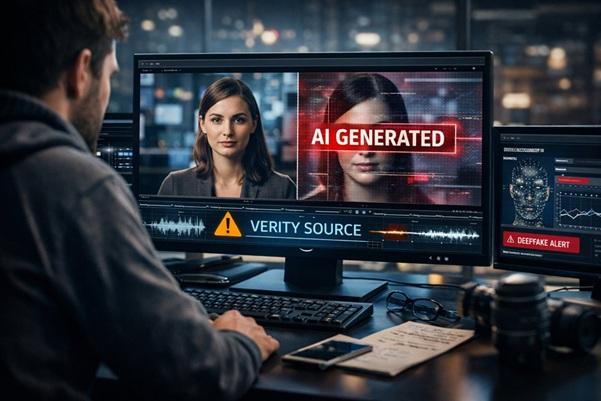
I used to look at consumer AI media tools as a novelty. Fun, impressive, occasionally useful — but still something I’d keep in a separate mental bucket from the things I take seriously. That changed when I started testing them the way I test anything else that touches trust, identity, and digital hygiene.
The moment a tool can alter how a person looks, extend what appears to be “real” footage, or generate stylized content that feels believable at a glance, it stops being just a creative app. It becomes part of the wider conversation around authenticity, misuse, and user judgment. That is exactly why I spent time experimenting with tools like AI video extender instead of dismissing them from the sidelines.
What I found was more nuanced than the usual hype cycle. These tools are powerful, yes, but the real story is not just what they can make. It is how easily people can overtrust what they see once the output looks smooth enough.
Why I Ended Up Testing AI Media Tools Like a Security Researcher
My first instinct was not creative. It was defensive.
I wanted to understand how “harmless” AI enhancement tools might shape user perception. If a short clip can be extended in a way that feels natural, a viewer may assume the added seconds are just as authentic as the original. That assumption matters. In security, the most expensive mistakes often begin with something that feels plausible enough to skip verification.
So I treated these tools the same way I would treat any emerging technology with downstream risk:
- I looked at what they do well
- I noted where artifacts still appear
- I paid attention to how confidence can outpace reality
- I asked what a normal user might miss
That last part matters most. Skilled users already know synthetic media exists. Average users often know it exists in theory, but they still react to polished media as if polish equals proof.
The Real Risk Isn’t the Tool — It’s How Easily People Accept What It Produces
After running repeated tests, I noticed something that kept bothering me: the strongest outputs were not necessarily the most technically advanced ones. They were the ones that removed just enough awkwardness to lower suspicion.
An AI-extended clip does not need to be perfect to be persuasive. It only needs to preserve motion well enough, maintain scene continuity reasonably well, and avoid obvious visual collapse. Once those three conditions are met, many viewers stop asking where the original footage ended.
That is where AI media starts intersecting with security awareness in a practical way.
A polished synthetic extension can:
- Make edited promotional footage feel more “documentary” than it is
- Blur the boundary between recorded events and generated filler
- Encourage lazy reposting without source checks
- Complicate moderation and authenticity review for teams already short on time
None of this means the technology is inherently malicious. It does mean our review habits have to mature.
What Matters Most to Me When Assessing AI-Generated or AI-Extended Media
When I test AI video tools, I do not ask, “Does this look cool?” I ask, “Where does trust break?”
That leads me to a much more practical review checklist.
|
Checkpoint |
What I Watch For |
Why It Matters |
|
Motion continuity |
Sudden limb drift, unnatural transitions, warped movement |
These are often the first clues that footage has been extended or synthesized |
|
Identity consistency |
Face shape shifts, eye spacing changes, unstable hairline |
Small changes can be missed by casual viewers but matter in identity-sensitive contexts |
|
Background logic |
Objects appearing, disappearing, or deforming |
Inconsistent environments are common tells in synthetic output |
|
Temporal credibility |
Added frames that feel cinematic but not causally consistent |
Smooth visuals can still misrepresent what really happened |
|
Re-share risk |
How believable the clip looks without context |
The easier it is to repost without questioning it, the greater the misuse potential |
That framework has helped me stay honest. Some outputs are genuinely useful for harmless creative work. Others are good enough to create false confidence, which is a different kind of problem.
Creative Tools Still Have a Place — As Long as the Context Is Respected
I do not think the right response is fear. Overreaction usually produces shallow advice, and shallow advice does not help anyone.
Used transparently, these tools can save time, fill visual gaps, and help creators communicate ideas faster. I have seen that firsthand. In fact, GoEnhance AI provides AI dance generation as well, which is another example of how these platforms are expanding from simple effects into full creative workflows that reshape motion and presentation.
That evolution is exactly why context matters so much.
If the content is obviously creative, labeled properly, and used in entertainment or stylized storytelling, the risk profile is very different. The trouble begins when generated media borrows the visual language of evidence, testimony, or lived documentation.
That is also why I pay attention to adjacent tools, including stylized generators such as AI anime generator. On the surface, anime-style generation seems less sensitive because it is not trying to look photoreal. Even so, it still trains users to normalize AI-transformed identity. That is not automatically bad, but it does change expectations around what a “real” image of a person even means online.
Once people get comfortable with identity transformation in one category, they may become less critical in another.
My Default Rule: Approach AI Media the Same Way You’d Approach an Unverified Attachment
The mindset shift is simple, and it has helped me more than any tool-specific trick.
I now treat AI-generated or AI-extended media the way I treat an unexpected file, a suspicious screenshot, or a forwarded message with no source trail. I do not assume it is fake. I also do not grant it credibility just because it looks polished.
Instead, I ask:
- Where did this originate?
- What part was recorded, and what part was generated?
- Is there source footage?
- Is the creator being transparent?
- Would this hold up if context were removed?
That last question is the one I come back to. Content spreads without captions all the time. If a clip loses its original explanation and still appears trustworthy, it can travel much farther than its creator intended.
Where I Landed After Testing It Myself
I came into this expecting to write off AI media tools as flashy but shallow. I left with a more serious view.
The creative upside is real. The productivity gains are real. The risk is real too.
What changed for me was not the technology itself. It was seeing how quickly visual fluency can create borrowed trust. A smooth output encourages people to relax. In security, that is exactly when discipline matters most.
So my takeaway is not “avoid AI media.” It is “use it with disclosure, review it with skepticism, and never confuse realism with proof.”
That mindset has served me well across security work for years. It applies here just as much.