
How Do Bomb Disposal Robots Handle Extreme Stress?
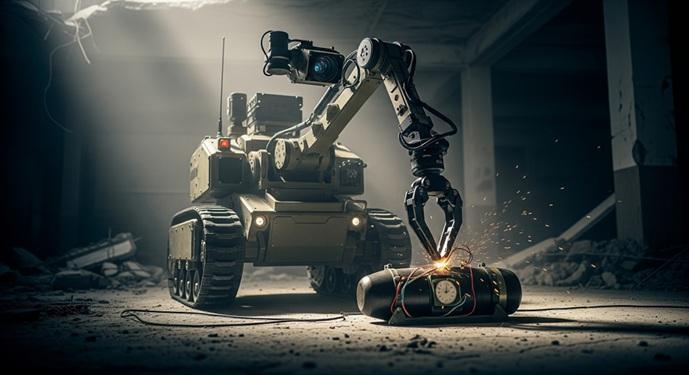
When you hear stress, you are more likely to imagine deadlines, a stressful conversation or even a flat tire on your way to a very important meeting. But what about being constructed just to get into circumstances where one misstep would spell disaster. That is what bomb disposal robots deal with on a day-to-day basis—machines that have to confront something that most humans would prefer to avoid.
Naturally, these robots do not have that kind of stress that we have. They do not perspire or doubt themselves. But the working conditions that they have? Those are as radical as it is possible. Whether it is desert sun or urban snow, war rubble or subway train tunnels, these machines must work perfectly at the times when the stakes cannot be higher.
Built for the Worst Possible Day
Bomb disposal robots have a special set of problems. They must have the strength to endure explosions, be able to handle fine wiring, and be dependable to the extent that their use becomes utterly relied upon by the operators.
Physical and Environmental Challenges
These robots are incredible in the physical stress they undergo. They have a tendency of operating under harsh conditions—say a robot under the scorching sun in the Middle East or collecting a talker about a suspicious package in the Northeast winter.
- Temperature Extremes: They must operate at a wide range of temperatures, 120°F or even lower than freezing.
- Terrain Navigation: They are often forced to drive over unstable grounds: rubble, stairs, narrow corners, and surfaces that even the most competent all-terrain vehicle cannot master.
Operational Pressures
Then there is the stress of doing the job. The operation of bomb disposal can take hours, and thus there must be a battery life and stability in its operation. The robot may require to have a camera at a fixed position and operators review an item a few miles away, or to have a fine control on a tool and slice through materials. The loss of any one, even a dropped connection, a mechanical hiccup, a power loss, could make a regulated situation a tragedy.
The Backbone: Specialized Components
The answer to this question lies in the quality and design of the internal systems of these robots which made them so strong. All the parts are important, however some of the most essential are those that we hardly ever ask ourselves about, the cables and connectors that ensure that everything is talking to one another.
High-Performance Wiring
Even half-way industrial standard cables used in consumer electronics would fall short in this case. Bomb disposal robots rely on robotic cable assembly designed specifically for extreme conditions. These are not just ordinary wires. They are designed to:
- Bend many times without breaking.
- Endure temperature extremes that would cause normal cables to brittle or become too soft.
- Preserve signal quality even when coiled, twisted, or stretched into service.
Durability Through Flexibility
This is particularly important due to the flexibility. The arm of a bomb disposal robot has the potential to rotate, extend, and articulate in a large manner that places enormous mechanical force on any cables passing through it. The connectors must have an ideal electrical contact with thousands of movement cycles. These assemblies are subjected to the torture by engineers who bend them, heat them, freeze them, and vibrate them, so they know they will not fail them when the time is right.
Customization for Unpredictable Scenarios
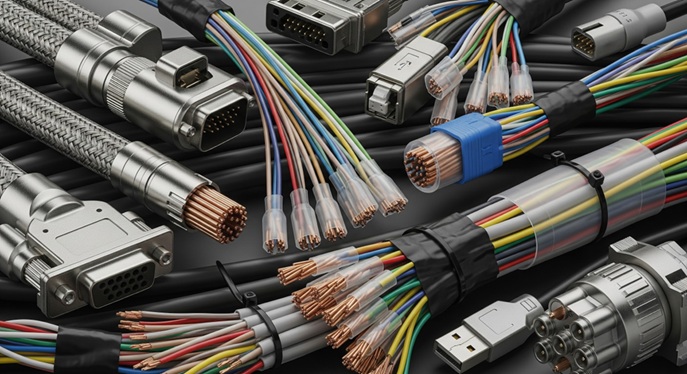
Here is what may strike you as odd: no two bomb disposal robots are precisely the same as far as their internal wiring and connectivity is concerned. The various agencies have various needs. An army squad that is clearing IEDs in a rural area of Afghanistan must have different needs than a police force that receives some suspicious packages in a subway network.
That's where custom cable assemblies become essential. Instead of imposing the one-size-fits-all solution, manufacturers collaborate with the end users to design cable solutions to meet certain operational requirements:
- EMI Shielding: A specific robot should be shielded in a special way to avoid electromagnetic interference.
- Waterproofing: Another one might need to have special waterproof connectors in order to use them in underwater recovery.
- Efficiency vs. Ruggedness: Others require extremely lightweight designs to enjoy maximum battery efficiency and others value ruggedness more than anything else.
This personalization does not only apply to the cables. The routing, connector type, materials, lengths, etc. all are optimized to suit the mission profile of the robot. It is the gap between a robot which works on paper and one which performs in actual situations when an operator is facing a genuine threat.
Miniaturization Without Compromise
The current bomb disposal robotics are technologically loaded in nature. They have several cameras, sensors, communication apparatus, manipulator arms and more advanced computer programs. It takes some serious engineering imagination to take all this into a chassis which can still squeeze into a tight space.
The Role of Flexible PCBs
This is where flexible PCB manufacturing plays a surprisingly important role. Conventional inflexible circuit boards occupy space and they are not easily customized to suit the complicated shapes within a robot.
- Space Optimization: Bendable printed circuit boards have the capability to bend around corners, in a straight line, and follow curved surfaces all the time, ensuring that the electrical connections are reliable.
- Reliability: These are flexible circuits which assist engineers to use maximum of all cubic inches within the robot. They save weight, make some use of them, use fewer bulky connectors, and even increase reliability by decreasing the number of possible failure points.
That flexibility can be directly carried over into better performance in a setting where each and every ounce counts, and each element must be pulling its weight.
The Human Element
Despite all the astonishing engineering, it should be kept in mind that bomb disposal robots do not operate solitary. The machine will always have a highly trained operator making split-second decisions depending on what the cameras and sensors on the robot are showing. The task of the robot is to stretch the abilities of that operator into a perilous area—to be his or her eyes, hands and legs to be in the place where they cannot possibly be in real life.
Such a human machine relationship requires total reliability. When an operator moves a joystick, he or she has to believe that the robot will react in a way that is as intended. Creating that trust involves robots that can cope with unimaginable stresses without flinching. This can sometimes prove to be impossible when you bear in mind that robots have metal and circuitry.
Conclusion
Bomb disposal robots are subjected to extreme stress levels, which are addressed by the engineers, good material, and careful construction. It is specialized cable assemblies that flex thousands of times then fail, to custom made cable assemblies designed to meet specific mission needs, to flexible circuits that can make the most out of a small space, all of these are integrated to make a machine that can be relied on where all other systems have failed. That way, they are able to ensure the people that run them, and the communities that they secure, are a little bit safer.