
How Agriculture Drones Improve Soil Health Monitoring Through Advanced Imaging Technology
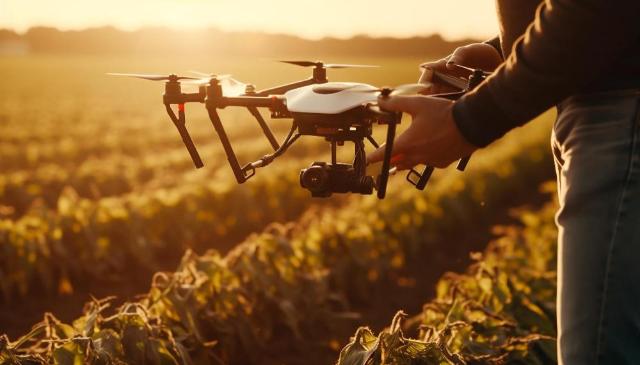
Designed by Freepik
Healthy soil is the foundation of productive farming, but it’s not always easy to see what’s happening beneath the surface. Traditional soil testing can feel slow and incomplete, often missing early signals of imbalance that could harm crops.
That’s where drones step in. With advanced imaging technology, they give farmers real-time insights into soil conditions. Instead of reacting after problems appear, growers can act early, preserving soil fertility, reducing waste, and protecting yields. The difference lies in seeing patterns invisible to the naked eye.
How Do Drones Monitor Soil Conditions More Accurately?
Conventional soil sampling offers only a snapshot of small areas. Drones, however, scan entire fields, using multispectral and thermal imaging to detect subtle changes in soil moisture, organic matter, and nutrient distribution. This broader, data-rich view reveals patterns that traditional tools often miss.
When these insights are paired with advanced platforms like Talos Drones, farmers can then act on the data using advanced spraying equipment such as the DJI Agras T10 Sprayer Drone, gaining accurate mapping that highlights problem zones across their fields. The advantage isn't just faster data collection but also more effective, science-backed interventions before yield suffers. That accuracy reshapes how soil management is planned and executed.
What Imaging Technologies Are Used in Agriculture Drones?
Advanced imaging tools on drones go far beyond standard photography. They capture data across multiple wavelengths, detecting conditions that human eyes can’t perceive. These technologies work together to create a detailed picture of soil health, plant stress, and water distribution. Here’s how each plays a role:
Multispectral Cameras
Multispectral sensors measure reflected light in different bands, including infrared. They help identify soil nutrient deficiencies and moisture imbalances by showing variations invisible to standard photos. Farmers rely on these images to guide targeted fertilizer or irrigation applications.
Thermal Imaging
Thermal cameras detect temperature differences across the soil surface. Cooler patches often indicate higher moisture, while hotter zones may signal dryness or compaction. This tool helps manage irrigation more effectively, reducing water waste and improving soil consistency.
LiDAR Technology
LiDAR sensors use laser pulses to map elevation changes in fields. Even subtle topographic shifts affect how water drains and nutrients spread. These maps reveal erosion-prone areas, allowing corrective actions like contour farming or cover cropping to stabilize the soil.
Why Is Drone Data More Reliable Than Visual Inspections?
Visual inspections can miss early warning signs of stress since problems often appear below the surface before becoming visible. Drone imaging captures measurable data long before symptoms show up. That shift transforms soil health from a guessing game into a science-driven process.
Farmers also eliminate bias. Human observation might vary from person to person, but drone data delivers objective, repeatable measurements. The consistency improves trust in decisions, whether adjusting irrigation, applying fertilizer, or scheduling soil amendments. Reliable monitoring reduces costly trial-and-error practices in the field.
How Can Drone Insights Improve Fertilizer and Irrigation Efficiency?
Drone data isn’t just for diagnostics; it directly changes how resources are applied. By highlighting areas with specific nutrient or water needs, drones reduce the blanket approach to field treatments. That precision lowers costs and protects the environment from excess chemical use.
Take irrigation as an example. Instead of watering entire fields uniformly, drones identify moisture-rich and moisture-poor patches. Farmers then tailor irrigation to those differences, preserving water without sacrificing crop health. Over time, this precision prevents nutrient runoff and improves long-term soil resilience.
When Should Farmers Incorporate Drone Monitoring Into Soil Management?
Timing matters. The most effective use of drone monitoring comes at key crop growth stages, before planting to assess soil readiness, mid-season to adjust fertilizer and irrigation, and after harvest to evaluate field recovery. This cycle creates a continuous feedback loop.
Regular monitoring helps farmers detect trends rather than just isolated issues. A single scan might highlight a temporary imbalance, but repeated imaging builds a deeper understanding of soil behavior over time. That knowledge empowers smarter planning for future seasons and sustained soil fertility.
What Is a Common Misconception About Agriculture Drones?
A frequent myth is that drones are only useful for large commercial farms. In reality, the cost of drone technology has dropped, and even small-scale farmers benefit. A single drone pass can save far more in reduced fertilizer, seed, and water waste than the initial investment.
Another misconception is that drones replace agronomists or soil experts. They don’t. Instead, drones enhance their work by supplying real-time data. Professionals interpret these insights to recommend treatments, blending technology with human expertise for more effective and sustainable outcomes.
Where Do Real-World Results Show the Value of Drone Monitoring?
One farm in a semi-arid region struggled with uneven yields despite regular irrigation. Drone imaging revealed that water was pooling in low-lying areas, leaving other zones dry. Adjustments to irrigation layouts solved the issue, improving soil balance and reducing wasted water within a single season.
Another grower noticed recurring nutrient deficiencies despite heavy fertilizer use. Multispectral drone scans exposed uneven application patterns caused by faulty equipment. By addressing the problem, fertilizer use decreased, costs dropped, and soil health steadily improved. These results highlight how imaging turns hidden inefficiencies into actionable insights.
Frequently Asked Questions
How often should drones be used for soil monitoring?
Ideally, drones should scan fields at least three times per season, before planting, during peak growth, and after harvest. This ensures a clear understanding of soil conditions across critical growth stages.
Can drones replace traditional soil testing?
No. Drones complement soil tests rather than replace them. While drones provide a wide-field perspective, lab tests confirm precise nutrient and chemical levels. Together, they create a complete soil health profile.
Are drone imaging systems difficult to operate?
Modern drones are increasingly user-friendly, often with automated flight paths and AI-driven analysis. Training is minimal, making it practical for both large and small farms to adopt the technology without specialized expertise.
What are the environmental benefits of using drones in soil management?
By preventing overuse of fertilizers and optimizing water application, drones reduce nutrient runoff, conserve water, and minimize chemical exposure. This not only benefits crops but also protects surrounding ecosystems from pollution.