
Application and Development of Intelligent Cranes in Urban Construction
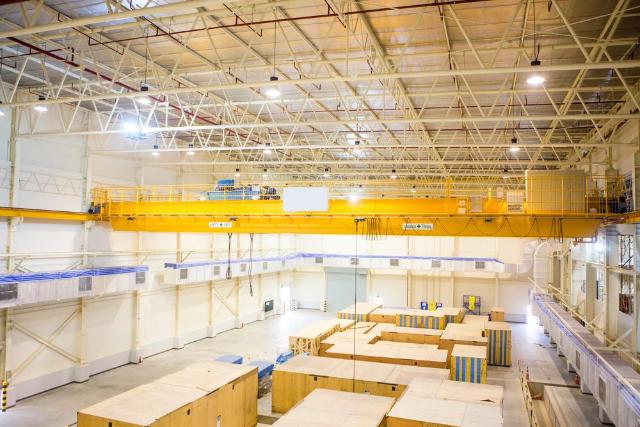
Image Source: depositphotos.com
With the continuous advancement of urbanization, the construction of urban infrastructure faces new challenges. Traditional cranes often suffer from inefficiency and insufficient safety during operation, while the emergence of intelligent cranes provides new solutions for urban development. By integrating sensors, data analysis, and automated control technologies, intelligent cranes achieve more efficient and safer operating modes, playing an increasingly important role in the construction of smart cities.
Basic Concepts and Technical Features of Intelligent Cranes
An intelligent crane is an upgraded product based on traditional cranes, enhanced with modern information technologies. It realizes intelligent lifting operations through multiple integrated technologies.
- Perception Technology:
Intelligent cranes are equipped with various sensors, including load sensors, displacement sensors, and vision sensors. These sensors can monitor the crane’s operating status in real time, such as lifting weight, lifting height, and running speed. The environmental sensing system can recognize the surrounding environment and detect obstacles to ensure operational safety. - Control Technology:
Equipped with advanced control systems, intelligent cranes can achieve precise position control and motion trajectory planning. Through programmed operation, cranes can automatically complete complex lifting tasks and reduce human errors. In some small and medium-sized industrial plants or warehouses, the single girder overhead crane is often used as a foundation for intelligent upgrades. With its compact structure and stable performance, it can achieve precise positioning and automated handling when integrated with smart control systems. - Communication Technology:
Intelligent cranes use wireless communication technology to connect with central control systems, enabling real-time data transmission. Operators can remotely monitor the crane’s operating status from the control room and adjust parameters as needed. - Data Analysis Technology:
During operation, data generated by the crane are collected and uploaded to a cloud platform, where analytical algorithms process them. These data can be used to predict equipment failures, optimize workflows, and support maintenance decisions.
Application Scenarios of Intelligent Cranes in Urban Construction
The technical features of intelligent cranes make them particularly suitable for use in smart city construction. Below are several typical application scenarios:
- Building Construction:
In high-rise building projects, intelligent cranes can accurately lift building materials such as steel beams and precast concrete components. With pre-programmed paths, the crane can automatically deliver materials to designated positions, improving construction efficiency. The load monitoring system helps prevent overload operations and ensures job-site safety. - Bridge Engineering:
In bridge construction, intelligent cranes are used for lifting large bridge components. Their precise positioning capabilities make component installation more accurate and reduce manual adjustments. The environmental sensing system can detect wind speed and other weather conditions, automatically suspending operations during severe weather to prevent accidents. - Municipal Facility Installation:
During the installation of large municipal facilities such as transformers and pipeline systems, intelligent cranes can safely and efficiently complete lifting tasks. Remote control functions allow operators to work from a safe distance, minimizing operational risks. - Logistics and Warehousing:
In smart city logistics systems, intelligent cranes are used for material handling and stacking. By interfacing with warehouse management systems, cranes can automatically identify cargo information and transport goods along optimized paths, greatly improving logistics efficiency. For smaller-scale storage and light-load handling needs, the 1 ton overhead crane also plays an important role within intelligent systems. Its compact design, combined with automated identification and positioning functions, enables efficient multi-batch and high-frequency material handling.
Advantages and Value Brought by Intelligent Cranes
The application of intelligent cranes brings improvements to urban construction in multiple dimensions—enhancing not only efficiency but also safety and cost-effectiveness.
- Enhanced Operational Safety:
Intelligent cranes’ multiple safety protection systems significantly reduce accident risks. Functions such as overload protection, limit protection, and anti-collision systems can promptly detect potential hazards and take corresponding actions. Statistics show that the use of intelligent cranes has led to a remarkable decrease in accident rates. - Improved Work Efficiency:
Through automated control and optimization algorithms, intelligent cranes can operate continuously, reducing downtime caused by manual intervention. Under the same working conditions, their efficiency is about 30% higher than that of traditional cranes. - Reduced Operating Costs:
Although intelligent cranes require higher initial investment, their long-term operating costs are lower. Automation reduces dependence on skilled operators, while predictive maintenance minimizes downtime caused by equipment failures, helping users save substantial operating expenses. - Data-Driven Decision Support:
The operational data collected by intelligent cranes can serve as valuable references for project management. By analyzing indicators such as equipment utilization and work efficiency, managers can better plan project schedules and optimize resource allocation.
Development Trends and Challenges of Intelligent Cranes
With continuous technological progress, intelligent cranes are evolving toward higher levels of intelligence and integration, though several challenges remain.
- Technological Integration Trend:
In the future, intelligent cranes will be more deeply integrated with the Internet of Things (IoT) and artificial intelligence (AI). Through machine learning algorithms, cranes will be able to optimize operating strategies autonomously and adapt to more complex working environments. - Standardization Requirements:
Currently, there is no unified technical standard for intelligent cranes, and compatibility issues exist among products from different manufacturers. The industry needs to establish unified standards to promote interconnection and interoperability among devices. - Talent Development:
The operation and maintenance of intelligent cranes require skilled professionals. However, talent cultivation in this field lags behind technological development, becoming a key factor that restricts wider adoption. - Cost Issues:
The high cost of intelligent cranes makes them difficult for small and medium-sized enterprises to afford. As technology matures and large-scale production is achieved, equipment prices are expected to gradually decrease, enabling more users to benefit from this technology.
Conclusion
As essential equipment in modern engineering construction, intelligent cranes are playing an increasingly significant role in smart city development. Their intelligent features not only improve operational efficiency and safety but also provide technological support for refined urban management. With continuous advancements and expanding application scenarios, intelligent cranes will continue to drive urban construction toward safer, more efficient, and smarter directions. This process requires joint efforts from manufacturers, users, and industry regulators to overcome technical and managerial challenges, ensuring ongoing innovation and broader adoption of intelligent crane technologies.