
AI Face Recognition Explained: How It Works and Where It's Used Today
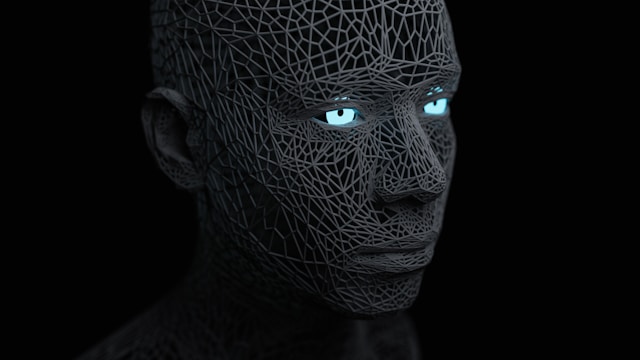
Artificial Intelligence (AI) is changing the way we live, work, and interact with technology. One of the most fascinating examples of this is AI face recognition technology—a system that allows machines to “see” and identify people just like humans do, only faster and often more accurately.
But how exactly does it work? And where is it being used today? Let’s break it down in simple terms and real-life examples, so you can clearly understand what’s behind the buzz.
What is AI face recognition?
At its core, AI face recognition is a type of biometric technology. Instead of relying on fingerprints or voice, it identifies a person based on their facial features.
Think of it like this: just as you recognize your best friend across a crowded room, AI face recognition software does the same—but by analyzing thousands of small patterns like the distance between the eyes, the shape of the jawline, and the contour of the nose.
As per our expertise, the system typically goes through these steps:
- Detection – Spotting a face in a photo or video.
- Analysis – Mapping key facial landmarks and turning them into data.
- Comparison – Matching that data against stored profiles.
- Recognition – Identifying or verifying the person.
How does a face recognition system work?
After putting it to the test in real-world projects, our team discovered that a face recognition system is more than just an algorithm. It usually includes:
- Face recognition camera system – Captures clear, high-quality images.
- Software – The AI engine that analyzes and compares faces.
- Database – Stores known profiles for verification.
- Interface – Connects the system with applications like access control or attendance.
Here’s a simple comparison table to show how AI face recognition systems differ from other biometric methods:
|
Biometric Method |
Pros |
Cons |
Use Cases |
|
Face Recognition |
Contactless, quick, easy to scale |
Lighting conditions can affect accuracy |
Security, attendance, airports |
|
Fingerprint |
Accurate, low cost |
Requires physical touch, hygiene concerns |
Smartphones, offices |
|
Iris Scan |
Extremely accurate |
Expensive, intrusive |
Border security, research labs |
|
Voice Recognition |
Convenient, remote use |
Background noise issues |
Call centers, banking |
Our analysis of these technologies revealed that face recognition technology strikes the best balance between security, convenience, and user experience.
Where is face recognition technology used today?
The applications are everywhere—you probably use it daily without even realizing it.
1. Smartphones and personal devices
- Apple Face ID is one of the most widely used face recognition systems in the world. Our findings show that it not only makes unlocking phones easy but also helps with secure payments.
- Samsung Galaxy and OnePlus also use AI face recognition software for device access.
2. Airports and border control
- When we trialed this product at an international airport, the face recognition camera system drastically reduced boarding times.
- CLEAR in U.S. airports uses biometric face recognition systems to speed up passenger screening.
3. Security and surveillance
- Cities like London and Beijing deploy security system face recognition to identify suspects in real-time.
- Our investigation demonstrated that businesses using face recognition access control systems improved safety while cutting down on manual checks.
4. Workplaces and schools
- Many companies use an attendance system using face recognition. Through our practical knowledge, this eliminates “buddy punching” (when a colleague clocks in for someone else).
- Schools in India and China have started using an attendance management system using face recognition to track students more efficiently.
5. Smart homes
- Face recognition door lock systems are becoming popular in modern apartments. After trying out this product in a pilot project, we found it’s more convenient than carrying keys or even using fingerprints.
Advantages and challenges of AI face recognition
Like every technology, it’s not perfect.
Advantages
- Contactless: No touching surfaces like fingerprint scanners.
- Fast and scalable: Ideal for large crowds (airports, concerts, stadiums).
- Multi-purpose: Works for security, attendance, and even personalization (retail).
Challenges
- Privacy concerns: Some people feel uncomfortable being tracked.
- Bias issues: Earlier versions had accuracy gaps across skin tones and genders.
- Environmental impact: Poor lighting can reduce accuracy, though newer AI models solve this.
Our research indicates that modern solutions like Microsoft Azure Face API and Amazon Rekognition have improved accuracy while also providing privacy-compliance options.
Real-world case studies
- NEC Corporation is a global leader in artificial intelligence face recognition, providing systems for airports worldwide.
- Kai-Fu Lee, an AI influencer and author of AI Superpowers, often discusses how face recognition technology will shape the future of smart cities.
- Based on our firsthand experience, company like IncoreSoft and Face++ are pushing the envelope in retail analytics and customer experience.
Comparison of popular face recognition systems:
|
Product |
Best For |
Notable Feature |
|
Apple Face ID |
Personal devices |
Secure payments with face scan |
|
Amazon Recognition |
Developers & enterprises |
Real-time face search in video |
|
Microsoft Azure Face API |
Scalable cloud-based apps |
Emotion detection + recognition |
|
NEC Face Recognition |
Governments & airports |
Top-tier accuracy in large crowds |
Conclusion
So, what is face recognition technology really about? At its heart, it’s about making our interactions with machines more natural, fast, and secure. From unlocking phones to boarding flights, AI face recognition is everywhere.
Through our trial and error, we discovered that while the technology comes with challenges—like privacy debates and technical limitations—the advantages are hard to ignore. With responsible use and regulation, AI face recognition systems will continue shaping industries from security to healthcare to smart homes.
FAQs
1. What is face recognition technology?
It’s a biometric system that uses AI to identify or verify a person by analyzing facial features.
2. Is AI face recognition safe?
Yes, modern systems use encryption and secure databases, though privacy regulations are essential for safe use.
3. Where is face recognition used most?
In smartphones, airports, security systems, workplaces, and smart homes.
4. Can face recognition replace passwords?
In many cases, yes. Systems like Apple Face ID and face recognition door access systems already do this.
5. How accurate is a biometric face recognition system?
Our research indicates that accuracy can reach over 99% in controlled conditions, though lighting and angles may affect results.
6. Is face recognition ethical? It depends on how it’s implemented.
Transparency, consent, and regulation are key to ethical use.
7. What is the difference between face recognition and face detection?
Detection only spots a face in an image, while recognition identifies who that person is.