Security | Threat Detection | Cyberattacks | DevSecOps | Compliance

Scam-Proofing Loyalty at Scale: What ATO Protection in Retail Should Look Like in 2025

Retail fraud has gone public. It no longer happens quietly in the background. Today’s scams are faster, sharper, and designed to look exactly like your brand. A spoofed checkout flow can harvest thousands of credentials before your SOC team even sees a spike. But the real damage isn’t always technical. In 2025, one impersonation scam can trigger waves of fake complaints, social media outrage, and reputational backlash that cost far more than the fraud itself.

The MemcycoFM Show: Ep 17 - Scam-Proofing Loyalty at Scale: What ATO Protection Should Look Like

Scam-Proofing Loyalty at Scale: What ATO Protection in Retail Should Look Like in 2025 Retail fraud has gone public. It no longer happens quietly in the background. Today’s scams are faster, sharper, and designed to look exactly like your brand. A spoofed checkout flow can harvest thousands of credentials before your SOC team even sees a spike. But the real damage isn’t always technical. In 2025, one impersonation scam can trigger waves of fake complaints, social media outrage, and reputational backlash that cost far more than the fraud itself.
Breaking into Cybersecurity with Motti Tal: From Code to Cyber Strategies

In this episode of Breaking Into Cybersecurity's latest episode, featuring Motti Tal, CSO at Memcyco. Motti shares his journey from studying computer science at Tel Aviv University to programming for the Israeli Navy and eventually moving into software and cybersecurity. He discusses the evolution of his career, how AI influences critical thinking, and the importance of innovative thinking in cybersecurity.

How CISOs Apply Zero Trust Thinking to Credential Harvesting Prevention

A customer opens their bank’s login page. At least, that’s what they think. The design is flawless, the fields are familiar. But it’s a cloned site built to harvest credentials. Within seconds, their details are replayed against the genuine portal. To the bank’s defenses, it looks like business as usual – same username, same password, same MFA prompt. This is the reality of credential harvesting, one of the most common precursors to account takeover.

The MemcycoFM Show: Ep 15 - How CISOs Apply Zero Trust Thinking to Credential Harvesting Prevention

A customer opens their bank’s login page. At least, that’s what they think. The design is flawless, the fields are familiar. But it’s a cloned site built to harvest credentials. Within seconds, their details are replayed against the genuine portal. To the bank’s defenses, it looks like business as usual — same username, same password, same MFA prompt.

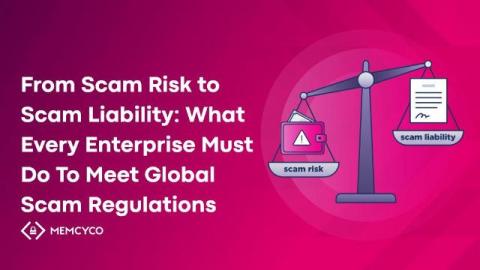
From Scam Risk to Scam Liability: What Every Enterprise Must Do to Meet Global Scam Regulations

Regulators aren’t just cracking down on digital fraud – they’re rewriting the rules on who’s responsible when it happens. Across every major region, laws are shifting liability closer to the first point of compromise: the login session. If your digital environment can’t detect a spoofed page, stop a phishing attempt, or block credential theft in real time, you’re not just at risk – you may be out of compliance.

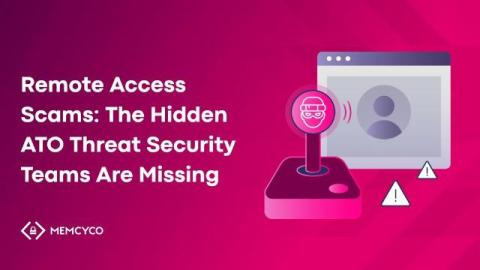
Remote Access Scams: How to Stop Them (and Why Security Teams Miss the Risk)

Remote access scams are social engineering attacks where fraudsters convince users to install or open remote desktop tools like TeamViewer or AnyDesk. Once inside, they hijack login flows, harvest credentials, and often bypass MFA, opening a hidden path to account takeover (ATO). These scams are rising fast, exploiting customer trust and evading traditional fraud controls.

The MemcycoFM Show: Episode 15 - Remote Access Scams: The Hidden ATO Threat Security Teams Miss

Remote access scams are social engineering attacks where fraudsters convince users to install or open remote desktop tools like TeamViewer or AnyDesk. Once inside, they hijack login flows, harvest credentials, and often bypass MFA — opening a hidden path to account takeover (ATO). These scams are rising fast, exploiting customer trust and evading traditional fraud controls. In this guide, we’ll break down how these scams work, why they’re so effective, and how security teams can detect and disrupt them — in real time, before ATO occurs.

How to File a DMCA Takedown (And Why You Don't Need To)

Many enterprises turn to the DMCA takedown process when they discover infringing or fraudulent content online. While DMCA takedown serves as a protective mechanism for copyrighted material, it was never designed to address the speed and scale of brand impersonation and phishing scams. To put things into context, it takes less than 60 seconds for users to fall for phishing emails.

The MemcycoFM Show: Episode 14 - How to File a DMCA Takedown (And Why You Don't Need To)

Many enterprises turn to the DMCA takedown process when they discover infringing or fraudulent content online. While DMCA takedown serves as a protective mechanism for copyrighted material, it was never designed to address the speed and scale of brand impersonation and phishing scams. This gap leaves businesses compromised, leveraging a reactive approach that can’t keep up with the sheer agility and scale of scammer operations. To confront it head-on, we’ll show how to file a DMCA takedown notice effectively, while highlighting tactics for resolving its shortfalls in aggressive brand impersonation, phishing and account takeover (ATO) scenarios.