


Security | Threat Detection | Cyberattacks | DevSecOps | Compliance

Anubis and the Death of Data: A New Era of Ransomware Operations

Ransomware activity continues to increase, and Bitsight data illustrates the scale of this growth. In our State of the Underground 2025 report, Bitsight TRACE observed a nearly 25% rise in unique ransomware victims publicly listed on leak sites. Additionally, the number of leak sites operated by ransomware groups grew by 53%.

New Research: Why 9 in 10 Cybersecurity Leaders Say Their Job Is Harder Today

In today’s environment—marked by accelerating threats like ransomware, increasingly complex supply chains, and the growing footprint of AI and IoT—managing cyber risk has never been more urgent or more difficult. Our latest research with Sapio Research, The State of Cyber Risk and Exposure 2025, draws on the insights of 1,000 cybersecurity and cyber risk leaders around the world to understand what they are focused on today and what will be keeping them up tomorrow.

Mind the Gap: Why UK Cyber Programs Struggle to Turn Visibility into Action

Cybersecurity leaders in the UK are facing a stark reality: managing cyber risk is becoming significantly harder. Not only are threats growing in scale and complexity, but a lack of visibility into digital exposures—both internal and across the supply chain—is compounding the challenge.

ToxicPanda: The Android Banking Trojan Targeting Europe

ToxicPanda is a banking trojan designed to infiltrate your mobile device, stealing financial details by targeting banking & financial apps. The malware keeps evolving, with the developers behind it being quick to add new features, such as overlaying pin & pattern codes, overlaying credential inputs for specific banking apps, allowing cybercriminals to remotely take control of compromised bank accounts and initiate unauthorized money transfers.

The Rise of Acreed Infostealer in the Post-LummaC2 Threat Landscape

Acreed, a new malware-as-a-service (MaaS) platform, appears to have taken the top spot in the infostealer ecosystem. We suspect this is due to the takedown of Lumma Stealer (LummaC2) in May 2025. In just its first week, Acreed was observed uploading over 4,000 stolen credential logs to a dark web Russian Market.

ToolShell Threat Brief: SharePoint RCE Vulnerabilities (CVE-2025-53770 & 53771) Explained

A serious new vulnerability (CVE-2025-53770, also known as “ToolShell”) is actively being exploited by cybercriminals to hack into on-premises Microsoft SharePoint Servers. The vulnerability, along with CVE-2025-53771 was discovered around July 18, 2025. Bitsight Research classifies CVE-2025-53770 as 10 out of 10 on our Dynamic Vulnerability Exploit (DVE) scale and CVE-2025-53771 as a 5.82 out of 10 indicating severe and moderate urgency respectively.

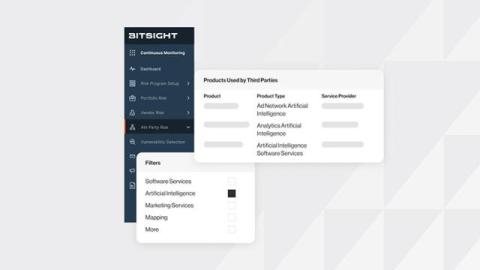
Why You Should Care About Vendors Using AI Products, and How Bitsight Helps You Find Out

Artificial intelligence—it’s a term you’ve likely encountered more than once today, and this won’t be the last. And while it reshapes how businesses operate, it’s also introducing new risks. As organizations embrace AI-powered tools for efficiency and innovation, it becomes essential to understand what technologies your vendors rely on, and what those choices mean for your cybersecurity posture.

Hijacked by a Text: Understanding and Preventing SIM Swapping Attacks

SIM swapping is not a novel cyber threat; it has been a persistent issue for over a decade. This technique exploits vulnerabilities in mobile carrier procedures and identity verification protocols. Attackers employ social engineering tactics to deceive telecom providers into transferring a victim’s phone number to a SIM card under their control.

Navigating the Noise: Separating Security Reality from Hype

In the cybersecurity landscape, sensational headlines and alarming vulnerability disclosures are commonplace. Recent events have been a whirlwind, with claims of massive data breaches and widespread vulnerabilities affecting critical infrastructure. From the overstated impact of Next.js middleware vulnerabilities to the exaggerated reach of Nginx ingress issues, it's clear that the cybersecurity community needs a reality check.