

Security | Threat Detection | Cyberattacks | DevSecOps | Compliance

Securing your CI/CD Pipelines with GitHub Actions: DevSecOps in Action

When people talk about securing software, they typically refer to two distinct aspects. The code itself, or the servers it runs on. That makes sense. Those are the most visible parts. But what actually holds everything together isn’t either of those. It’s the pipeline in between the system that moves code from an idea in a developer’s head to something running in production. CI/CD pipeline can be easy to overlook because it often feels invisible.
Zero Trust in DevSecOps Pipelines: Securing CI/CD Pipelines

Your CI/CD pipeline may also be the rocket that propels your business, but it can also be the silent killer that will blow up all that you have created. Think about it. You have automated code builds, testing, and deployments. Your people are driving features at light speed. Customers are happy. Revenue is growing. But beneath the surface? A single crack will cause the entire system.

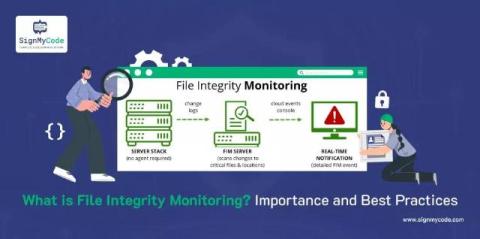
What is File Integrity Monitoring (FIM)? Importance and Best Practices

File Integrity Monitoring (FIM) is a process that provides security by monitoring and verifying changes made to critical files, directories, and system configurations in an IT environment. This is accomplished by taking the current state of files, operating system binaries, application files, configuration files, logs, or sensitive data, and comparing them against a known and trusted baseline.