Security | Threat Detection | Cyberattacks | DevSecOps | Compliance

When Customer Data Quietly Walks Out the Door: Lessons from the Coupang Breach

Large data breaches rarely begin with dramatic system failures. More often, they start with sustained, unauthorized access to sensitive data that goes undetected for months. The recent breach at Coupang, South Korea’s largest e-commerce platform, illustrates this pattern clearly. Nearly 34 million customer records were likely exposed over an extended period before detection.
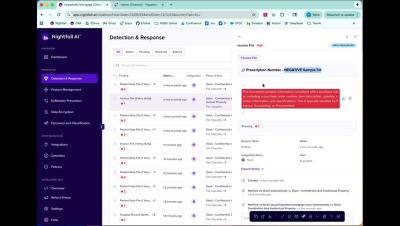

Build a Context-Aware DLP Entity Detector Without Regex (Prompt-Based Detection Demo)

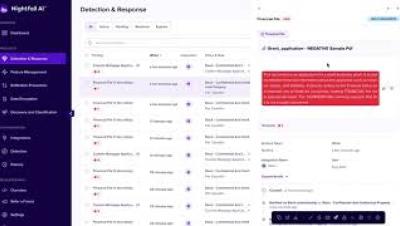
See how to build a prompt-based custom entity detector in Nightfall that understands context, not just patterns. Using a real healthcare example, you’ll see how prescription numbers are detected accurately while similar-looking data like purchase order numbers are ignored. You’ll see: Why regex breaks down in real workflows How prompt-based detection reduces false positives Creating a custom detector with positive and negative examples Deploying it to Slack and validating results across files.

Create Custom File Classifiers with Nightfall AI. No Regex Required

DLP solutions have a challenge in detecting standard document types: financial records, source code, and customer lists. Moreover, what happens when your organization needs to protect business-critical documents that don't fit pre-built categories? Or when you need more granular classification to support specific workflows? Traditional approaches force you to choose between brittle regex patterns that generate false positives.

Create Highly Specific File Classifiers with Nightfall's Prompt-Based AI. No Regex Required

Many sensitive documents don’t fit cleanly into standard categories, and traditional approaches like regex or broad classifiers often create noise and false positives. In this video, we walk through how to use Nightfall’s prompt-based file classifiers to detect business-critical documents based on intent, not brittle patterns or custom model tuning.

AI-Native Browsers Demand AI-Native Security: Why Legacy DLP Can't Protect You

In our recent analysis of AI browser exfiltration risks, we exposed how OpenAI's Atlas and Perplexity's Comet create permanent backdoors to sensitive data through persistent memory, autonomous agents, and cross-platform sync. The challenges with AI native browsers strongly resonated with CISO’s and security leaders we speak with on a daily basis. But the threat extends far beyond Atlas and Comet.

Why Customer Support Teams Need Modern DLP for Zendesk

Customer support teams face an impossible paradox: they need to help customers quickly, but customers routinely share sensitive information that creates compliance risks and security exposure. Credit card numbers pasted into chat. Driver's licenses attached to verification tickets. Medical records uploaded to troubleshoot healthcare apps. Social security numbers submitted through web forms. Traditional DLP wasn't built for this reality.

When Screenshots, Clipboard Activity, & File Uploads Become Security Incidents: Lessons from a Recent Insider Threat Case

A leading cybersecurity vendor recently terminated an employee who took internal screenshots and shared them with threat actors, who then attempted to pass off the leaked material as evidence of a system breach. While no customer data was compromised and production systems remained secure, the incident exposed a blind spot that should concern every CISO: authorized users with legitimate access becoming your biggest vulnerability.