Security | Threat Detection | Cyberattacks | DevSecOps | Compliance

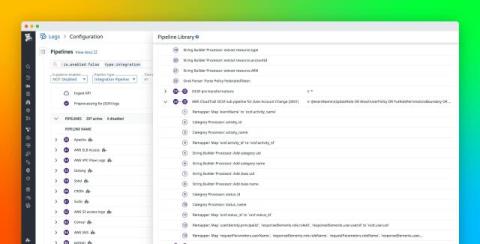
Normalize your data with the OCSF Common Data Model in Datadog Cloud SIEM

Security teams rely on SIEMs to aggregate and analyze data from a wide range of sources, including cloud environments, identity providers, endpoint protection platforms, network appliances, SaaS apps, and more. But every source delivers logs in its own format, with different field names, structures, and semantics. This fragmentation makes it difficult to build scalable, reusable detection rules or correlate threats across systems.

Security and SRE: An Example from Datadog's Combined Approach

In most companies, Security and SRE organizations are distinctly separate entities and often fall under different executive branches of the company. The work of Security and SRE organizations may appear different, but their goals are the same: keep the company running. This separated structure hinders collaboration, but what if you could change it? Over the past year, Datadog has joined our SRE and Security teams together in a single organization unifying all aspects of reliability.

Build, test, and scale detections as code with Datadog Cloud SIEM

Security teams often struggle to keep up with rapidly evolving threats, especially when they have to manually manage detection rules. Without automation or version control, it's difficult to maintain consistency across environments, track changes, or deploy updates quickly. Datadog Cloud SIEM supports detection as code, a structured approach to authoring, testing, deploying, and managing detection rules using code and infrastructure-as-code tools like Terraform.

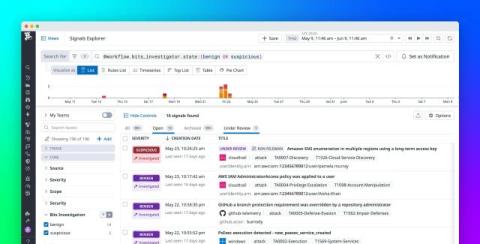
Automate Cloud SIEM investigations with Bits AI Security Analyst

Security analysts face unprecedented challenges in today's cloud landscape. Security operations center (SOC) teams are chronically understaffed, and cybersecurity threats are skyrocketing—further intensified by GenAI-driven attacks. High false positive rates add to this strain, fueling alert fatigue and delaying the detection of real threats. These hurdles make it harder for analysts to keep pace, which ultimately drives up mean time to resolution (MTTR).

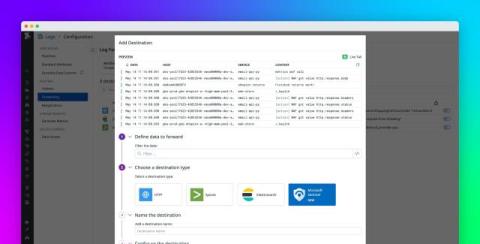
Centrally process and govern your logs in Datadog before sending them to Microsoft Sentinel or Google SecOps

Organizations rely on best-in-class solutions for observability and security, and various teams within an organization often have preferences for different platforms. For example, your security team may use a SIEM platform like Microsoft Sentinel and Google Security Operations (SecOps) to detect and investigate threats, while your DevOps teams use Datadog Log Management for real-time troubleshooting and monitoring.