Cybersecurity Awareness Month encourages organizations to examine the controls behind everyday security habits. Training helps employees spot phishing and use strong authentication but does not resolve gaps in systems that govern access. Many organizations manage employee access through an identity provider (IdP) and single sign-on (SSO). However, not every AI or SaaS application connects to those systems.
Passkeys make authentication safer by resisting phishing attacks and eliminating shared secrets like passwords that attackers can steal from a website to access your accounts. By removing the secrets from servers, they reduce the risk of data breaches. However, advances in quantum computing threaten to increase the risk of those data breaches yet again by breaking the cryptography passkeys currently use.
At 1Password, we believe strong security should feel like part of the workflow, not an interruption. That is the goal behind our work on user verification (UV) for passkeys.
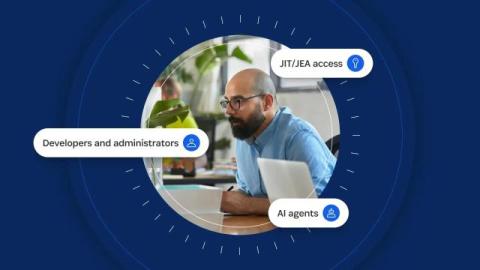
In most organizations, standing privileges don’t show up all at once. They accumulate quietly. A role is added “temporarily.” A contractor needs broad access to finish a project. A service account gets oversized permissions because no one has time to fine-tune them. None of these choices seem harmful in the moment, but over time they build into a privilege surface that’s far too large to monitor and far too easy to misuse.
In the first post in this series, Wade shared how our team laid the foundation for using AI in detection engineering. The short version is that an LLM doesn't know your stack. Without documentation and workflow context, it can produce plausible results that are difficult to trust, regardless of which model you use.
Identity and access have changed drastically in the past decade. To meet the needs of the modern enterprise perimeter, Enterprise Password Managers (EPM) have evolved far beyond traditional workplace password storage.